Evil Eye Meaning: What Does the Evil Eye Symbolize?
Quick Answer
“Evil eye” means two things: (1) a supernatural belief that an envious glare can bring misfortune or illness — one of humanity’s oldest superstitions (~5,000 years); and (2) the blue eye-shaped amulet (Turkish nazar boncuğu) worn to ward off that curse. Around 40% of the world’s population holds some form of this belief.
- The curse: Harm from an envious stare (often unintentional)
- The amulet: Blue glass “eye” that deflects the gaze
- Age: ~5,000 years (Mesopotamia → worldwide)
- Names: Nazar, mati, malocchio, oculus malus
What Does “Evil Eye” Mean?
The phrase carries a crucial double meaning: (1) the curse — a look of envy believed to transmit misfortune, often unintentional; (2) the protection — the eye-shaped talisman designed to deflect that gaze. Same name, opposite job.
The core idea: being admired invites envy; envy invites harm — humanity’s ancient theory of why good things go wrong right after they’re noticed.
5,000 Years of History
- ~3300 BCE, Mesopotamia: earliest eye amulets at Tell Brak (Syria) — predates organized religion.
- Ancient Greece & Rome: Greek baskania, Latin oculus malus; 6th-century BC eye-cups.
- ~1500 BCE: Mediterranean glass beads popularize the blue eye-bead.
- Today: ~40% of humanity believes in some version.
The Evil Eye Around the World
Turkey: Nazar (nazar boncuğu). Greece: Mati — xematiasma prayer ritual. Italy: Malocchio — cornicello horn charms. South Asia: Nazar — “nazar lag gai,” black dots on babies, lemon-chilli. Latin America: Mal de ojo — feared for babies. Ancient Rome: Oculus malus.
Different names, different charms — identical fear.

The Nazar Amulet
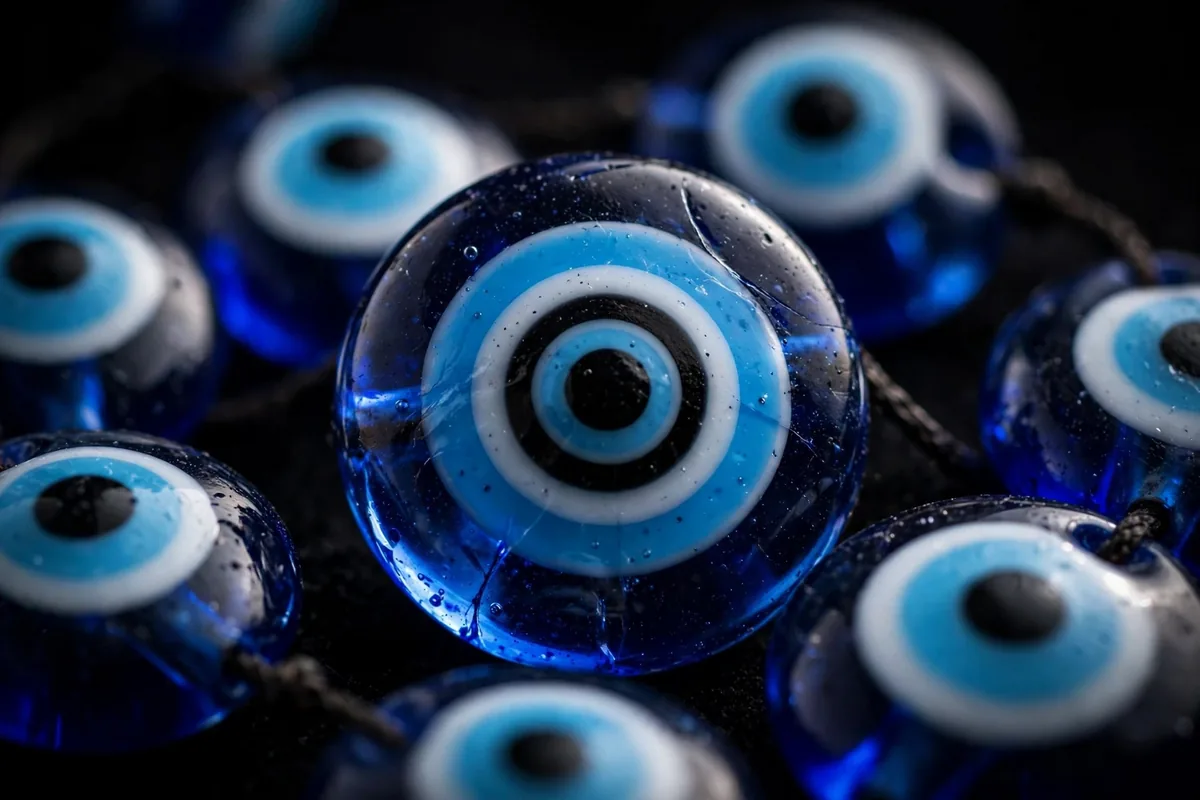
- Design: concentric dark blue, white, light blue, black — handmade glass, like a watchful eye.
- Believed to work by attracting the malicious gaze to itself — fight eye with eye.
- Why blue: blue shields against evil in Turkish/Middle Eastern belief.
- Forms: jewelry, door hangings, car mirrors, baby pins.
- Digital age: own emoji — 🧿 U+1F9FF (2018).
Protection Practices
- Nazar jewelry — the universal defense.
- Black dots on babies (South Asia) — imperfection deflects envy.
- Lemon-chilli on doors/vehicles (India); beads over doorways.
- Greek xematiasma — secret prayer ritual; olive leaves burned in Cyprus.
- Mashallah when praising — neutralizes envy in admiration.
The Evil Eye in Modern Life
- “Nazar lag jayegi”: the warning against posting happy photos online — the evil eye went digital.
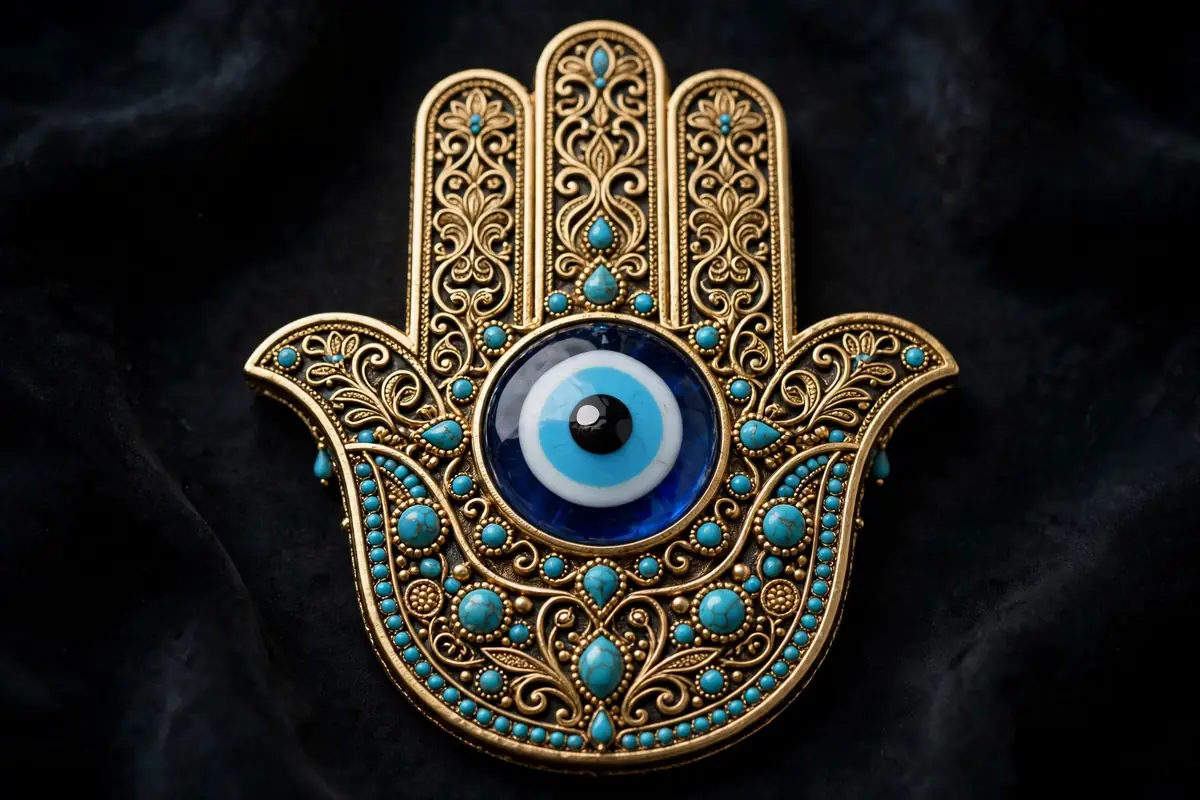
- Fashion: motifs on runways — aesthetic + heritage.
- The paradox: the more connected the world, the more the evil eye thrives — envy scales with the feed.
A Grounded Note
- Belief, not fact: no scientific evidence gazes transmit misfortune.
- Why it persists: it encodes real social wisdom — envy damages relationships; rituals calm anxiety.
- Respect it: for ~40% of humanity this is heritage, not a joke.
Frequently Asked Questions
What does the evil eye mean?
The belief that an envious glare brings misfortune — and the amulet warding it off.
What is the evil eye symbol?
A blue eye-shaped amulet (nazar) believed to deflect the gaze.
Where did the evil eye originate?
~5,000 years ago in Mesopotamia.
What does “nazar lagna” mean?
Urdu/Hindi: “the evil eye has struck.”
Why is the evil eye blue?
Blue symbolizes protection — believed to absorb negativity.
What is malocchio?
The Italian name — “bad eye.”
Does the evil eye really work?
No scientific evidence — but real psychological comfort for millions.
Source: For the full documented history, see Wikipedia’s article on the evil eye.