Basilisk Meaning: What Does “Basilisk” Mean?
Quick Answer
A basilisk is a mythical “king of serpents” — a legendary reptile said to kill with its gaze alone. The name comes from Greek basiliskos, meaning “little king.”
- Core meaning: Mythical serpent with a deadly stare
- Name origin: Greek basiliskos — “little king”
- Born from: A cock’s egg, hatched beneath a toad
- Weakness: The crow of a rooster
What Does “Basilisk” Mean?
Wikipedia describes the basilisk as a mythical reptile, reputed to be the king of serpents, with the power of causing death by a look alone. The name comes from the Greek basiliskos — literally “little king” — a diminutive of basileus (“king”).
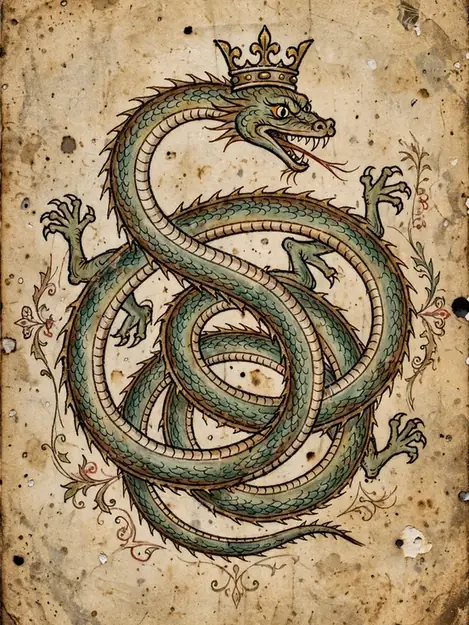
The “king” title wasn’t poetic license: ancient writers described the creature as bearing a white, crown-like marking on its head — a natural diadem proclaiming its royalty among snakes. From that small detail grew two thousand years of legend.
Today “basilisk” lives a double life: the mythical monster of legend and fantasy, and the name of a real lizard that runs on water. This article covers both — plus the cannons, the symbolism, and the boy wizard.

The Basilisk in Mythology
The basilisk’s biography was assembled over centuries, each era adding horrors:
- Pliny the Elder (1st century AD): in his Natural History, Pliny described the basilisk as a small snake — not a giant — native to North Africa, with deadly venom and a venomous gaze. The white crown-spot marked it as serpent royalty. Even its hiss supposedly scattered other snakes.
- The birth: medieval writers (following Bede) claimed the basilisk hatched from a cock’s egg — an egg laid by an old rooster — incubated by a toad. The unnaturalness of the birth (male bird laying, amphibian hatching) marked the creature as profoundly wrong.
- The gaze: the basilisk’s signature power — death by looking. Some versions killed by direct eye contact; others by the breath, the touch, or even poison traveling up a spear that struck it. Medieval accounts grew increasingly baroque.
- Weaknesses: two natural enemies — the weasel, whose odor could kill it (Pliny claimed weasels were thrown into basilisk dens), and the rooster, whose crowing was fatal to the monster. Mirrors were also said to work: the basilisk killed by its own reflected gaze.
- Medieval bestiaries: illustrated manuscripts merged the basilisk with the cockatrice and depicted it as everything from a crowned snake to a rooster-serpent chimera, sometimes breathing fire.
The through-line across all versions: the basilisk is kingship corrupted — royal in name and bearing, but its rule is pure death.
Basilisk vs Cockatrice
These two are constantly confused — and medieval writers often merged them. Here’s the distinction:
| Basilisk | Cockatrice | |
|---|---|---|
| Name means | “Little king” (Greek) | “Tracker” (Latin calcare, to tread) |
| Form | Serpent (originally small) | Rooster-serpent chimera (two legs, rooster head, serpent tail) |
| Signature power | Deadly gaze | Deadly gaze or breath (same idea) |
| Birth | Cock’s egg hatched by a toad | Same legend — hence the confusion |
| Weakness | Rooster’s crow | Rooster’s crow (same) |
The honest answer: in most medieval sources they’re the same creature under two names. The distinction is a modern scholarly tidiness imposed on messy legend. If someone says “cockatrice,” picture the rooster-snake hybrid; “basilisk,” the serpent — but don’t be surprised when sources swap them.
The Basilisk in Harry Potter
For most modern readers, “basilisk” means one thing: the monster in the Chamber of Secrets.
- The beast: a gigantic serpent, fifty feet long, dwelling in the Chamber beneath Hogwarts for a thousand years.
- Its power: direct eye contact kills; indirect glimpses (through a mirror, a ghost, a camera lens) merely petrify. Its venomous fangs are independently lethal — one of the few substances that can destroy a Horcrux.
- Its birth: Rowling follows the medieval recipe — hatched from a chicken’s egg beneath a toad.
- Its enemies: spiders flee from it (Aragog’s colony abandons Hogwarts); only the crowing of a rooster is fatal — which is why all the school’s roosters are killed.
- Its death: Harry slays it with the Sword of Gryffindor, taking a fang in the arm — and is saved by Fawkes’s phoenix tears.
- The lore detail: Fantastic Beasts notes that breeding basilisks has been illegal since medieval times — though the ban proved “impractical to enforce.”
Rowling’s basilisk is remarkably faithful to the medieval sources — the egg, the toad, the rooster, the spiders, the gaze. She didn’t invent the monster; she gave the old legend its definitive modern form.
The Basilisk in Other Stories & Games
- Dungeons & Dragons: the basilisk is a classic monster — its gaze turns victims to stone (a slight upgrade from death, and more useful for adventurers who might get cured).
- The Witcher: basilisks appear as draconic monsters — blending the serpent legend with dragon lore.
- Video games: from Final Fantasy to Terraria, basilisks recur as petrifying enemies — the gaze mechanic translates perfectly to gameplay.
- Medieval literature: Chaucer, Spenser, and Shakespeare all invoke the basilisk — Shakespeare’s characters threaten each other with “basilisk eyes” across several plays.
- Heraldry: the basilisk (as cockatrice) appears in coats of arms — a monster on a shield signaling deadly power.
Real-World Basilisks
The name escaped mythology into surprisingly practical uses:
- Basilisk lizards (Basiliscus): Central American lizards nicknamed the “Jesus Christ lizard” for their ability to run across water — sprinting upright on their hind legs, slapping the surface faster than they sink. The crested head reminded naturalists of the mythical king’s crown, hence the name.
- The basilisk cannon: in the 16th–17th centuries, a basilisk was a large brass cannon — artillery pieces were routinely named after monsters (culverins, sakers, falcons), and the basilisk’s deadly reputation made it a natural name for heavy ordnance.
- “Basilisk stare”: the idiom survives — a withering, hostile glare is still called a basilisk stare, two thousand years after Pliny.

The Symbolism of the Deadly Gaze
Why does the killing look recur across cultures — the basilisk, Medusa, the “evil eye”? The symbol runs deep:
- Vision as power: to see is to perceive, judge, and dominate. The deadly gaze literalizes the feeling of being destroyed by someone’s look — the withering stare of a parent, a boss, a rival.
- The evil eye: the Mediterranean malocchio tradition — envy made visible, harm transmitted through looking — is the basilisk’s folk cousin, still warded against with amulets today.
- Shame and exposure: being seen truly can feel lethal — the basilisk externalizes the terror of exposure, of being known completely.
- Kingship’s dark side: the “little king” whose look is death is a political metaphor too — absolute power as a gaze that destroys what it falls on.
Frequently Asked Questions
What does “basilisk” mean?
From Greek basiliskos — “little king” — the mythical king of serpents.
What is a basilisk?
A mythical reptile said to kill with its gaze alone — one of European legend’s most famous monsters.
How is a basilisk born?
According to legend, from a cock’s egg (laid by a rooster) hatched beneath a toad.
What can kill a basilisk?
The crow of a rooster is fatal to it. Its own reflected gaze (in a mirror) can also kill it. In Harry Potter, the Sword of Gryffindor.
What’s the difference between a basilisk and a cockatrice?
The basilisk is properly a serpent; the cockatrice is a rooster-serpent hybrid — but medieval sources constantly merged them, so the distinction is blurry.
Is the basilisk in Harry Potter accurate to mythology?
Remarkably yes — the egg, the toad, the rooster weakness, the spiders fleeing, the deadly gaze all come from medieval sources.
Are basilisks real?
The monster is mythical — but basilisk lizards (Basiliscus) are real Central American reptiles famous for running on water.
What does “basilisk stare” mean?
A withering, hostile glare — the idiom survives from the legend of the killing gaze.
How do you use “basilisk” in a sentence?
“She fixed him with a basilisk stare that ended the argument.” / “The basilisk waited in the Chamber of Secrets.”
Why is it called the “king of serpents”?
Ancient writers described a white, crown-like marking on its head — a natural diadem proclaiming its royalty. The Greek name basiliskos literally means “little king.”
Did medieval people believe basilisks were real?
Many did. The basilisk appeared in natural histories (like Pliny’s) alongside real animals — the line between zoology and legend was blurry for centuries. It was treated as a rare but real creature, not a fairy tale.
What is a baby basilisk called?
There’s no special term — but legend says a basilisk hatches fully formed from its cock’s egg, already deadly. No childhood; just immediate menace.
Related mythology on SpellProf: YHWH meaning, ankh meaning.
Source: For the mythological background, see Wikipedia’s article on the basilisk.