Encanto Meaning: What Does Encanto Mean?
Quick answer: Encanto (pronounced en-KAHN-toh, /enˈkanto/) is a Spanish noun meaning “charm,” “enchantment,” or “spell.” It describes both personal charm (“eres un encanto” — “you’re such a sweetheart”) and magic (a spell cast on someone). Disney’s 2021 film Encanto plays on both meanings: the Madrigal family lives in a charming Colombian town under a magical enchantment. Puerto Rico’s nickname is Isla del Encanto — the “Island of Enchantment.”
In this article
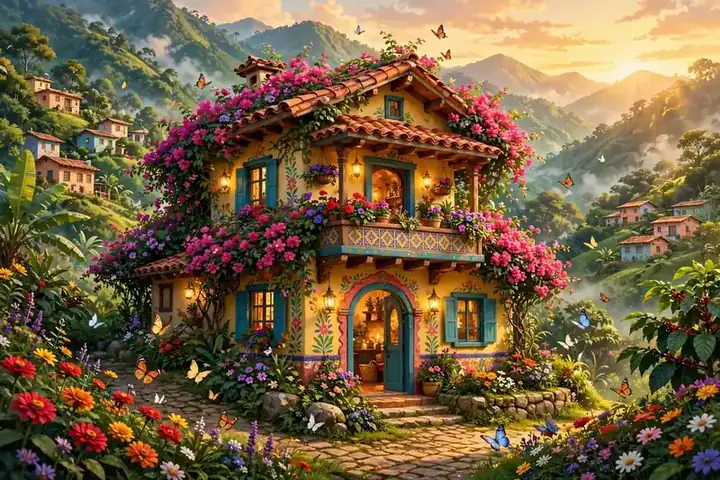
What Does Encanto Mean?
Encanto is a Spanish noun with a double life:
- Charm / delight: the pleasing quality of a person, place, or thing — “el encanto de la ciudad” (the charm of the city).
- Spell / enchantment: magic cast upon someone — “romper el encanto” (to break the spell).
Pronunciation: en-KAHN-toh (/enˈkanto/) — stress on the middle syllable; the “c” is hard like “k”; the final “o” is short and crisp, not “oh.”
The word family:
- Encantar (verb) — “to enchant, to delight”; famously “me encanta” = “I love it” (literally “it enchants me”).
- Encantado/a — “delighted”; what you say when introduced: “¡Encantada!” = “Delighted to meet you!”
- Encantador/a — “charming” (adjective); “un hombre encantador” = a charming man.
The beautiful logic: Spanish treats love and magic as the same force — to be delighted by something (me encanta) is to be spellbound by it. The language never separated charm from enchantment; they’re one word.
Latin roots: from incantare — “to chant upon, bewitch” (in- “upon” + cantare “to sing/chant”). English “enchant,” “enchantment,” “chant,” and “incantation” are all cognates — the same magic, different languages. When you say “enchanted,” you’re speaking Latin through French; when you say encanto, you’re speaking it through Spanish.
Encanto in Everyday Spanish
Complimenting people:
- “¡Eres un encanto!” — “You’re such a sweetheart/delight!” (high praise, warm and genuine).
- “Ella tiene mucho encanto.” — “She has a lot of charm.”
- “¡Qué encanto de niño!” — “What a delightful child!”
Describing places:
- “Este pueblo es un encanto.” — “This town is a gem/charming.”
- “La casa tiene su encanto.” — “The house has its charm.”
The magic sense:
- “Bajo el encanto” — “under the spell.”
- “Romper el encanto” — “to break the spell” (also: to ruin the mood).
Social fluency: encanto words are everyday currency in Spanish — “me encanta” is among the first phrases learners master, and “encantado” opens every introduction. The word family is warmth made grammatical.
The “encanto” test for travelers: if you learn one word family before visiting the Spanish-speaking world, make it this one. “¡Encantado!” at introductions, “me encanta” at dinner, “¡eres un encanto!” to your hosts — three phrases that open every door. Few words buy so much goodwill so cheaply.
Why Disney Named the Movie Encanto
The double meaning: Disney’s Encanto (2021, Walt Disney Animation’s 60th film) uses both senses at once. The Madrigal family lives in a charming Colombian mountain town — and under a magical enchantment that grants each member a gift. The title is a pun the whole movie earns.
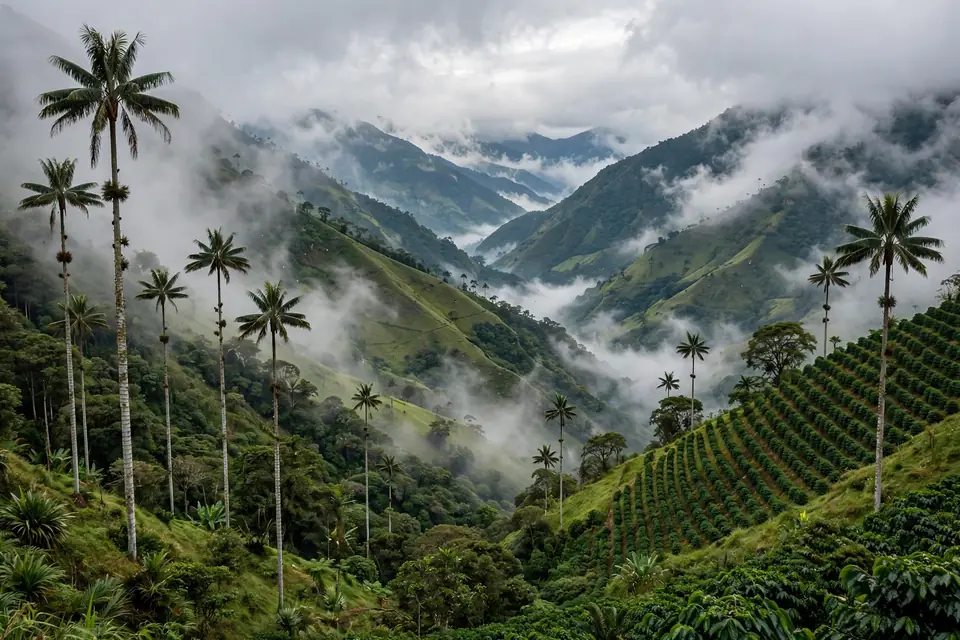
The setting: directors Byron Howard and Jared Bush researched Colombia extensively — and encountered encantos: in Colombian folklore, places of natural wonder with heightened spirituality, where emotion-related magic happens. The film’s hidden mountain valley is an encanto.
Thematically: the film argues the family’s true encanto isn’t the magic — it’s each other. Mirabel, the granddaughter with no gift, embodies the movie’s thesis: you don’t need supernatural charm when you have human charm. The title’s double meaning is the moral.
Cultural milestone: only the second Disney animated film with a non-English title (after 1942’s Saludos Amigos). Keeping the Spanish word kept the culture untranslated — the title itself refuses to assimilate. Songs by Lin-Manuel Miranda (“We Don’t Talk About Bruno,” “Dos Oruguitas”) became global phenomena.
The Madrigal gifts: each family member’s don (gift) reflects their role and wound — Luisa’s strength (the burden of carrying everything), Isabela’s flowers (the pressure of perfection), Pepa’s weather (emotions she can’t control), Bruno’s visions (the truth nobody wants). The magic is psychology made visible — which is why the film resonates with therapists as much as children. The encanto doesn’t grant random powers; it grants revealing ones.
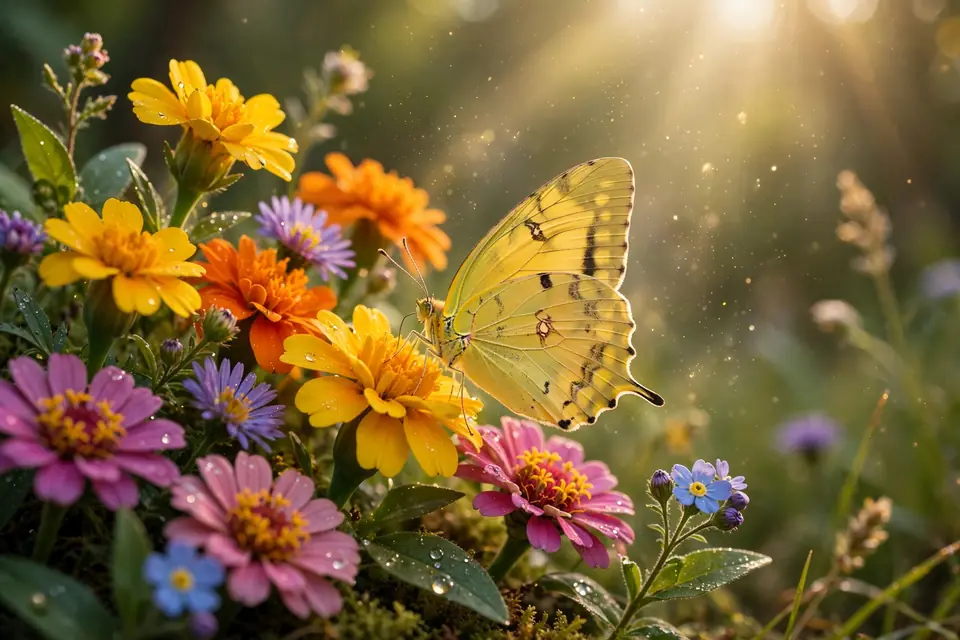
The butterfly motif: yellow butterflies recur throughout the film — on Mirabel’s dress, in the animation, in the symbolism. In Colombian writer García Márquez’s magical realism, yellow butterflies signal love and transformation — a literary nod woven into Disney’s visuals. For more on butterfly symbolism, see our guide to butterfly meaning.
The Music of Encanto
Lin-Manuel Miranda’s score: the Hamilton creator wrote eight original songs, each a character study — “Surface Pressure” (Luisa’s anxiety anthem), “We Don’t Talk About Bruno” (the Billboard #1 ensemble mystery), “Dos Oruguitas” (the Oscar-nominated Spanish ballad of the grandparents’ love).
“We Don’t Talk About Bruno”: the first Disney song to top the Billboard Hot 100 since “A Whole New World” (1993) — and the first with an all-Latino credited lineup. Its gossip-structure (each family member adds a verse) mirrors how families actually talk: overlapping, contradicting, harmonizing.
“Dos Oruguitas”: “two little caterpillars” — the film’s emotional core, sung entirely in Spanish, nominated for the Academy Award for Best Original Song. It’s about the grandparents’ journey and sacrifice — the origin of the encanto itself. The caterpillars-to-butterflies metaphor is the movie.
Why the music mattered: the soundtrack made encanto audible — millions who’d never spoken Spanish now sing “encanto” without knowing they know it. Music is language’s smuggler: it carries words across borders inside melodies.
The awards story: Encanto won the Academy Award for Best Animated Feature (2022), the Golden Globe, and the BAFTA — a clean sweep that confirmed the film as a cultural landmark, not just a hit. “Dos Oruguitas” earned its Oscar nomination sung entirely in Spanish — a quiet revolution in what Academy voters embrace.
Encanto in Culture and Folklore
Isla del Encanto: Puerto Rico’s beloved nickname — the “Island of Enchantment.” It captures how Puerto Ricans see their homeland: not just beautiful, but magical. The nickname is official enough for tourism campaigns and intimate enough for love songs.
Magical realism: Latin American literature’s signature genre — where the marvelous is mundane — runs on encanto. García Márquez’s Macondo, Allende’s spirits, Esquivel’s kitchens: all encantos, places where enchantment is the natural state. The word is the genre’s native tongue.
Folklore: across the Spanish-speaking world, encantos are enchanted places — springs, caves, forests where spirits dwell and the rules of reality soften. They’re the geography of wonder: every region has its own.
Why “charm” and “spell” share a word: English split the concept — “charm” for the pleasant, “spell” for the magical. Spanish kept them united, and the unity is philosophically richer: it says attraction is a kind of magic, and magic is a kind of attraction. To charm someone is to cast a spell on them. The language refuses the distinction — and honestly, lived experience agrees.
The global journey: before Disney, encanto was Spanish-speakers’ treasure. After 2021, it’s the world’s — children everywhere sing about Bruno in a word they now half-understand. That’s how language travels: on a melody.
Encanto vs. similar Spanish words: learners often confuse the family — encanto (noun: charm/spell), encantar (verb: to delight/bewitch), encantado (adjective: delighted — also “haunted,” as in casa encantada, “haunted house”), encantador (adjective: charming). The noun names the thing; the verb names the action; the adjectives name the state. Master all four and you own the concept.
Frequently Asked Questions
What does encanto mean in English?
“Charm,” “enchantment,” or “spell” — both the delightful and the magical senses.
How do you pronounce encanto?
en-KAHN-toh (/enˈkanto/) — stress on the middle syllable.
What does “eres un encanto” mean?
“You’re such a sweetheart/delight” — a warm compliment.
What does “me encanta” mean?
“I love it” — literally “it enchants/delights me.”
What does “encantado” mean?
“Delighted” — said when introduced: “delighted to meet you.”
Why is the Disney movie called Encanto?
The title uses both meanings: the charming town and the magical enchantment on the family.
What does “Isla del Encanto” mean?
“Island of Enchantment” — Puerto Rico’s beloved nickname.
Is encanto a noun or verb?
Noun — the verb is encantar (“to enchant”).
What does “romper el encanto” mean?
“To break the spell” — or to ruin the mood.
What are “encantos” in Colombian folklore?
Enchanted places — spots of natural wonder where magic happens; the film’s valley is one.
When did Disney’s Encanto come out?
2021 — Walt Disney Animation Studios’ 60th film.
What do the butterflies mean in Encanto?
Transformation and love — a nod to García Márquez’s magical realism.
Is “encanto” related to “enchant”?
Yes — both from Latin incantare (“to chant upon, bewitch”).
What does “qué encanto” mean?
“How delightful/charming” — an exclamation of pleasure.
Can encanto mean “spell” in a bad way?
Yes — encanto covers bewitchment too, not just pleasant magic.
Who wrote the Encanto songs?
Lin-Manuel Miranda — including “We Don’t Talk About Bruno.”
Where is Encanto set?
Colombia — in a hidden mountain valley inspired by the coffee region.
What does “encantador” mean?
“Charming” (adjective) — “un hombre encantador” = a charming man.
What is the verb form of encanto?
Encantar — “to enchant, to delight” (“me encanta” = I love it).
Does “encantado” also mean “haunted”?
Yes — casa encantada = “haunted house”; context decides between “delighted” and “haunted.”
What language is “encanto” from?
Spanish — from Latin incantare (“to chant upon, bewitch”).
Is Encanto based on a true story?
No — but its Colombian setting, folklore, and music are deeply researched and authentic.
Source: For the word’s meanings and history, see Dictionary.com on the magical meaning of encanto.