Memento Mori Meaning: What Does It Mean & Why It Matters
Quick Answer
Memento mori is Latin for “remember that you must die.” It is an ancient philosophical and artistic tradition — a reminder of mortality meant not to frighten, but to sharpen your appreciation of life and keep vanity, fear, and trivial worries in perspective.
- Literal meaning: “Remember [that you have] to die”
- Pronunciation: mə-MEN-toh MOR-ee
- Origin: Ancient Rome; Stoic philosophy; Christian tradition
- Symbols: Skull, hourglass, wilting flowers, extinguished candle
What Does Memento Mori Mean?
Memento mori (Latin for “remember [that you have] to die”) is one of humanity’s oldest pieces of wisdom literature compressed into two words. It is both a phrase and a tradition: the practice of keeping your own mortality in mind — not morbidly, but as a lens that brings life into focus.
The core idea is disarmingly simple: you will die, and remembering that fact changes how you live. Petty anxieties shrink. What truly matters — love, purpose, integrity — grows larger. As the ancient wisdom puts it: whatever you do, remember that someday you must die, and you will live more deliberately.

Pronunciation and Grammar
Pronunciation: mə-MEN-toh MOR-ee. Stress the second syllable of each word; the final “i” sounds like “ee.”
Grammar: Memento is the second-person singular future imperative of meminī (“to remember”) — literally a command: “remember!” Morī is the infinitive of the verb morior (“to die”). So the phrase is not a gentle suggestion — it’s an order addressed to you: you — remember — that you will die.
Common loose renderings include “remember death,” “remember that you die,” and “remember your mortality” — all capture the spirit, though the literal “remember that you must die” is sharpest.
History: From Roman Triumphs to Monasteries
The tradition is over 2,000 years old:
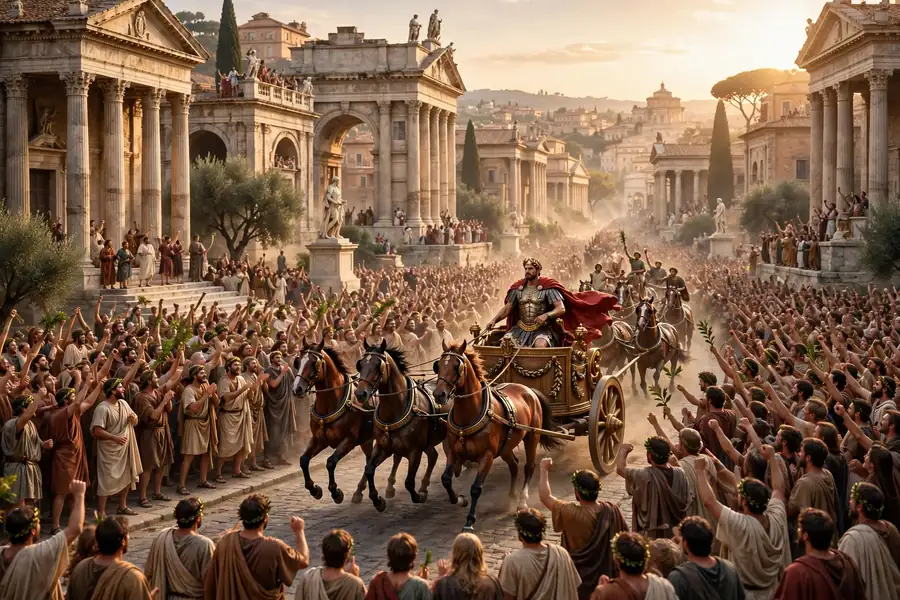
- Ancient Rome: During a triumph — the grand parade honoring a victorious general — tradition held that a slave stood behind the general in his chariot, whispering “memento mori” (or, in some accounts, “respice post te, hominem te esse memento” — “look behind you, remember you are a man”). At the peak of glory, the reminder: you are mortal.
- Classical philosophy: Plato’s Phaedo presents philosophy itself as “practice for dying” — learning to separate what matters from what doesn’t. The Stoics made mortality-meditation a daily discipline.
- Early Christianity: The desert fathers and later monastic orders embraced the practice. St. Benedict’s Rule instructs monks to “keep death daily before your eyes” — not from despair, but as preparation of the soul.
- Medieval Europe: The Danse Macabre (Dance of Death) — skeletons leading popes, kings, and peasants alike in a dance — reminded everyone that death is the great equalizer. Memento mori inscriptions appeared on gravestones, church walls, and jewelry.
- Renaissance: The golden age of memento mori art — wealthy collectors commissioned paintings dense with skulls, snuffed candles, and rotting fruit.
Memento Mori in Stoic Philosophy
No tradition developed memento mori more practically than Stoicism. For Seneca, Epictetus, and Marcus Aurelius, contemplating death was a daily exercise, not a gloomy obsession:
- Marcus Aurelius wrote in his Meditations: “You could leave life right now. Let that determine what you do and say and think.” Every decision, filtered through mortality.
- Seneca urged: “Let us prepare our minds as if we’d come to the very end of life. Let us postpone nothing.”
- Epictetus advised beginning each day by reminding yourself you may not see its end — so that you meet the day gratefully rather than anxiously.
The Stoic logic: fear of death poisons life; acceptance of death liberates it. The person who has truly internalized “I will die” stops wasting hours on outrage, status games, and worry — and starts spending them on what they’d choose if time were short. Because it is.
Memento Mori in Art: Skulls and Hourglasses
In visual art, memento mori became a symbolic language. Artists wove reminders of death into portraits, still lifes, and church decoration. Learn the vocabulary:
- Skull: The universal emblem — you will become this. Often shown resting on a book or crown, mocking worldly achievement.
- Hourglass: Time running out, grain by grain.
- Wilting flowers / rotting fruit: Beauty decays; pleasure is brief.
- Extinguished or guttering candle: A life snuffed out.
- Bubbles: Life’s fragility — beautiful, brief, easily burst.
- Vanitas paintings: An entire Dutch Golden Age genre — lavish still lifes of wealth (jewels, instruments, wine) undermined by a skull in the corner whispering: none of this lasts.
Far from being depressing, these works were meditation aids — the 17th-century equivalent of a phone wallpaper reminding you what matters.
Memento Mori vs Carpe Diem
These two Latin phrases are often paired — and often confused:
| Phrase | Literal meaning | The message |
|---|---|---|
| Memento mori | Remember you must die | Mortality gives life weight — live deliberately |
| Carpe diem | Seize the day | Don’t waste the present moment |
| Amor fati | Love of fate | Embrace whatever happens |
| Tempus fugit | Time flies | Time passes quickly — notice it |
They’re companions, not opposites: memento mori supplies the why (life is finite), carpe diem supplies the what (so use today well). Together they form a complete philosophy in four words.

Memento Mori Today: Tattoos, Tech & Mindfulness
The tradition is having a modern revival:
- Tattoos: “Memento mori” is among the most popular philosophical tattoos — usually paired with a skull, hourglass, or stoic imagery. Wearers describe it as a permanent perspective-check.
- Modern Stoicism: The 21st-century Stoic revival (books, podcasts, communities) put daily mortality-reflection back on the map as a mental-health practice — a structured way to fight anxiety and distraction.
- Tech culture: Founders and creators use memento mori as an anti-hustle corrective: a reminder that optimizing every minute misses the point if you’ve forgotten why the minutes matter.
- Mindfulness: Secular meditation traditions independently rediscovered the same insight — death-awareness reduces rumination and increases gratitude, a finding echoed in modern psychology research on mortality salience.
- Design objects: From “memento mori” coins and bracelets to phone wallpapers, the market for mortality-reminders suggests the ancient need hasn’t gone anywhere.
How to Practice Memento Mori
The tradition was always practical, not theoretical. Ways to practice:
- Morning reflection (2 minutes): Before the day starts, quietly acknowledge: “I may not see tomorrow. What deserves today?”
- The “last time” lens: Periodically ask of ordinary moments — this coffee with a friend, this walk home — “what if this were the last time?” Watch appreciation flood in.
- Premeditatio malorum: The Stoic exercise of visualizing loss in advance — not to worry, but to pre-appreciate what you have while you have it.
- Keep a token: A coin, a wallpaper, a small skull on the desk — a physical cue that interrupts autopilot.
- Evening review: “If today were my last, what would I change about tomorrow?” Then change one small thing.
- Write your eulogy virtues: List what you’d want said about you — then check whether today’s actions point that way.
A note of care: memento mori is meant to reduce anxiety by putting fears in perspective. If contemplating mortality increases your distress rather than focusing you, set the practice aside — it’s a tool, not an obligation, and support from trusted people or professionals matters more than any philosophy.
Common Misunderstandings
- “It’s morbid / depressing.” The tradition’s own practitioners insist the opposite: remembering death is what makes joy possible — you can’t savor what you take for granted.
- “It’s only religious.” It spans Stoic, Christian, Buddhist, and secular forms. The insight — finitude focuses the mind — needs no theology.
- “It means ‘live recklessly’ (YOLO).” No — that’s carpe diem misread. Memento mori counsels deliberateness, not recklessness: choose carefully because time is short.
- “It’s about fearing death.” It’s about befriending the fact of death so fear stops running your life.
Quick Facts
| Fact | Detail |
|---|---|
| Means | “Remember you must die” (Latin) |
| Says | mə-MEN-toh MOR-ee |
| Roots | Rome, Stoicism, monasticism |
| Symbols | Skull, hourglass, wilting flowers |
| Companion | Carpe diem — seize the day |
Frequently Asked Questions
What does memento mori mean literally?
Latin for “remember [that you have] to die” — memento (“remember!”, a command) + mori (“to die”).
How do you pronounce memento mori?
mə-MEN-toh MOR-ee.
What is the origin of memento mori?
Ancient Rome (the triumph slave’s whisper), developed by Stoic philosophers, embraced by Christian monasticism, and expressed through centuries of funerary and vanitas art.
Is memento mori religious?
It has deep roots in both Stoic philosophy and Christianity, but the core practice — reflecting on mortality — is used across secular mindfulness traditions too.
What is the difference between memento mori and carpe diem?
Memento mori (“remember you must die”) gives the reason; carpe diem (“seize the day”) gives the response. They’re companions.
Why do people get memento mori tattoos?
As a permanent reminder to live deliberately — a perspective-check worn on the skin.
Is memento mori depressing?
Its practitioners say the opposite: facing mortality increases gratitude and reduces anxiety about trivial things.
What are memento mori symbols?
Skull, hourglass, wilting flowers, extinguished candle, bubbles — each symbolizing life’s brevity.
Who said “memento mori” in ancient Rome?
Tradition holds a slave whispered it to the victorious general during his triumph parade — glory’s peak, mortality’s reminder.
Is there a Buddhist version of memento mori?
Maranasati — “mindfulness of death” — is a classical Buddhist meditation practice with the same insight: mortality sharpens appreciation of life.
Source: Historical and philosophical overview compiled from established references. For the encyclopedic article, see Wikipedia’s article on memento mori.