
PCT Meaning
Quick answer: PCT most commonly means Patient Care Technician — an entry-level healthcare professional working under nurses’ supervision in hospitals and clinics; duties include vital signs, daily-living assistance, EKG and phlebotomy; broader scope than a CNA; other meanings include Pacific Crest Trail and Patent Cooperation Treaty.
In this article

What Does PCT Mean?
PCT stands for Patient Care Technician, a trained healthcare worker who provides direct, hands-on support to patients and the clinical team. PCTs work under the supervision of registered nurses and physicians, and they are often the caregivers who spend the most face-to-face time with patients during a hospital stay.
The role sits at the entry level of professional healthcare. PCTs are also called patient care aides, nursing assistants, or patient care associates — the title varies by employer and state, but the core job is the same: keep patients safe and comfortable while relaying key observations to the nursing team. They are trained in more clinical skills than a basic nursing assistant, making the credential a popular first step toward becoming an LPN or RN.
In job postings and hospital directories, the abbreviation “PCT” appears far more often than the full title — and in hiring contexts it almost always means this technician role.
What Does a Patient Care Technician Do?
A PCT’s day is a mix of clinical tasks, physical assistance, and patient communication. Core duties vary slightly by state and employer, but they are consistent in most facilities.
Monitoring vital signs
Taking and recording temperature, pulse, blood pressure, breathing rate, and oxygen saturation is one of the most frequent PCT tasks — vital signs are the earliest warning system in a hospital, so anything abnormal must be flagged to the nurse immediately.
Helping with daily living activities
PCTs assist with bathing, dressing, grooming, toileting, and eating — the “activities of daily living” (ADLs) a sick or recovering person cannot safely manage alone. This is physically demanding work, and it is also where a PCT’s compassion matters most: helping someone with dignity through a vulnerable moment.
Collecting specimens and samples
PCTs collect urine, stool, and other specimens for lab testing, following strict labeling procedures so results are never mixed up — treatment decisions are built on lab results.
Performing EKGs
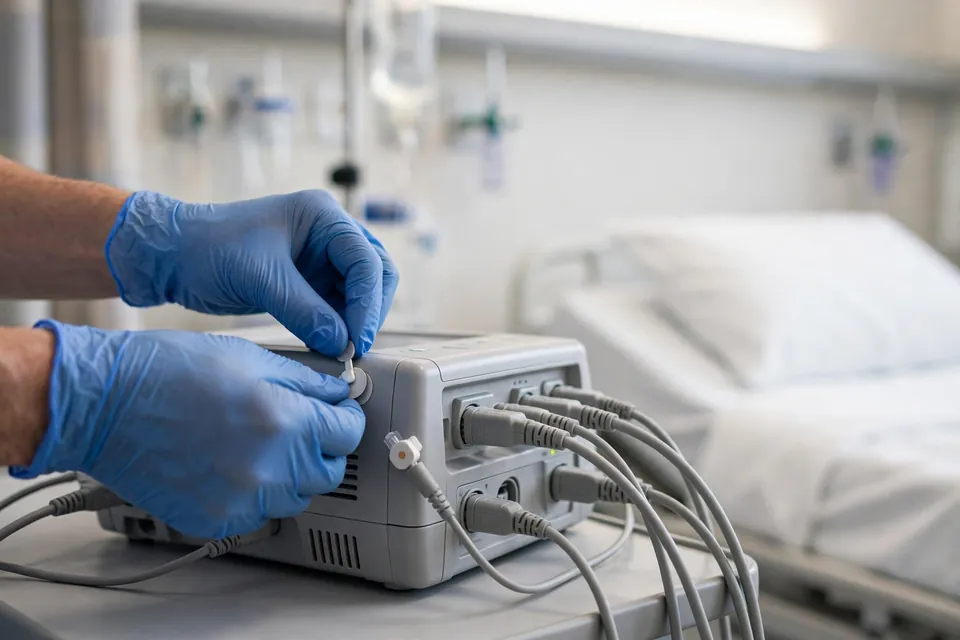
PCTs place electrodes and run electrocardiograms (EKG or ECG) that record the heart’s electrical activity; the physician reads the tracing, but correct lead placement by the PCT is what makes it reliable.
Drawing blood (phlebotomy)
In many states and hospitals, PCTs are trained in phlebotomy — drawing blood for lab tests. This is one of the skills that separates the PCT role from a basic nursing assistant.
Safety, observation, and documentation
PCTs reposition bedridden patients to prevent pressure injuries, help patients walk, keep rooms clean and stocked, watch for changes in a patient’s condition, document care in the patient’s chart, and transport patients to tests, surgeries, and discharge.
PCT vs CNA: What’s the Difference?
The two roles share most of a typical shift — both take vitals, help with bathing and eating, move and reposition patients, and report changes to the nurse. The difference is scope: a PCT is essentially a CNA with additional clinical training, usually in phlebotomy and EKG, which generally brings slightly higher pay and more hospital-based openings.
| PCT (Patient Care Technician) | CNA (Certified Nursing Assistant) | |
|---|---|---|
| Scope | Basic care plus phlebotomy, EKG, glucose checks, specimen collection | Basic care: ADLs, vitals, mobility, observation |
| Training length | Typically 8 weeks to about a year, longer than CNA programs | Often 4 to 12 weeks, federally mandated minimum hours |
| Certification | Certified Patient Care Technician (CPCT) via NHA, or NCPCT via AMT | State CNA certification, listed on the state nurse aide registry |
| Typical pay | Usually slightly higher, reflecting the extra skills | Solid entry-level healthcare wages |
| Common settings | Hospitals, dialysis clinics, outpatient facilities | Nursing homes, long-term care, assisted living, hospitals |
Which should you choose? If you want the fastest entry into healthcare, a CNA program gets you working sooner. If you want hospital work, a broader clinical toolkit, and a stronger launchpad toward nursing school, the PCT path is usually the better investment — many people start as a CNA and add PCT training later, since the two credentials stack well.
Where PCTs Work
Most PCTs work in hospitals, where they float between medical-surgical units, emergency departments, intensive care units, and specialty floors. Dialysis clinics are another major employer, with PCTs setting up machines and monitoring patients through treatment sessions.
Other common settings include nursing homes and long-term care facilities, rehabilitation centers, outpatient clinics — from family medicine to OB/GYN practices where patients may ask about terms like IUD — urgent care centers, hospice and home health agencies, and correctional facilities. Shifts are typically 8 or 12 hours and can include nights, weekends, and holidays, since patient care never stops.
How to Become a PCT
Becoming a PCT is one of the quickest realistic routes into clinical healthcare. The path usually looks like this:
- Earn a high school diploma or GED. This is the standard entry requirement for almost every PCT program.
- Complete a state-approved PCT program. Programs run roughly eight weeks to a year (20 to 27 weeks is common), covering anatomy, medical terminology, infection control, phlebotomy, EKG, and basic lab procedures, plus supervised clinical hours.
- Get certified. After finishing, most graduates sit for a certification exam — the Certified Patient Care Technician (CPCT) via the National Healthcareer Association (NHA) or the NCPCT via American Medical Technologists (AMT). Some employers hire first and require certification within a set window.
- Add BLS/CPR certification. Basic Life Support and CPR are expected by most hospitals and are often bundled into training programs.
- Check your state’s rules. Scope of practice varies: some states allow PCTs to handle wound care or catheter tasks that other states reserve for licensed staff, and a few require extra permits for dialysis work.
Because training is short and relatively affordable, it doubles as a tryout for healthcare: you earn a living while deciding whether to continue toward LPN, RN, or allied health programs.

Salary and Job Outlook
PCT pay varies considerably by state, setting, and experience. As an approximate range, most PCTs in the United States earn roughly the mid-teens to low-twenties USD per hour — hospital and dialysis positions in high-cost states tend to sit at the upper end, while long-term care in lower-cost states sits at the lower end. Overtime and shift differentials for nights and weekends can add meaningfully to take-home pay.
The demand outlook is encouraging. Career sources reporting on U.S. Bureau of Labor Statistics data cite around 5% projected growth between 2021 and 2031 for the allied healthcare and nursing-assistant occupation groups that PCTs fall into, driven by an aging population and rising chronic-care needs. Because PCTs are trained for both bedside care and clinical tasks like phlebotomy and EKG, they are employable across more settings than basic aides.
The role also pays forward: many hospitals offer tuition assistance, and working as a PCT while studying is one of the most practical ways to fund nursing school — you earn a wage, build clinical hours, and confirm healthcare suits you before committing to a longer degree.
Skills That Make a Good PCT
Technical training gets you hired; character keeps you good at the job. The strongest PCTs share these traits:
- Compassion with boundaries. You will care for people on their worst days. Genuine warmth matters, but so does professional distance — caregivers who absorb every patient’s distress can slide into codependency and burn out.
- Physical stamina. Twelve-hour shifts on your feet, lifting and turning patients, answering call lights — the job is athletic.
- Clear communication. PCTs are the nurses’ eyes and ears. Noticing a change and describing it precisely can change a patient’s outcome.
- Attention to detail. Specimen labels, vital-sign charts, intake and output records — small errors have large consequences.
- Calm under pressure. Codes, rapid responses, and agitated patients are part of hospital life; steady hands and a steady voice help everyone.
- Cultural sensitivity. You will meet patients from every background — including people who mix languages when describing symptoms, saying they want to recover their salud (health). Meeting patients in their own words builds trust fast.
Other Meanings of PCT
While Patient Care Technician is the most common meaning in everyday searches, the abbreviation shows up in a few other contexts worth knowing.
Pacific Crest Trail. In hiking circles, PCT means the Pacific Crest Trail, the roughly 2,650-mile national scenic trail running from the Mexican border in California through Oregon and Washington to Canada. Thru-hiking the entire trail is a bucket-list goal for long-distance backpackers.
Patent Cooperation Treaty. In intellectual property and business, PCT is the Patent Cooperation Treaty, which lets inventors file a single “PCT application” and seek patent protection in many countries at once. If PCT appears next to patent language, this is the meaning.
Percent (informal). In casual writing and texting, “pct” is simply shorthand for “percent” — the least likely meaning in professional or medical contexts.
Frequently Asked Questions
What does PCT stand for?
Most commonly, Patient Care Technician — an entry-level healthcare worker assisting nurses and doctors in hospitals, clinics, and long-term care facilities. It can also mean the Pacific Crest Trail, the Patent Cooperation Treaty, or informally “percent.”
What does a Patient Care Technician actually do?
A PCT takes vital signs, helps with bathing, dressing, eating, and mobility, collects lab specimens, performs EKGs, draws blood where trained, observes patients for changes, documents care, and transports patients within the facility.
What is the difference between a PCT and a CNA?
Both provide basic bedside care, but a PCT has extra training — usually in phlebotomy and EKG — giving a broader clinical scope. PCT programs run longer (roughly 8 weeks to a year versus 4 to 12 weeks for CNAs), and PCTs typically earn slightly more and work more often in hospitals.
How long does it take to become a PCT?
Most programs take about eight weeks to a year, with 20 to 27 weeks common. Afterward you typically sit for a certification exam such as the CPCT (NHA) or NCPCT (AMT), and most employers also require BLS/CPR certification.
Where do PCTs work?
Hospitals employ the most PCTs, followed by dialysis clinics, nursing homes and long-term care facilities, rehabilitation centers, outpatient and urgent care clinics, home health and hospice agencies, and correctional facilities.
Do PCTs draw blood?
Yes — phlebotomy is one of the signature skills separating PCTs from basic nursing assistants. Most programs and states allow it, though exact scope depends on state rules and employer policy.
Is PCT a good career?
For many, yes. Training is short and affordable, demand is growing, and the role is a practical on-ramp to nursing or allied health — many PCTs work while attending LPN or RN programs, often with employer tuition help.
What does PCT mean on a hiking trail?
The Pacific Crest Trail — the roughly 2,650-mile scenic trail from Mexico to Canada through California, Oregon, and Washington. Context makes it clear: outdoors it is the trail, in a hospital it is the technician.
How much does a PCT make?
It varies by state, setting, and experience, but a reasonable approximate range is the mid-teens to low-twenties USD per hour in the United States. Hospital and dialysis roles in high-cost states pay toward the top of that range, with overtime and night/weekend differentials on top.
Source: For background on the healthcare technician role, see Wikipedia’s article on healthcare technicians.