
Purple Ribbon Meaning: What Does a Purple Ribbon Mean?
Quick answer: A purple ribbon is an awareness ribbon used to show support for multiple causes — most commonly Alzheimer’s disease, pancreatic cancer, domestic violence, and epilepsy. It also represents lupus, Crohn’s disease, cystic fibrosis, fibromyalgia, ADD/ADHD, animal abuse prevention, and elder abuse awareness. Because one color covers many causes, campaigns pair the ribbon with words, logos, or specific awareness months so people know which cause it represents.
In this article
What Does a Purple Ribbon Mean?
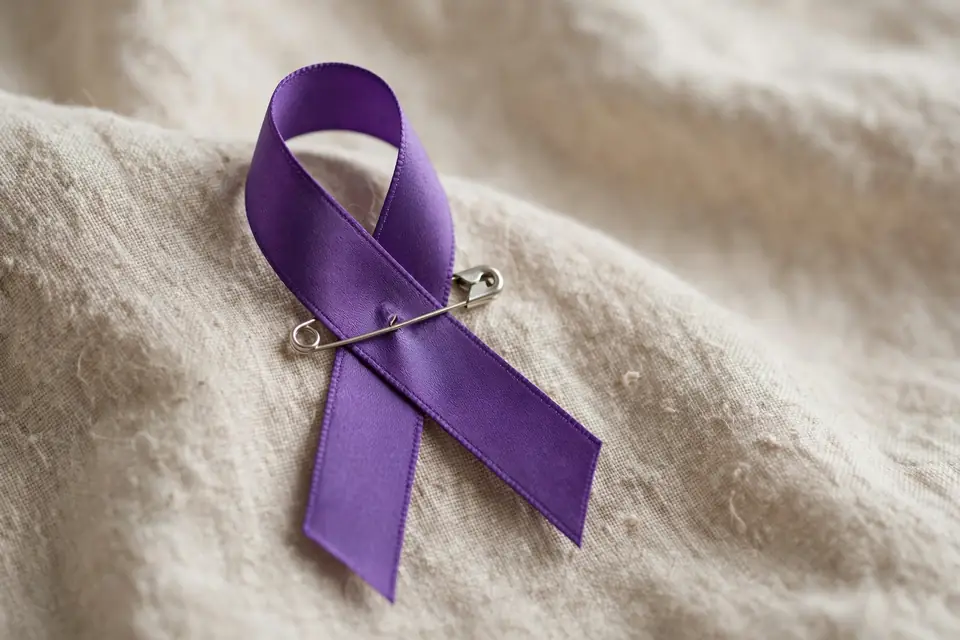
A purple ribbon is a small loop of purple fabric worn or displayed to show support, solidarity, or remembrance for a cause. Unlike the pink ribbon (almost exclusively breast cancer), purple is a shared symbol — claimed by dozens of health and social causes.
The big four — the causes most people mean by a purple ribbon:
- Alzheimer’s disease — memory loss and dementia awareness.
- Pancreatic cancer — one of the deadliest cancers, urgently needing research funding.
- Domestic violence — support for survivors and prevention.
- Epilepsy — seizure disorder awareness.
Why one color, many causes? Awareness ribbons proliferated in the 1990s — the New York Times dubbed 1992 “The Year of the Ribbon.” With only so many distinguishable colors, sharing was inevitable. Purple’s dignity and solemnity made it a natural fit for serious causes — and many causes chose it independently.
How campaigns clarify: since the color alone is ambiguous, organizations pair purple ribbons with printed text, logos, specific months (e.g., Alzheimer’s in November, pancreatic cancer in November, domestic violence in October), or shade variations.
The ribbon’s anatomy: the classic awareness ribbon is a loop crossed over itself — the crossed shape suggesting remembrance and hope intertwined. Purple fabric, a safety pin, and you’re wearing your cause. Simple enough for a child to make, meaningful enough for a president to wear.
Health Causes
Diseases and conditions represented by the purple ribbon:
- Alzheimer’s disease: the leading purple-ribbon cause — representing memory loss, dementia, and support for patients and caregivers. November is Alzheimer’s Awareness Month.
- Pancreatic cancer: purple is the signature color of pancreatic cancer awareness — a disease with low survival rates that receives disproportionately little research funding. November is Pancreatic Cancer Awareness Month.
- Epilepsy: representing seizure disorders — millions live with epilepsy worldwide. March 26 is Purple Day for epilepsy awareness.
- Lupus: the autoimmune disease where the body attacks its own tissues — May is Lupus Awareness Month.
- Crohn’s disease and ulcerative colitis: inflammatory bowel diseases — purple represents the IBD community.
- Cystic fibrosis: the genetic lung disease — purple ribbons honor patients and families.
- Fibromyalgia: chronic widespread pain — purple is its awareness color.
- ADD/ADHD: attention-deficit disorders — purple ribbons appear at ADHD awareness events (October).
- Sarcoidosis: the inflammatory disease affecting lungs and lymph nodes.
- Caregiver appreciation: honoring the unpaid caregivers — often family — who support the chronically ill.
Why so many? Purple conveys compassion without alarm — serious but hopeful. For diseases that are underfunded or misunderstood, that tone is exactly right.
The Purple Ribbon Calendar
When purple takes over:
| Month | Cause |
|---|---|
| March | Epilepsy (Purple Day, March 26) |
| May | Lupus awareness |
| October | Domestic violence awareness; ADHD awareness |
| November | Alzheimer’s awareness; pancreatic cancer awareness |
| Year-round | Crohn’s/colitis, cystic fibrosis, fibromyalgia — worn at events and fundraisers |
The November pileup: both Alzheimer’s and pancreatic cancer claim November — which is why you’ll see competing purple campaigns in the same month. Organizations differentiate with logos and slogans: the Alzheimer’s Association’s purple vs. the Pancreatic Cancer Action Network’s purple — same color, different branding.
Social Causes
Beyond medicine — purple ribbons for justice and protection:
- Domestic violence: one of the most prominent purple-ribbon causes — October is Domestic Violence Awareness Month. The ribbon honors survivors and demands prevention.
- Violence against women: closely linked — purple represents the global movement against gender-based violence.
- Elder abuse: purple ribbons mark Adult Protection Awareness — honoring vulnerable adults facing abuse, neglect, or exploitation.
- Animal abuse prevention: purple stands for domestic animals and wildlife — against cruelty and for protection.
- Religious tolerance: purple ribbons have represented interfaith harmony and tolerance.
- 9/11 remembrance: purple honored victims and survivors of the September 11 attacks, including firefighters and police officers.
- Workers’ memorial: purple ribbons remember trade union members killed, injured, or disabled by their work.
The common thread: purple’s social causes share a theme of protecting the vulnerable — whether from violence, abuse, or neglect.
A note on sensitivity: domestic violence and abuse ribbons represent real suffering. If you or someone you know is experiencing domestic violence, the National Domestic Violence Hotline (US) is available at 1-800-799-7233 — free, confidential, 24/7. Wearing the ribbon is solidarity; knowing the resources is action.
Shades of Purple: Lavender, Periwinkle, Violet
Not all purples are equal. Shade variations carry distinct meanings:
| Shade | Represents |
|---|---|
| Purple (standard) | Alzheimer’s, pancreatic cancer, domestic violence, epilepsy, lupus, and the full list above |
| Lavender (light purple) | General/all cancer awareness, epilepsy, Rett syndrome, caregiving |
| Periwinkle (blue-purple) | Eating disorders, pulmonary hypertension, esophageal and stomach cancers, acid reflux |
| Violet (deep purple) | Hodgkin’s lymphoma |
Why shades matter: with so many causes sharing one color family, the exact shade is often the only visual clue. Campaign materials usually specify the shade — when in doubt, read the text alongside the ribbon.
Buying ribbons: awareness ribbons are sold by charities, craft stores, and online shops — often as fundraisers themselves (proceeds supporting the cause). When buying, check that proceeds actually go to a legitimate organization — the ribbon market, like any charity-adjacent market, has its opportunists.
How Purple Ribbons Are Used
Wearing: pinned to lapels, shirts, hats, and bags — the classic awareness display. Wristbands and silicone bracelets in purple serve the same purpose.
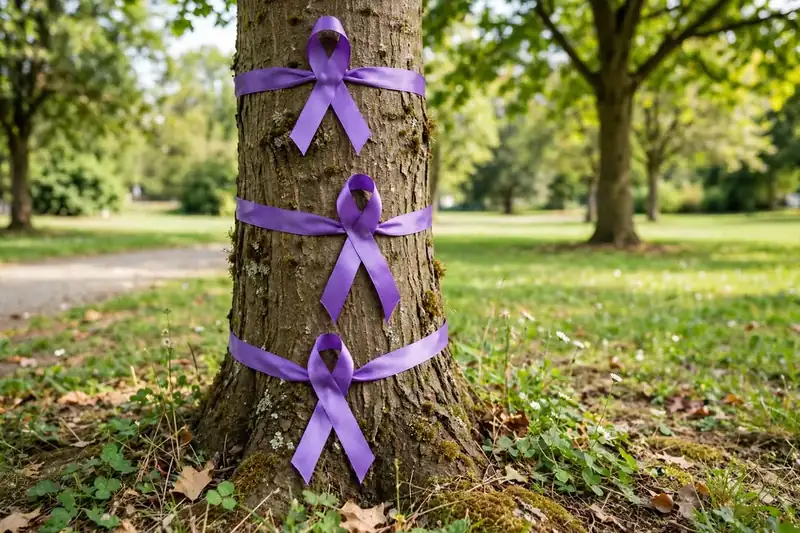
Displaying: tied around trees, hung on doors, wrapped on car antennas — public declarations of support. Landmarks sometimes light up purple for awareness months.
Fundraising: walks, runs, and galas — purple is the color code for Alzheimer’s walks, pancreatic cancer fundraisers, and domestic violence benefits. Merchandise (shirts, pins, hats) in purple funds research.
Workplace and school: awareness days — employees or students wear purple on a designated day, often with educational materials explaining the specific cause.
Online: purple profile frames, hashtags, and emojis — digital ribbons for social media campaigns.
If you’re organizing: always name the cause explicitly — “Purple Ribbon Walk for Alzheimer’s” — because the color alone won’t tell people which cause you mean. Pair the ribbon with your organization’s name and logo.
The psychology of wearing: studies on awareness symbols show they work on two levels — the wearer feels connected to a community, and observers get a conversation prompt. “What does your purple ribbon stand for?” is the whole point: the ribbon starts the conversation that spreads the awareness. A ribbon nobody asks about is just decoration.
Frequently Asked Questions
What does a purple ribbon mean?
It’s an awareness ribbon for multiple causes — most commonly Alzheimer’s, pancreatic cancer, domestic violence, and epilepsy.
What cancer does a purple ribbon represent?
Pancreatic cancer primarily; lavender represents all cancers generally.
Does a purple ribbon mean domestic violence?
Often yes — it’s one of the leading purple-ribbon causes (October awareness month).
What does a purple ribbon mean for Alzheimer’s?
Support for patients, families, and caregivers affected by Alzheimer’s and dementia.
What is Purple Day?
March 26 — the international day for epilepsy awareness, when people wear purple.
What does a lavender ribbon mean?
General cancer awareness, epilepsy, Rett syndrome, and caregiving.
What does a periwinkle ribbon mean?
Eating disorders, pulmonary hypertension, and esophageal/stomach cancers.
What does a violet ribbon mean?
Hodgkin’s lymphoma awareness.
Why do so many causes use purple?
Purple conveys compassion and dignity — and with limited colors, sharing became inevitable in the 1990s ribbon boom.
How do I know which cause a purple ribbon stands for?
Look for accompanying text, logos, or the event context — the color alone is ambiguous.
When is Pancreatic Cancer Awareness Month?
November — purple is its signature color.
When is Domestic Violence Awareness Month?
October — marked with purple ribbons and events.
When is Alzheimer’s Awareness Month?
November (US) — purple ribbons honor patients and caregivers.
Does purple represent animal abuse?
Yes — purple ribbons support animal abuse prevention for domestic animals and wildlife.
Does purple represent elder abuse?
Yes — Adult Protection Awareness uses purple ribbons.
What does a purple ribbon mean at a funeral?
Usually remembrance tied to one of the ribbon’s causes — e.g., someone lost to pancreatic cancer or Alzheimer’s.
Can I wear a purple ribbon for any cause?
Yes — but label it clearly so people know which cause you support.
Where did awareness ribbons start?
The modern movement grew from yellow ribbons for returning soldiers and red ribbons for AIDS awareness (early 1990s).
What month do people wear purple ribbons?
October (domestic violence, ADHD) and November (Alzheimer’s, pancreatic cancer) are the peak months.
Is there a purple ribbon emoji?
There’s no dedicated purple-ribbon emoji — campaigns use the purple heart (💜) as a stand-in.
What’s the difference between purple and lavender ribbons?
Lavender (lighter) leans toward general cancer awareness and caregiving; standard purple covers the specific causes above.
Who started the purple ribbon for Alzheimer’s?
The Alzheimer’s Association adopted purple as its signature color, making it one of the most recognized purple-ribbon campaigns.
Source: For a detailed breakdown of purple-ribbon causes, see Swagify’s purple ribbon guide.