Redacted Meaning: What Does Redacted Mean? Full Guide
Quick Answer
Redacted means edited to remove or hide sensitive information — typically shown as black bars covering text in a document. A redacted document has had confidential details (names, classified data, private records) deliberately obscured before being shared publicly, while the rest remains readable.
- Part of speech: Adjective (past participle of redact)
- Pronunciation: ri-DAK-tid
- Core sense: Sensitive information removed or hidden
- Root: Latin redigere (“to bring back”)
What Does Redacted Mean?
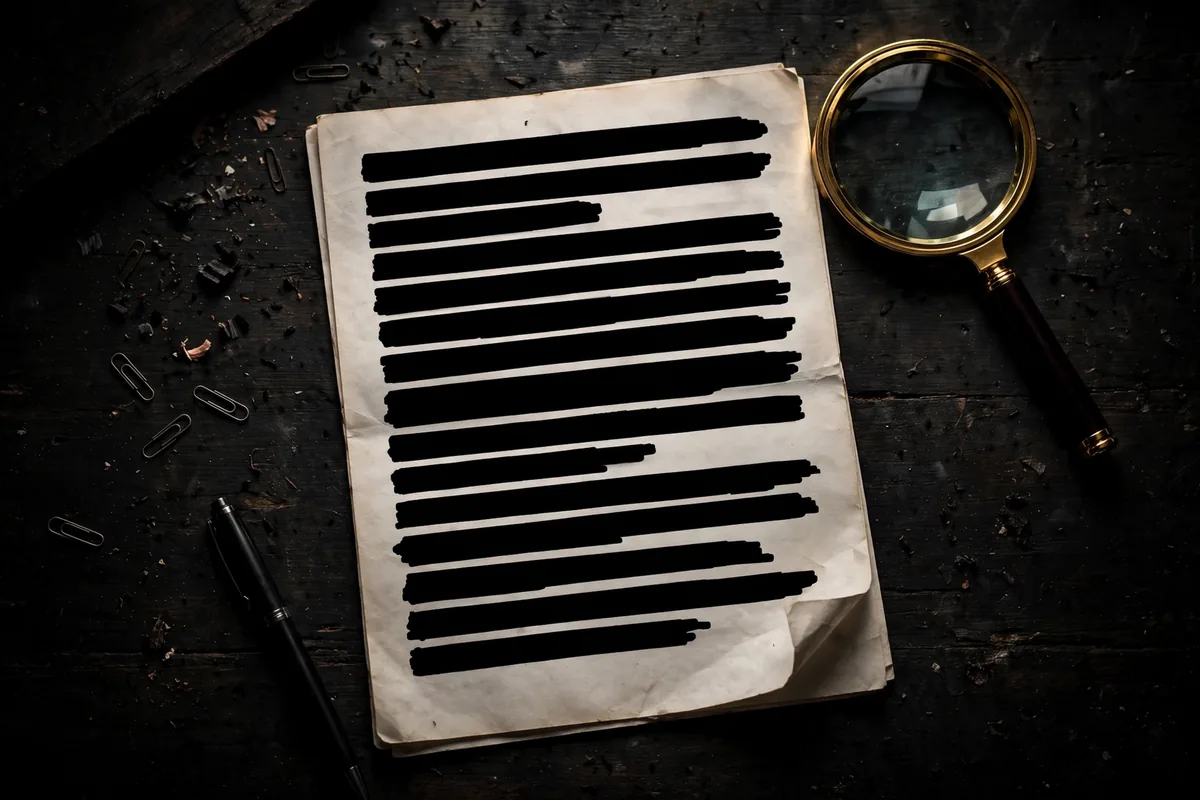
Redacted describes a document (or image, or piece of information) from which confidential or sensitive content has been removed or obscured — most recognizably as those bold black bars covering words, names, or whole paragraphs.
The key idea: redaction is selective. Unlike destroying a document or classifying the whole thing, redaction preserves what’s shareable while hiding what isn’t. A redacted report can be released to the public, submitted as court evidence, or published by journalists — with only the sensitive fragments blacked out.
Dictionary definitions capture three shades:
- (Of a document) with confidential information removed or hidden — “a redacted court filing.”
- (Of text/images/information) removed, obscured, or hidden from view.
- Edited or compiled from multiple sources (an older, literary sense — “a redacted edition”).
Pronunciation
Redacted is pronounced ri-DAK-tid — three syllables, stress on the middle one. The verb redact is ri-DAKT; the noun redaction is ri-DAK-shun.
Etymology: “To Bring Back”
The word’s history is a small irony:
- Latin redigere — “to bring back, drive back, reduce”
- → Late Latin redactio — a bringing back, a reducing
- → French rédaction — editing, compiling (as in a rédacteur, an editor)
- → English redaction (18th century) — the act of editing or compiling
- → English redact (mid-19th century) — to edit, to put into shape
- → redacted — the modern “blacked out” sense
Notice the journey: the word began meaning to bring material together (editing, compiling) and ended up meaning to take material away (hiding, removing). As one etymology puts it, modern redaction means “taking back” information — a neat reversal of its origins.
Why Documents Get Redacted
Redaction exists at the intersection of transparency and secrecy. Common reasons:
- National security: Classified intelligence, military details, and sources-and-methods are stripped before public release.
- Privacy: Names, addresses, Social Security numbers, and medical details are removed to protect individuals — legally required in court filings and health records.
- Legal privilege: Attorney-client communications and work product are shielded in litigation.
- Protecting the vulnerable: Juvenile court records, domestic-violence victim addresses, and informant identities are routinely redacted.
- Trade secrets: Companies redact proprietary formulas, algorithms, and financial details in public filings and lawsuits.
- Ongoing investigations: Details that could tip off suspects or compromise sources stay hidden until cases close.
The governing principle: release everything you can, hide only what you must — and be able to justify each black bar.
The Psychology of the Black Bar
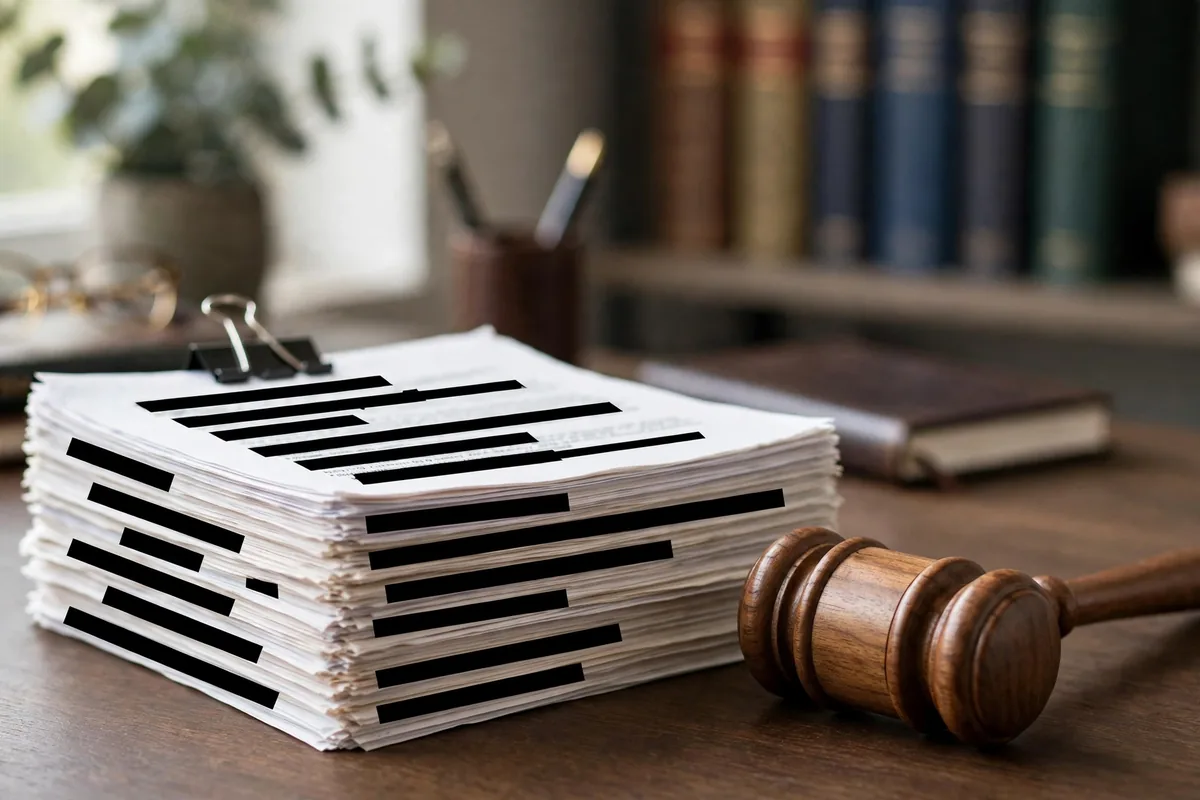
Here’s the paradox of redaction: hiding information makes people want it more. Psychologists call related phenomena the Streisand effect (attempts to hide something draw attention to it) and information-gap curiosity — the brain itches hardest at exactly the boundary of what it can’t see.
This is why heavily redacted releases often backfire politically: each black bar becomes a tiny billboard advertising “something important was here.” Readers don’t think “ah, routine privacy protection” — they think “what are they hiding?”
Smart communicators know this. When redaction is explained — “names of minors removed per court rule” — the bars feel procedural. When redaction is unexplained, the bars feel conspiratorial. The black bar doesn’t just hide information; it communicates attitude about the hider.
Redacted vs Censored vs Classified
These get mixed up constantly. Here’s the distinction:
| Term | What it means | Key difference |
|---|---|---|
| Redacted | Specific parts removed; rest released | Partial — the document survives with holes |
| Censored | Content suppressed, often for moral/political reasons | About control of ideas, not just privacy |
| Classified | The whole document restricted by clearance level | Total — nothing is released |
| Expurgated | Objectionable parts removed (often literary/moral) | About propriety, not secrecy |
| Sanitized | Cleaned of sensitive details | Broader — can include rewording, not just black bars |
Memory aid: classified locks the whole filing cabinet; redacted blacks out single lines; censored decides you shouldn’t read the idea at all.
How Redaction Is Done (Right and Wrong)
Proper redaction is harder than it looks — and failures are legendary:
The right way:
- True removal: Delete the underlying text/images entirely, then flatten the document — the black bar must not sit on top of recoverable text.
- Metadata scrubbing: Remove hidden data (author names, tracked changes, embedded images) that can leak what the bars hide.
- Consistent marking: Label redactions with the reason so reviewers and courts can audit them.
Famous failures:
- The copy-paste leak: Black bars drawn over text in a PDF — anyone who copies the “hidden” text and pastes it elsewhere reads it plainly. This has embarrassed governments and law firms alike.
- Metadata giveaways: Redacted names recovered from document properties, revision history, or embedded thumbnails.
- The “unredacted” slip: Accidentally publishing the original alongside the redacted version.
Rule of thumb: if you can select it, highlight it, or find it in the file’s guts — it isn’t redacted. Real redaction destroys the information in that copy, permanently.
Famous Redacted Documents
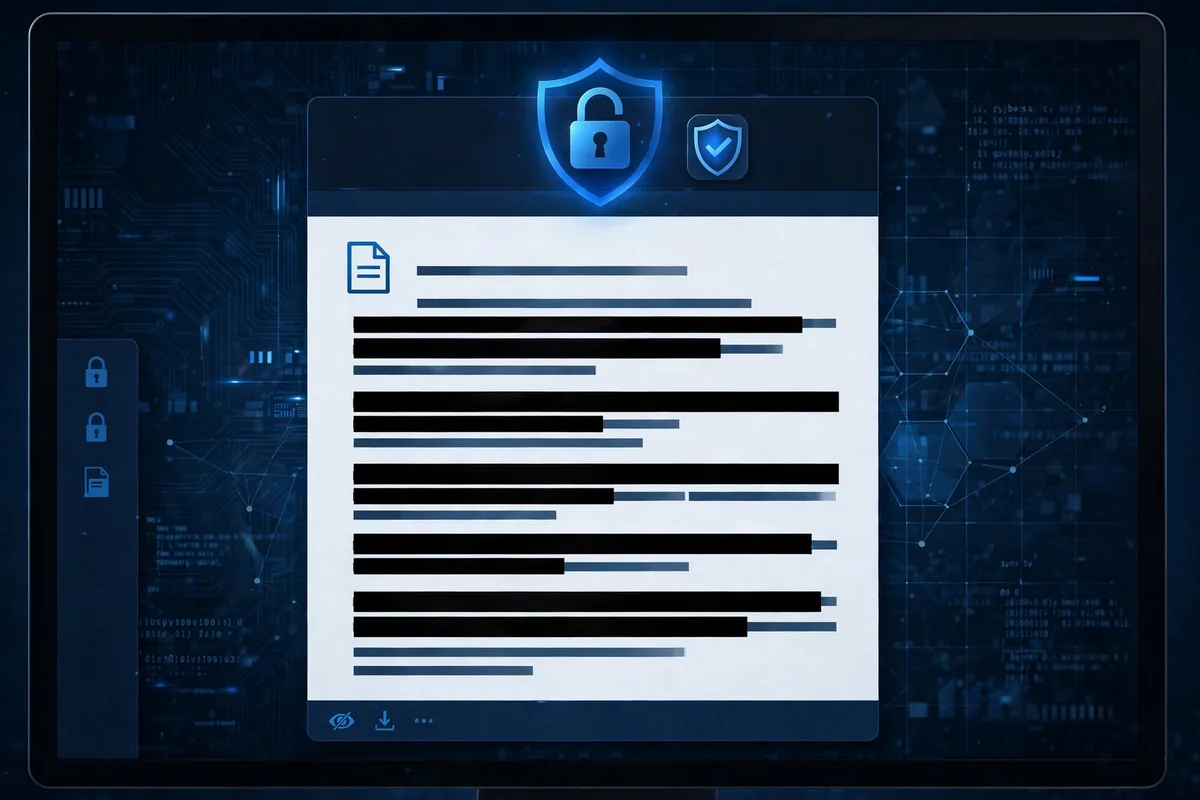
- The Mueller Report (2019): The public version of the Special Counsel’s Russia-investigation report arrived heavily redacted — entire pages blacked out — sparking national debate about what the bars hid.
- JFK assassination files: Decades of scheduled releases arrived with redactions intact, feeding public fascination with what remains hidden.
- Court filings: Everyday redaction happens in millions of legal documents — SSNs, minors’ names, and victim addresses blacked out as a matter of routine.
- FOIA releases: Freedom of Information Act responses are redaction’s home turf — agencies release what the law requires and black out what exemptions protect.
Each famous case reinforced the same public lesson: the black bar is a promise — that something was deliberately hidden, by someone, for a reason. Curiosity about the reason is inevitable.
Redacted in Pop Culture
Redaction has escaped the file room and become a visual meme:
- Spy thrillers: The classic shot — an agent flipping through a file that’s 95% black bars — is Hollywood shorthand for “serious secrets.”
- Internet humor: “[REDACTED]” as a punchline — censoring the funny part of a joke for comic effect, or mock-redacting mundane texts.
- Gaming (notably SCP Foundation): Entire horror mythos built on redacted documents — the black bars are the scare, letting readers’ imaginations supply the horror.
- Merchandise: “Redacted” stamped on t-shirts, mugs, and notebooks — secrecy as aesthetic.
The meme works because everyone intuitively understands the grammar: black bar = something juicy was here.
Redacted in Sentences: Examples
- “The court released a redacted version of the decision.”
- “Names of minors were redacted from the filing.”
- “The heavily redacted document raised more questions than it answered.”
- “Before publishing, they redacted all personal addresses.”
- “Only redacted copies were made available to the press.”
Frequently Asked Questions
What does redacted mean?
Edited to remove or hide sensitive information — typically shown as black bars over text in a document.
What is the difference between redacted and censored?
Redacted = specific sensitive parts removed, rest released. Censored = content suppressed, often to control ideas or for moral/political reasons.
Why are documents redacted?
To protect national security, personal privacy, legal privilege, vulnerable people, trade secrets, or ongoing investigations — while still releasing the rest.
Can redacted text be recovered?
Properly redacted text cannot — the information is truly removed. But sloppy redaction (black bars drawn over live text in a PDF) can be defeated by copy-paste or metadata inspection.
What does “unredacted” mean?
The original, complete version — nothing hidden or removed.
Is redaction legal?
Yes — it’s a standard, often legally required practice in courts, government, healthcare, and finance.
What is redaction in law?
The process of obscuring confidential information (names, SSNs, privileged communications) from legal documents before filing or disclosure.
Where does the word redacted come from?
From redact, via French rédaction, from Latin redigere (“to bring back”) — originally meaning to edit or compile, now meaning to remove or hide.
Source: Definitions cross-checked against leading dictionaries. For the full dictionary entry, see Dictionary.com’s definition of redacted.