Shibari Meaning: What Is Shibari?
Quick Answer
Shibari (縛り) is the Japanese art of decorative rope tying — literally “to tie” or “to bind.” It blends aesthetics, trust, and communication, used for art, performance, and photography. Safety and consent are its foundations.
- Means: “To tie / binding” (Japanese)
- Also called: Kinbaku (“tight binding”)
- Roots: Samurai restraint art (hojojutsu)
- Modern art form: Since early 1900s
What Does “Shibari” Mean?
Shibari (縛り) broadly means “binding” or “tying” in Japanese. In the West, it’s used for the Japanese style of decorative rope bondage — intricate rope patterns created on the body, emphasizing form, aesthetics, and emotion over mere restraint.
Key distinction: unlike Western bondage (focused on restraint), Japanese rope art is about the artistry of the process — the journey matters as much as the result.
In everyday Japanese, shibari is an ordinary word — tying a parcel or fastening a kimono sash. It gained its specialized artistic meaning internationally, where “shibari” became shorthand for an entire practice. In Tokyo the art is usually called kinbaku; “shibari” is the label the rest of the world adopted.

Shibari vs Kinbaku
| Shibari | Kinbaku | |
|---|---|---|
| Literally | “To tie / binding” (縛り) | “Tight binding” (緊縛) |
| In Japan | Generic tying | Erotic/artistic rope art |
| In the West | Catch-all term (since 1990s) | Emphasizes emotional depth |
| Focus | Aesthetics, technique | Connection, intimacy |
Outside Japan, the terms are often used interchangeably — though purists maintain the distinction.
History: From Samurai to Art
- Hojojutsu (捕縄術): samurai martial art of restraining prisoners with rope — different knots signaled rank and crime. Precision was a matter of honor.
- End of Edo period (1868): as samurai declined, rope restraint began appearing in artistic contexts — kabuki theater, ukiyo-e prints.
- Seiu Ito (1882–1961): the “Father of Kinbaku” — painter who fused hojojutsu + kabuki + ukiyo-e into the modern art form.
- 1950s–60s: kinbaku popularized in Japan via photography magazines (like Kitan Club) and live performances.
- 1990s: spread to the West — “shibari” became the global term.
- Important: it’s not an ancient folk art — modern kinbaku dates to the early 1900s.
The artistic turn was gradual. By the late Edo period, bound figures were appearing in kabuki stagecraft and woodblock prints, where rope served as visual drama. Seiu Ito studied those images alongside real hojojutsu technique and began staging elaborate scenes in the 1900s–1920s. Post-war erotic art magazines gave kinbaku a regular audience, and performers carried it to live stages; the West encountered it later, through art books, traveling performers, and then the internet.

Masters of the Art
- Seiu Ito: founder — painter who invented kinbaku as art.
- Akechi Denki: post-war master — brought kinbaku to stage performance.
- Naka Akira: contemporary nawashi — precise, traditional style.
- Hajime Kinoko: modern innovator — large-scale installations, mainstream art world.
- Title: a master is called nawashi (rope master) or kinbakushi.
Shibari in Modern Culture
- Performance art: stage shows and live demonstrations at festivals worldwide.
- Photography: rope as visual art — symmetry, lines, form — gallery exhibitions.
- Fashion: rope aesthetics influence designers — harnesses as clothing.
- Meditation & trust: some practice it as mindfulness — presence, breath, connection.
- Film/TV: appears in art-house cinema and documentaries.
- Roles: the rigger (ties) and the rope bottom (is tied); sometimes they switch.
Safety, Consent & Ethics
- Consent first: clear boundaries and communication before anything begins — enthusiastic, ongoing.
- Education matters: improper tying can cause nerve injury — learn from experienced practitioners, not just videos.
- Communication: check in continuously; agree on a safe word/signal beforehand.
- Start simple: basic ties before complex suspensions — master fundamentals.
- Never alone: don’t practice restrictive ties solo without training.
- Physical risks: nerve compression, circulation issues — know anatomy.
Safety in shibari is not a footnote — it is the core ethic of the practice. The community standard is explicit, informed, ongoing consent, and serious teachers spend as much time on anatomy and risk assessment as on knots. Nerves in the wrists, armpits, and inner thighs can be compressed by rope in minutes, and suspension multiplies every risk — which is why reputable schools teach safety first, and video-only learning is strongly discouraged.
Rope, Materials & Technique
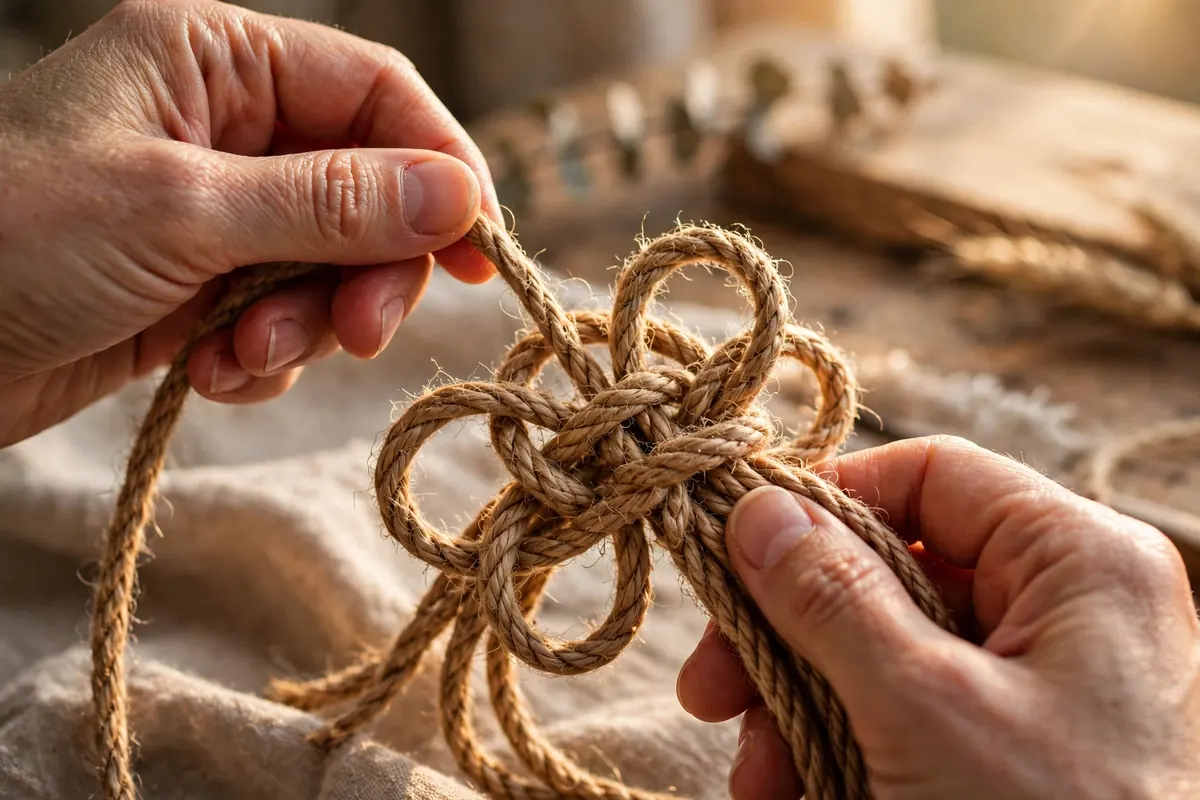
- Traditional: natural fibers — jute, hemp, linen (asanawa — hemp rope).
- Standard length: ~7–8 meters, ~6mm diameter — prepared (conditioned, singed).
- Emphasis: clean lines, symmetry, balance — inspired by Japanese aesthetics (wabi-sabi).
- Asymmetry is also prized for psychological impact — tension as art.
- Care: rope is maintained — oiled, stored properly, inspected before use.
Learning Shibari
- Workshops: in-person classes with experienced teachers — safest path.
- Community: rope groups (often called “munches” or jams) — peer learning.
- Online: video tutorials exist — supplement, don’t replace, hands-on learning.
- Books: Douglas Kent’s Complete Shibari series — comprehensive references.
- Patience: mastery takes years — respect the craft.
When choosing a teacher, look for someone who leads with safety — a reputable instructor asks about your goals, explains risks before touching rope, and never pressures anyone. Good teachers have verifiable experience and community references; red flags include promises of quick mastery or skipped safety discussion. Often the best learning environment is a local rope jam, where experienced practitioners correct beginners in real time.
The Aesthetics of Shibari
- Wabi-sabi: beauty in imperfection — asymmetry as art.
- Ma (間): the space between — rope frames negative space.
- Lines: clean, parallel wraps — precision as meditation.
- Contrast: soft rope against skin — texture as expression.
Common Patterns & Ties
| Tie | Japanese | Description |
|---|---|---|
| Single column | Tanuki | Basic — one limb, foundation |
| Double column | Futomomo | Two limbs together |
| Chest harness | Takate-kote | Iconic — box tie |
| Hip harness | Hishi | Diamond pattern |
Note: names vary by school — no single standard.
Philosophy: More Than Rope
- Ichigo ichie: “one time, one meeting” — each session unrepeatable.
- Connection: rope as communication — nonverbal dialogue.
- Vulnerability: trust given and held — profound exchange.
- Presence: demands full attention — meditation in action.
Myths vs Reality
| Myth | Reality |
|---|---|
| Ancient Japanese tradition | Modern — early 1900s |
| Only sexual | Art, performance, meditation too |
| Easy to learn from videos | Requires hands-on teaching |
| Always painful | Shouldn’t be — pain signals problems |
The Bottom Line on Shibari
Shibari — Japanese rope art:
- Means: “to tie” — aesthetics over restraint
- Roots: samurai hojojutsu → Seiu Ito’s art
- Today: performance, photography, meditation
- Core: consent, safety, beauty
Shibari Quick Facts
| Fact | Detail |
|---|---|
| Word | Shibari (縛り) |
| Means | “To tie / binding” |
| Art form since | Early 1900s |
| Founder | Seiu Ito |
| Rope | Jute/hemp, 7–8m |
| Master called | Nawashi |
Resources for Learning
- Workshops: local rope groups — best starting point.
- Books: Douglas Kent — Complete Shibari series.
- Online: ShibariClasses, tutorials — supplement in-person.
- Community: FetLife groups, local munches.
Shibari rewards patience and punishes shortcuts: study the history, learn safety fundamentals from a qualified teacher, and treat every session with respect.
Shibari Events Worldwide
- Festivals: rope festivals in Tokyo, Berlin, London, New York.
- Performances: theater shows blending dance and rope.
- Exhibitions: photography galleries — mainstream art spaces.
Rope Care Guide
- Conditioning: oil new jute — camellia oil traditional.
- Singeing: burn off fuzz — smoother, safer.
- Storage: cool, dry — avoid mildew.
- Inspect: before every use — frayed rope retires.
Finding Community
- Rope jams: casual practice meetups — beginners welcome.
- Intensives: weekend workshops with masters.
- Online: forums, Discord servers — global rope community.
Shibari Glossary
- Shibari (縛り): “to tie” — decorative rope art.
- Kinbaku (緊縛): “tight binding” — emotional depth.
- Nawashi: rope master.
- Rigger: person who ties.
- Rope bottom: person being tied.
Frequently Asked Questions
What does “shibari” mean?
Shibari (縛り) is Japanese for “to tie” or “binding.” In the West it names the Japanese art of decorative rope tying: intricate rope patterns created on the body, emphasizing form, aesthetics, and the emotional experience of the process — not just restraint.
How is shibari different from kinbaku?
“Shibari” is a generic Japanese word for tying, while “kinbaku” (tight binding) specifically means the erotic and artistic rope practice. Westerners often use the terms interchangeably, but purists treat shibari as the technical, aesthetic side and kinbaku as the side emphasizing emotional connection between participants.
Where did shibari come from?
Its roots are in hojojutsu, the samurai martial art of restraining prisoners with rope, where knot styles signaled rank and offense. The painter Seiu Ito (1882–1961) fused that martial technique with kabuki theater and ukiyo-e aesthetics, creating the modern art form in the early 1900s.
Is shibari always sexual?
No. Many practitioners engage with it purely as visual art, performance, photography, or meditation centered on trust and presence. It can have an erotic dimension, but it equally stands alone as a non-sexual art form — the intent is set by the people involved, not the rope.
Is shibari safe? What are the risks?
Only with proper education, explicit consent, and continuous communication. Rope can compress nerves and restrict circulation, causing lasting injury if wraps are placed wrong — particularly at the wrists, armpits, and inner thighs. Learning from videos alone is widely discouraged for this reason.
What kind of rope is used, and why jute?
Traditionalists use natural fibers — jute, hemp, or linen — typically in 7–8 meter lengths about 6mm thick. Jute’s slight roughness holds knots without slipping and forms clean visual lines. New rope is oiled, singed, and inspected before every use.
What is a nawashi?
A nawashi, also called a kinbakushi, is a recognized rope master with years of study, a distinct style, and usually a lineage of teachers. Figures like Seiu Ito, Akechi Denki, and Naka Akira shaped the tradition; the title is earned through skill and teaching, never self-declared.
How long does it take to learn shibari?
Fundamental ties can be learned in months of regular practice, but genuine proficiency takes years. Safety knowledge — anatomy, nerve placement, risk management — must develop alongside technique, and experienced practitioners consider themselves students.
Can I learn shibari online, or do I need a teacher?
Online tutorials and books like Douglas Kent’s Complete Shibari series are useful supplements, but they cannot replace in-person instruction. A teacher spots dangerous wraps, corrects hand placement, and teaches the communication skills that keep practice safe.
Is shibari legal?
Between consenting adults it is generally legal in most countries, but laws on obscenity, public performance, and consent vary by jurisdiction. Photographing or performing rope work publicly can fall under different rules than private practice, so research local law when in doubt.
What is the takate-kote tie?
The takate-kote is the iconic chest harness — the most recognizable pattern in shibari — distributing pressure across the torso in symmetrical lines. Because it passes near the brachial plexus nerves in the armpits, poor technique there is especially dangerous, so it is taught carefully by qualified instructors.
How do I find a shibari community or teacher?
Look for local rope groups, which often host casual practice “jams” or structured workshops, plus online communities on forums and Discord servers. Vet teachers carefully: a good instructor leads with safety, explains risks upfront, and never pressures participants.
Source: For the encyclopedia overview, see Wikipedia’s article on Japanese bondage.