3PL Meaning: What Does 3PL Mean?
Quick Answer
Quick answer: “3PL” stands for third-party logistics — a company you hire to handle outsourced logistics and distribution services for your business. Instead of renting your own warehouse and hiring packers, you send your products to a 3PL, which stores them, picks and packs customer orders, and ships them out. The “third party” is the provider; the first party is the seller and the second party is the buyer.
- Full form: Third-party logistics (also written TPL)
- Pronunciation: “three-pee-ell”
- Core meaning: Outsourced warehousing, inventory management, order fulfillment, and shipping
What Does 3PL Stand For?
3PL stands for third-party logistics. It is an initialism pronounced letter by letter — “three-pee-ell” — naming both a business model and the companies that provide it: a 3PL provider is a firm that takes over logistics operations on behalf of other businesses.
The numbering tells you where the provider sits. The first party is the seller or manufacturer, the second party is the buyer, and the third party is the outside company in between, storing and moving the goods. The Wikipedia entry on third-party logistics defines it as an organization’s long-term commitment of outsourcing its distribution services to third-party logistics businesses — companies that are neither the consignor nor the consignee. You may also see TPL used interchangeably, though 3PL is far more common.
| Term | 3PL (also TPL) |
|---|---|
| Full form | Third-party logistics |
| Pronunciation | “Three-pee-ell” (initialism, letter by letter) |
| Type | Initialism; business and supply-chain term |
| Core meaning | Outsourced logistics and distribution services handled by an outside specialist |
| Main services | Warehousing, inventory management, order fulfillment, shipping, returns |
What Is Third-Party Logistics?
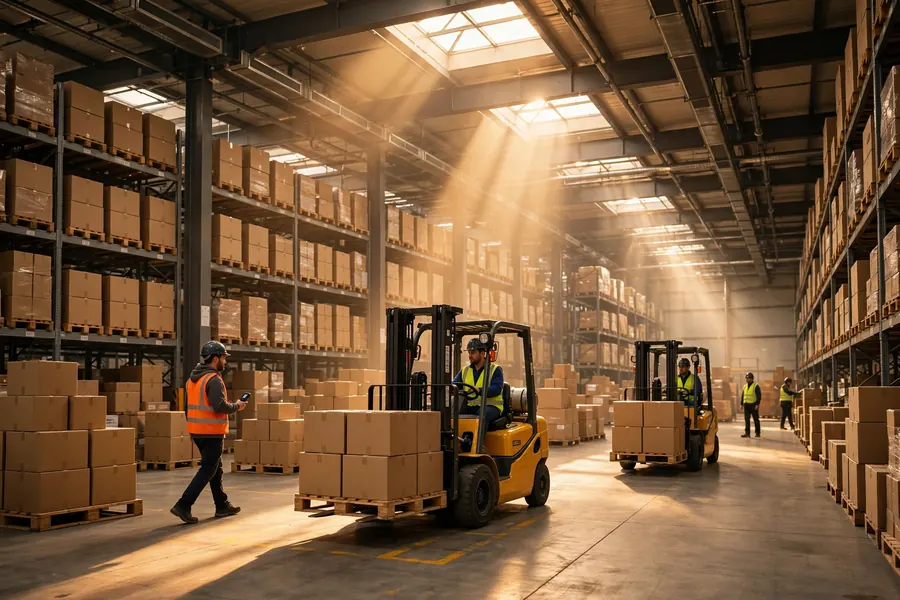
Third-party logistics is the practice of hiring an outside specialist to run part or all of your supply chain operations. Instead of signing a warehouse lease, buying racking and forklifts, and hiring a fulfillment team, a business ships its products to a 3PL provider and pays for the logistics work as a service — usually storage fees plus per-order fulfillment fees.
The model took shape after freight-transport deregulation in the 1980s and grew rapidly in the 1990s as information technology made real-time inventory tracking across company boundaries possible. Today the global 3PL market generates well over a trillion dollars a year and underpins nearly all large-scale e-commerce, retail, and B2B distribution.
The defining split: the brand keeps ownership of the inventory and the customer relationship, while the 3PL owns the operations — receiving stock, storing it, picking and packing orders, handing them to carriers, and processing returns. A growing online store can sell nationwide without ever touching a shipping label, because the provider’s warehouse, workforce, software, and carrier contracts become its logistics department.
What Services Does a 3PL Provide?
Providers bundle services differently, but a full-service 3PL typically covers most of the following. A small e-commerce brand might use only storage and pick-and-pack; a large retailer may outsource its entire distribution operation.
| Service | What the 3PL actually does |
|---|---|
| Receiving | Unloads inbound shipments, checks quantities against purchase orders, inspects for damage |
| Warehousing | Stores your products in its fulfillment centers — racked, labeled, and slotted for fast picking |
| Inventory management | Tracks stock in real time via a warehouse management system (WMS) and syncs counts with your store |
| Order fulfillment | Picks items from shelves, packs them with your branding, and prepares them for dispatch |
| Shipping | Books carriers, negotiates rates, prints labels, and hands parcels to delivery networks |
| Returns (reverse logistics) | Receives returned orders, inspects and restocks resellable items |
| Kitting and assembly | Bundles products into gift sets, subscription boxes, or multi-packs |
| Freight and forwarding | Moves bulk inventory between ports, suppliers, and warehouses |
Most modern 3PLs also provide a software dashboard for tracking orders and shipments — systems too expensive for a small brand to build alone. And when your supplier’s minimum order quantity forces you to buy more stock than fits in your garage, a 3PL gives you somewhere professional to put it — which is exactly when most growing brands make the switch.
How Does a 3PL Work?
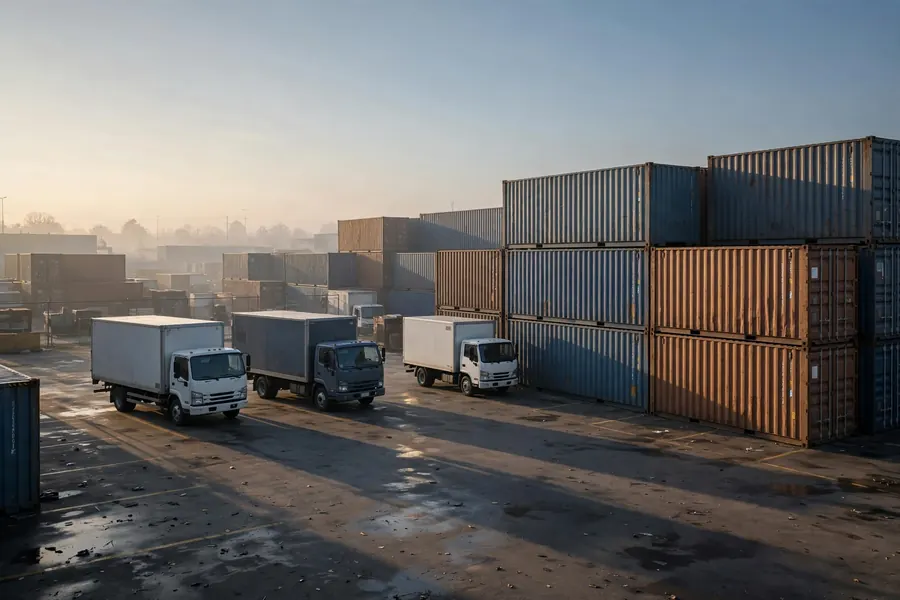
The partnership follows a predictable five-step cycle:
1. You ship inventory to the 3PL. Your supplier sends bulk products to the provider’s warehouse, where staff count, inspect, and log every unit into the warehouse management system.
2. Products sit in storage. Your goods are shelved alongside inventory from other brands. You pay a storage fee — usually per pallet or cubic foot per month.
3. A customer places an order. The order flows automatically from your store into the 3PL’s system. No manual forwarding, no spreadsheets.
4. The 3PL picks, packs, and ships. Staff pick the items, pack them in your branded packaging, print the label with the cheapest qualifying carrier, and hand the parcel to the carrier — usually the same day if the order beats the cutoff.
5. Returns come back to the 3PL. Returned orders go to the warehouse, not to you. The 3PL inspects and restocks resellable items so inventory counts stay accurate.
The practical effect: logistics becomes a variable cost that rises and falls with sales — so a seasonal business pays for peak capacity only when it actually peaks.
3PL vs 4PL vs 5PL: What’s the Difference?
The numbered models describe how much of your supply chain you hand over, and to whom. A 3PL executes logistics work; a 4PL manages the companies that do the work; a 5PL — a newer, still-evolving concept — coordinates supply-chain networks across multiple businesses using data platforms.
| 3PL | 4PL | 5PL | |
|---|---|---|---|
| Full form | Third-party logistics | Fourth-party logistics | Fifth-party logistics |
| Role | Performs logistics tasks: warehousing, fulfillment, shipping | Manages your whole supply chain, including your 3PLs and carriers | Coordinates logistics networks across multiple companies, often with AI and data platforms |
| Owns assets? | Often yes — warehouses, trucks, staff | Usually asset-light; coordinates rather than owns | Asset-light; technology-driven |
| You control | Strategy: you set the plan, the 3PL executes | Outcomes: the 4PL designs the network and chooses providers | Even less day-to-day control; ecosystem-level orchestration |
| Best for | Businesses of all sizes that need fulfillment done | Large companies with complex, multi-provider supply chains | Emerging model; definitions still vary by source |
The rule of thumb: a 3PL does the logistics work, while a 4PL manages the companies doing it. If you hire a warehouse to store and ship your products, that is a 3PL. If you hire a firm to run carrier tenders across continents and report one set of performance metrics, that is a 4PL.
Examples of 3PL Companies
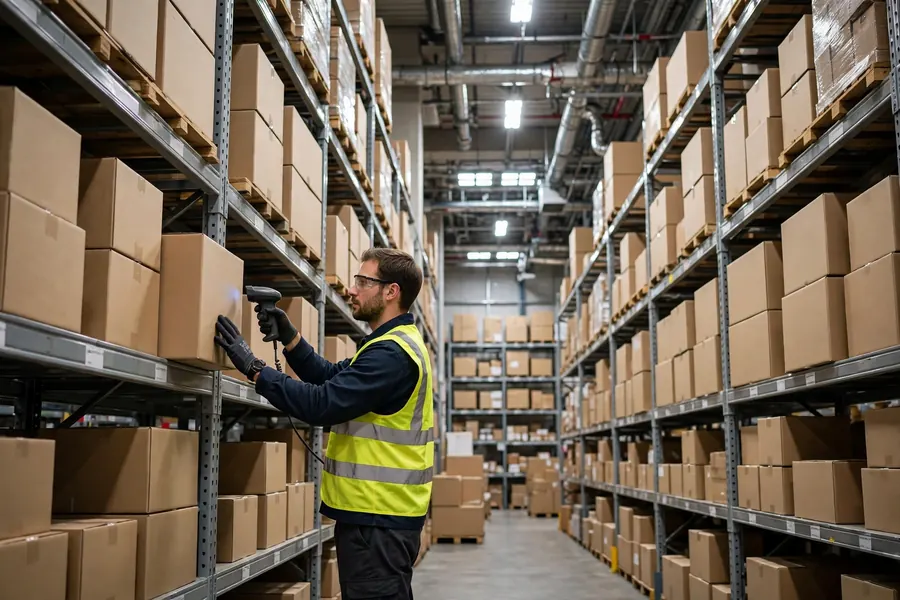
Providers range from global giants to specialists built for small e-commerce brands. Large examples include DHL Supply Chain (over a thousand warehouses worldwide), C.H. Robinson (the largest conventional 3PL in the US by many measures), Kuehne + Nagel and DSV (European forwarding heavyweights), UPS Supply Chain Solutions and FedEx Supply Chain (the logistics arms of the parcel giants), and Ryder and GXO Logistics (specialists in running large distribution centers).
For e-commerce sellers, the familiar names are Fulfillment by Amazon (FBA) — which acts as a 3PL for external sellers — and fulfillment platforms like ShipBob, built for smaller brands. Size is no quality guarantee: the right 3PL is the one whose warehouse locations, technology, and pricing fit your order volume.
Benefits and Drawbacks of Using a 3PL
The main benefits are scale, expertise, and cost flexibility. A 3PL lets a small brand offer two-day delivery from multiple warehouse locations — impossible alone. You get professional warehouse systems, negotiated carrier rates, and experienced packing teams with no capital investment, and costs track your revenue instead of arriving as a fixed monthly burden.
The main drawbacks are cost, control, and distance from the customer. Per-unit fees plus monthly storage add up and bite hardest on low-margin products — many brands must recalculate their MSRP or retail pricing to protect margins after outsourcing. You also surrender direct control: slow holiday packing or picking errors get blamed on you, and quality issues can reach buyers before you spot them. Below a certain order volume, monthly minimums cost more than packing boxes yourself.
How to Use 3PL in a Sentence
3PL works as a noun (“a 3PL,” “our 3PL”) and as a modifier (“3PL warehouse”) — and is always capitalized.
| Context | Example sentence |
|---|---|
| E-commerce | “We switched to a 3PL last year, and our average delivery time dropped from five days to two.” |
| Startup | “Our garage couldn’t hold another pallet, so hiring a 3PL was the only way to keep growing.” |
| Retail | “The retailer uses three regional 3PL warehouses to offer next-day delivery nationwide.” |
| Business planning | “Before signing with a 3PL, compare their per-order fees against your current in-house costs.” |
| Careers | “She spent six years in operations at a 3PL before launching her own skincare brand.” |
| News | “The 3PL provider announced a new 500,000-square-foot fulfillment center outside Dallas.” |
| Comparison | “Unlike a 4PL, a 3PL won’t design your supply chain — it executes the plan you give it.” |
| Attributive use | “Rising 3PL storage fees forced the company to reduce its slow-moving inventory.” |
Frequently Asked Questions
What does 3PL stand for?
3PL stands for third-party logistics — outsourced logistics and distribution services provided by an outside company.
What is a 3PL company?
A firm that handles logistics for other businesses: receiving inventory, warehousing it, picking and packing orders, shipping them, and processing returns.
What services do 3PLs provide?
Warehousing, inventory management, order fulfillment (pick and pack), shipping and carrier coordination, and returns processing. Many also offer kitting, freight forwarding, and customs support.
What is the difference between 3PL and 4PL?
A 3PL executes logistics tasks like warehousing and shipping. A 4PL manages your entire supply chain, including selecting and overseeing your 3PLs and carriers.
What is 5PL?
5PL (fifth-party logistics) is an emerging model where a provider coordinates supply-chain networks across multiple businesses, typically using AI and data platforms. The term is not yet standardized, so definitions vary.
What are examples of 3PL companies?
DHL Supply Chain, C.H. Robinson, Kuehne + Nagel, UPS Supply Chain Solutions, FedEx Supply Chain, Ryder, and GXO Logistics. E-commerce options include Fulfillment by Amazon (FBA) and ShipBob.
How much does a 3PL cost?
Typically monthly storage fees (per pallet or cubic foot) plus per-order fulfillment fees, the actual shipping cost, and often one-time onboarding fees and monthly minimums.
When should a business use a 3PL?
When order volume outgrows your storage space, fulfillment eats time needed for products and marketing, you want faster delivery from multiple regions, or seasonal spikes overwhelm your in-house team.
Is Amazon FBA a 3PL?
Yes — for external sellers, Fulfillment by Amazon functions as a 3PL: Amazon stores sellers’ inventory, picks and packs orders, and ships them to customers.
What is a 3PL warehouse?
A warehouse run by a 3PL provider storing inventory for multiple client brands. Because fixed costs are spread across many clients, small brands get professional fulfillment infrastructure they could never afford alone.
Is 3PL the same as dropshipping?
No. With a 3PL you own the inventory — you buy in bulk and the 3PL stores and ships it. With dropshipping you never hold inventory; the supplier ships directly to your customer.
What is the difference between 3PL and fulfillment?
Fulfillment (receiving, storing, picking, packing, shipping) is the core of what a 3PL does, but a true 3PL is broader — adding transportation, freight, returns management, and services like kitting.
In short, 3PL means third-party logistics: hiring a specialist to store your products, fulfill your orders, and handle the shipping and returns you don’t have the space, staff, or systems to do yourself. It is why a two-person brand can promise two-day delivery nationwide — the warehouse and packing teams belong to someone else, while the products and customers stay yours.