
Sonder Meaning: What Does Sonder Mean?
Quick answer: Sonder (pronounced SON-der, rhymes with “ponder”) is a modern coined word meaning the realization that every stranger you pass is living a life as vivid and complex as your own — with their own ambitions, worries, routines, and stories you’ll never know. It was invented in 2012 by writer John Koenig for his project The Dictionary of Obscure Sorrows, which creates new words for feelings that lack names. Though a neologism (not a traditional dictionary word), sonder has become widely used online and in print.
In this article

What Does Sonder Mean?
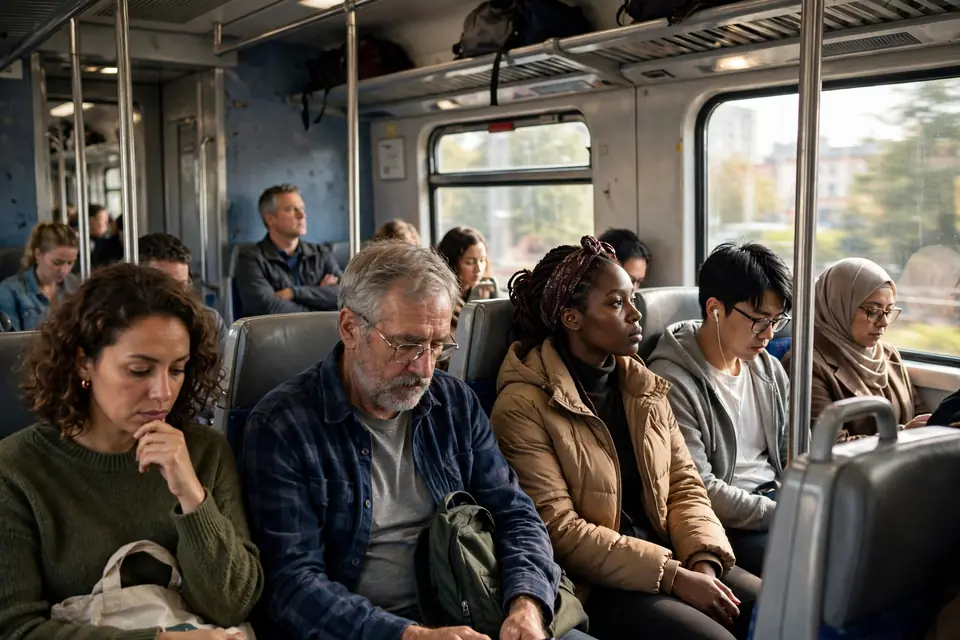
Sonder names a feeling you’ve had but probably never named: sitting in a café, watching strangers pass, and suddenly realizing — really realizing — that each one is the main character of a story as full, messy, and specific as yours.
Koenig’s definition (summarized): sonder is the realization that each random passerby is living a life as vivid and complex as your own — populated with their own ambitions, friends, routines, worries, and inherited craziness — an epic story continuing invisibly around you, in which you might appear only once, as an extra in the background.
What it is NOT:
- Not empathy exactly — empathy is feeling with someone; sonder is recognizing the depth you can’t access.
- Not loneliness — though it can feel melancholic, sonder is ultimately connective: a reminder you’re not alone in being complex.
- Not a traditional word — it’s a neologism (invented 2012), not found in classical dictionaries.
The “lighted window at dusk” test: Koenig’s image of a lighted window at dusk — glimpsed from outside, hinting at a whole life within — is sonder’s perfect metaphor. You’ve seen thousands of such windows. Each one is a sonder.
Where Did Sonder Come From?
John Koenig — writer, designer, and self-described neologist — coined sonder in 2012 for The Dictionary of Obscure Sorrows, a project inventing words for emotions that lack names.
The project’s journey:
- 2009: Koenig starts the blog — one invented word at a time.
- 2012: “Sonder” is published — and becomes the project’s breakout word.
- YouTube era: beautifully produced definition videos earn millions of views; sonder’s video is among the most shared.
- 2021: The Dictionary of Obscure Sorrows published as a book (Simon & Schuster) — sonder as its flagship entry.
The etymology (Koenig’s construction): inspired by German sonder- (“special”) and French sonder (“to probe”) — a word that sounds like it means something profound, built from parts that suggest specialness and depth. Koenig researches real etymology for each invention, so his neologisms feel linguistically plausible.
Why it caught on: sonder named a universal experience that previously required a paragraph to describe. The internet loves a word that compresses a feeling — and sonder compresses one of the deepest.
The “sonder walk” exercise: writers and mindfulness practitioners recommend a sonder walk — strolling through a crowded place and deliberately imagining one stranger’s day: their morning, their worries, what they’re heading toward. It’s empathy training disguised as people-watching — and practitioners report it reliably produces the feeling the word names.

Pronunciation and Grammar
Pronunciation: SON-der — rhymes with “ponder” (fittingly — sonder is a kind of pondering). First syllable stressed: SON-der, not son-DER.
Part of speech: primarily a noun (“I felt a deep sonder on the subway”). But Koenig notes it can work as a verb too — “to sonder” — used the way you’d use “to wonder”: “I sondered about the lives in that apartment building.”
Example sentences:
- “Walking through the airport, I was hit by sonder — thousands of stories departing simultaneously.”
- “She sondered over the old photographs, imagining each stranger’s whole life.”
- “The novel’s power is its sonder — every minor character feels fully alive.”
Dictionary status: sonder appears in Wiktionary as a neologism and is widely used in print and online — but it has not been adopted by Merriam-Webster or Oxford as a standard entry. It’s a word in the wild, thriving without official papers.
The Philosophy of Sonder
Why sonder matters beyond its beauty:
Against “main character syndrome”: the internet jokes about “main character syndrome” — living as if you’re the protagonist and everyone else is background. Sonder is the antidote: the recognition that everyone is the main character of their own story — including the barista, the bus driver, the person you cut off in traffic.
Koenig’s framing: “In a state of sonder, each of us is at once a hero, a supporting cast member, and an extra in overlapping stories.” You are the hero of yours, supporting cast in your friends’, and a blurry extra in thousands of strangers’ — simultaneously.
Sonder and kindness: psychologists note that recognizing others’ inner lives — what researchers call “theory of mind” — is the foundation of empathy. Sonder is theory of mind made poetic: a practice of remembering that the stranger’s rudeness might be grief, their hurry might be fear, their silence might be exhaustion.
The melancholy edge: sonder carries “obscure sorrow” — the ache of knowing you’ll never know those stories. Thousands of epic lives, and you’re an extra in all of them. That simultaneous connection and separation is what makes sonder bittersweet rather than merely warm.
Sonder in Pop Culture
Viral word: sonder exploded on Tumblr, Reddit, and Instagram in the mid-2010s — shared as text posts, tattoo designs, and journal prompts. It became the internet’s favorite obscure word, the one people inked on their skin.
Literature: novelists and poets adopted sonder to describe the crowd scenes and passing-stranger moments that prose has always struggled to name. Writing workshops use it as a prompt: “write a sonder.”
Music and film: songwriters and filmmakers reference sonder in titles and lyrics — the word’s sound (soft, weighty) suits melancholic art. It appears in album titles, short films, and photography series about urban life.
The tattoo phenomenon: “sonder” is among the most tattooed English words of the 2010s — usually in typewriter font on forearms and ribs. A permanent reminder that everyone has a story.
Academic interest: linguists study sonder as a case of successful neologism — a coined word that filled a genuine gap and achieved organic adoption without institutional backing. It’s Exhibit A for how language actually evolves in the internet age.
Words Like Sonder
More from the Dictionary of Obscure Sorrows — sonder’s siblings:
- Exulansis — the tendency to give up explaining an experience because people can’t relate — letting the memory drift away.
- Anemoia — nostalgia for a time you’ve never known — missing an era you never lived in.
- Occhiolism — the awareness of the smallness of your perspective — your life is a sample size of one.
- Ambedo — a melancholic trance of absorption in sensory details — raindrops, lamplight, coffee swirls.
- Liberosis — the desire to care less — to hold life loosely, like a volleyball kept playfully in the air.
- Chrysalism — the tranquility of being indoors during a thunderstorm.
Why they work: each names a real, common, previously nameless feeling — the same trick as sonder. Together they form a vocabulary for interior life that standard dictionaries never built.
Frequently Asked Questions
What does sonder mean?
The realization that every stranger is living a life as vivid and complex as your own.
How do you pronounce sonder?
SON-der — rhymes with “ponder.”
Who invented the word sonder?
John Koenig, in 2012, for The Dictionary of Obscure Sorrows.
Is sonder a real word?
It’s a neologism — coined, not traditional — but widely used and listed in Wiktionary.
Is sonder in the dictionary?
In Wiktionary yes; not yet in Merriam-Webster or Oxford as a standard entry.
What is The Dictionary of Obscure Sorrows?
John Koenig’s project (blog → YouTube → 2021 book) inventing words for unnamed emotions.
Can sonder be a verb?
Yes — “to sonder,” used like “to wonder.”
What language does sonder come from?
It’s invented — inspired by German sonder- (special) and French sonder (to probe).
What’s the opposite of sonder?
“Main character syndrome” — acting as if only your story matters.
Is sonder the same as empathy?
No — empathy feels with someone; sonder recognizes depths you can’t access.
Why is sonder called an “obscure sorrow”?
It carries a bittersweet ache — connection plus the knowledge you’ll never know those stories.
What does “lighted window at dusk” mean?
Koenig’s metaphor for sonder — a glimpse of a whole hidden life.
Is sonder a sad word?
Bittersweet — melancholic but ultimately connective.
How do you use sonder in a sentence?
“The crowded train gave me sonder — a thousand unseen lives.”
What are some words similar to sonder?
Exulansis, anemoia, occhiolism — fellow Dictionary of Obscure Sorrows inventions.
Why do people tattoo “sonder”?
As a permanent reminder that everyone has a story — one of the most-tattooed words of the 2010s.
Did John Koenig invent other words?
Dozens — the Dictionary of Obscure Sorrows contains hundreds of neologisms.
Can I use sonder in formal writing?
In creative writing, yes; in academic/legal writing, define it first — it’s still nonstandard.
What is “theory of mind”?
The psychological ability to recognize others’ inner lives — sonder is its poetic form.
Has sonder appeared in books?
Yes — in Koenig’s 2021 book and widely in contemporary fiction and poetry.
Source: For sonder’s definition and etymology, see Wiktionary’s entry on sonder.