Inseam Meaning: What Does Inseam Mean?
Quick Answer
Inseam is the seam on the inside of a pant leg — and, by extension, the length of that seam, measured from the crotch to the hem. It’s the key number that decides whether pants fit just right, too long, or too short.
- What: Inner leg seam (crotch to hem)
- Common lengths: 28″ short · 30″ average · 32″ long · 34″ extra-long
- Why it matters: Prevents bunching, dragging, or the high-water look
- First known use: 1886
What Does “Inseam” Mean?
Merriam-Webster defines inseam as “the seam on the inside of the leg of a pair of pants” — and also “the length of this seam.” In plain terms, the inseam runs up the inside of your leg, from where the legs meet (the crotch) down to the bottom hem. It’s the single most important number for pant length.
Why does it matter so much? Because everything about how pants look on you flows from this one measurement. The wrong inseam means fabric bunching at your ankles, hems dragging on the ground, or the dreaded high-water look. The right inseam gives you a clean, unbroken line from hip to shoe — the visual foundation of a well-fitted outfit.
Unlike waist size, which is about circumference, the inseam is about proportion. Two people with the same waist size can need wildly different inseams depending on their leg length, which is why “I’m a 32” means almost nothing without the second number.
How to Measure Your Inseam
There are two reliable methods, and the pants method is easier for most people.
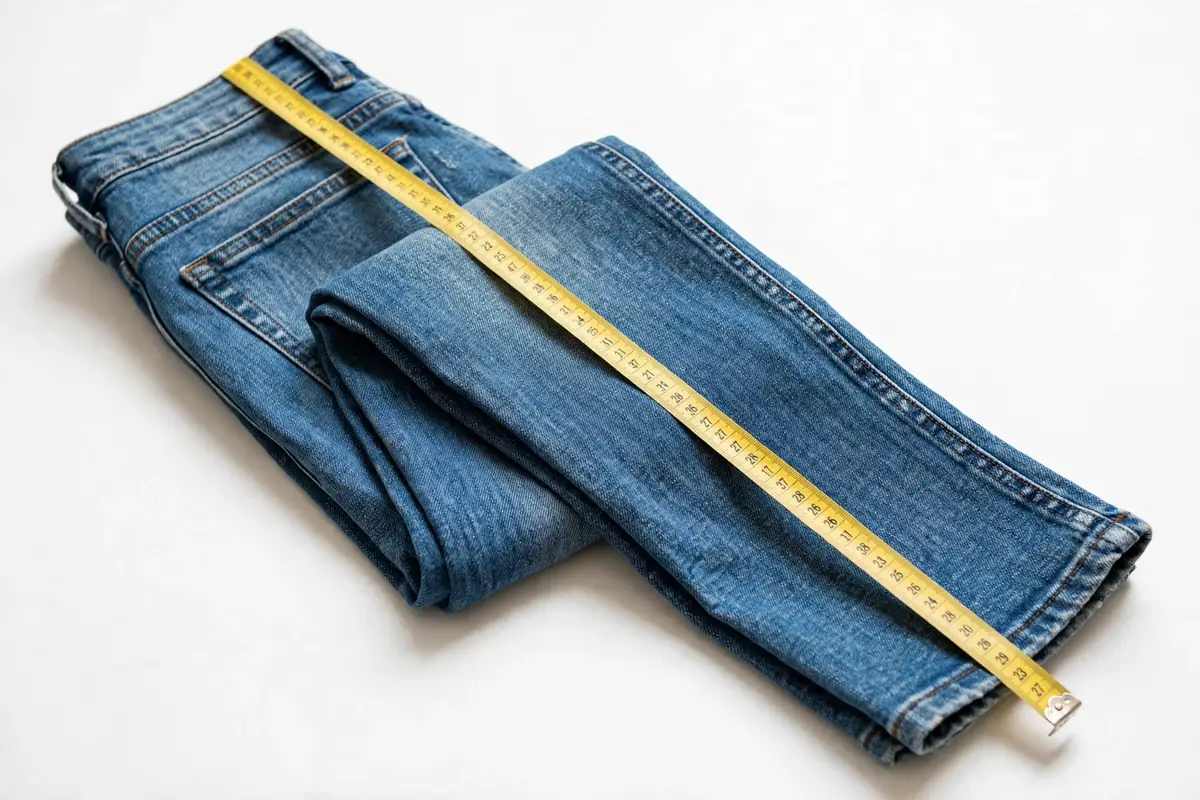
Method 1 — Measure your best-fitting pants (easiest). Lay the pants flat on a hard surface and smooth out the wrinkles. Measure from the crotch seam intersection — the exact point where the inner leg seams meet — straight down to the bottom hem. Record the number in inches (or centimeters). That’s your inseam.
Method 2 — Measure on your body. Stand straight with feet shoulder-width apart, wearing snug-fitting pants. Place the tape at the crotch point and run it down the inner leg to where you want the pants to end — typically the ankle or the top of the shoe. Having someone help makes this far more accurate; self-measuring twists your posture and skews the number.
Pro tips: measure both legs (they’re often slightly different — use the longer one for full-length pants), always use a flexible tape measure rather than a ruler, and remember that fabric can shrink after washing, especially untreated cotton and raw denim.
Inseam Lengths by Height
These are starting points, not rules — torso-to-leg ratios vary enormously:
| Height | Typical Inseam | Label |
|---|---|---|
| 5’0″ – 5’3″ | 28″ – 30″ | Short / Petite |
| 5’4″ – 5’7″ | 30″ – 32″ | Regular |
| 5’8″ – 6’0″ | 32″ – 34″ | Long |
| 6’1″ and up | 34″ – 36″+ | Tall / Extra-long |
Think of this chart as a first guess. Two people at 5’8″ can have completely different leg lengths — one might wear a 30″ inseam and the other a 34″. Always check the actual number rather than trusting “your size,” and when buying online, compare against the pants you already own.

Inseam vs Outseam vs Rise
Three measurements, three different jobs:
| Measurement | From → To | Used For |
|---|---|---|
| Inseam | Crotch → hem (inner leg) | Pant length, alterations |
| Outseam | Waist → hem (outer leg) | Suit tailoring, premium garments |
| Rise | Crotch → waistband | Fit at hips (low/mid/high rise) |
For everyday shopping, the inseam is the one that matters for length. The outseam comes into play mainly in suit tailoring, where the total leg line is drafted from the waist down. Rise is a different animal entirely — it determines where the waistband sits on your body and how the pants fit through the hips and seat, not how long the legs are.
Inseam by Pant Style
The “right” inseam isn’t one number — it shifts with the style of the pant. Dress pants traditionally run slightly longer, with a bit of fabric folding over the shoe — tailors call this the “break,” and a slight or medium break looks sleek with formal shoes.
Jeans and casual pants usually go full length to the ankle, where a little stacking (gentle bunching above the shoe) is normal and even fashionable. Cropped pants are shorter by design, ending above the ankle — here the inseam is intentionally abbreviated, not wrong.
Athletic pants are adjusted for movement rather than looks, and the right length depends on the sport. And one factor people forget: footwear. The same inseam sits completely differently with sneakers versus heels. Always measure — or try on — with the shoes you’ll actually wear.

Common Inseam Mistakes
The number-one mistake is guessing. “I’m a 32” is a hope, not a measurement — brands vary so much that a 32 in one label can be a 30 or 34 in another. The second classic error is ignoring shrinkage: raw denim and untreated cotton can shrink one to two inches in the wash, which turns a perfect fit into a flood situation.
Measuring barefoot when you’ll wear heels (or vice versa) skews everything, since shoe height changes where the hem lands. And many people measure only one leg — but legs differ, sometimes by half an inch or more. For full-length pants, always go with the longer leg’s measurement.
Finally, don’t trust vanity sizing. There’s no universal standard for what a “32 inseam” means across brands, which is exactly why knowing your own number — and checking size charts — beats memorizing a label.
Inseam Alterations and Tailoring
The good news: inseam is one of the easiest and cheapest alterations in all of tailoring. Hemming — shortening the legs — typically costs $10–25 and any competent tailor can do it in a day or two. This is why experienced shoppers buy pants slightly long on purpose: lengthening is hard, shortening is trivial.
Lengthening is the difficult direction. It only works if there’s extra fabric folded into the existing hem — usually an inch or two at most. If you need more length than that, you’re buying the wrong pants.
For quick DIY fixes, iron-on hem tape works surprisingly well on casual pants, and a basic sewing machine handles permanent hems easily. But for dress pants with a proper break, or anything with a cuff or finished hem detail, a professional tailor is worth the modest cost.
Shopping by Inseam
Once you know your number, shopping gets dramatically easier — especially online. Most retailers let you filter by inseam length, and jeans are labeled with both dimensions: “32×30” means a 32-inch waist with a 30-inch inseam.
If you’re at either end of the height spectrum, petite and tall specialty lines are worth seeking out. They’re cut proportionally — not just shortened or lengthened — so the knee placement, pocket position, and rise all work with the leg length.
When trying on, do the full test: sit down, walk around, check the break with your usual shoes. Pants that look perfect standing still can ride up awkwardly the moment you move. And write your inseam in your phone’s notes — future-you, standing in a fitting room, will be grateful.
Etymology
Inseam is a straightforward compound: in- (“inside”) + seam (from Old English sēam, “line of stitching”). It literally names the seam on the inside — descriptive naming at its simplest.
The first known use dates to 1886, right in the middle of the ready-to-wear clothing revolution. As mass-produced garments replaced custom tailoring, the industry needed standardized measurements — and the inseam became one of the foundational numbers of modern sizing, a role it still holds nearly 140 years later.
Frequently Asked Questions
What does “inseam” mean?
The inner leg seam of a pair of pants — and by extension, its length, measured from the crotch to the bottom hem. It’s the key number for pant length.
How do I measure my inseam?
Lay your best-fitting pants flat and measure from the crotch seam intersection straight down to the bottom hem. Or stand straight and measure down your inner leg from the crotch to the ankle.
What is a 30-inch inseam?
An average length that typically suits people around 5’4″ to 5’7″ — but leg proportions vary, so always verify against your own measurement.
What’s the difference between inseam and outseam?
Inseam runs crotch to hem along the inner leg; outseam runs waist to hem along the outer leg. Inseam controls everyday pant length.
What is “rise” in pants?
The distance from the crotch to the waistband. It determines where pants sit on your body (low, mid, or high rise) — fit at the hips, not leg length.
Should I size up to allow for shrinkage?
Untreated cotton and raw denim can shrink 1–2 inches. Check the fabric content before buying an exact fit — pre-shrunk garments are safer.
Can a tailor fix the inseam?
Yes — hemming (shortening) is routine and costs about $10–25. Lengthening is much harder and only possible with extra hem fabric.
How do I convert inseam from inches to centimeters?
Multiply inches by 2.54. A 32-inch inseam is about 81 cm.
What does “32×30” mean on jeans?
The first number is the waist (32 inches), the second is the inseam length (30 inches) — width × length.
Why do inseams vary so much between brands?
There’s no enforced standard — vanity sizing and different fit philosophies mean a “32” in one brand can be a 30 or 34 in another. Measure yourself and check size charts.
Source: For the dictionary definition, see Merriam-Webster’s entry for inseam.