Bittersweet Meaning: What Does Bittersweet Mean?
Quick Answer
Bittersweet (BIT-er-sweet) describes a mix of happiness and sadness — pleasure accompanied by suffering or regret, like graduation day or a final farewell. Literally, it means tasting both bitter and sweet at once. It also names a poisonous nightshade vine and a pinkish-orange color.
- Emotion: Joy tinged with sorrow
- Taste: Bitter and sweet together (dark chocolate)
- Plant: Woody nightshade vine (Solanum dulcamara)
- Color: Between scarlet and orange
What Does “Bittersweet” Mean?
Merriam-Webster defines bittersweet as “something that is bittersweet — especially pleasure accompanied by suffering or regret.” The core idea is two opposites in a single moment: the sweet (joy, pride, love) and the bitter (loss, ending, longing), experienced together rather than one after the other.
It’s pronounced BIT-er-sweet — three syllables. And it’s one of the most honest words in the language, because it admits what most emotional vocabulary won’t: that happiness and sadness aren’t always opposites. Sometimes they’re roommates.
The word works as both adjective and noun. You can have a bittersweet moment, a bittersweet memory, a bittersweet goodbye — or you can simply say the day itself was bittersweet, and everyone knows exactly what you mean.

The Bittersweet Emotion
Life’s most profound moments are often bittersweet. Graduation — proud of the achievement, sad it’s over. Farewells — happy for someone’s future, sorrowful to part ways. Homecoming — the joy of return mixed with nostalgia for what’s gone. A child’s first day of school — delight and heartache in the same photograph.
What makes bittersweetness distinct is the simultaneity. It’s not happiness followed by sadness; it’s both at once, layered. Psychologists call this emotional complexity, and it’s considered a sign of emotional maturity — the ability to hold two truths without needing to resolve them.
There’s a reason we reach for this word at milestones. Bittersweet is, at bottom, an acute awareness of passing time paired with a piercing joy at the world’s beauty. You feel the moment fully because you know it won’t last.

The Psychology of Bittersweet
Modern psychology takes bittersweetness seriously. Feeling two things at once isn’t confusion — it’s complexity, and research links emotional complexity to resilience and better coping. People who can name mixed emotions tend to navigate them more skillfully than those who flatten everything into “good” or “bad.”
Susan Cain’s 2022 book Bittersweet argues the state is actually a superpower — that the ache of longing is the wellspring of creativity and compassion. Her thesis: the people most attuned to life’s impermanence are often the ones who create its most moving art and show its deepest kindness.
Nostalgia is bittersweet by nature — warm memory plus the ache of loss. And it’s important to distinguish bittersweetness from depression: bittersweet includes joy. It’s rich, not empty; full, not flat. If sadness ever comes without the sweet half, that’s a different thing entirely — and worth taking seriously.
Other Meanings: Taste, Plant, Color
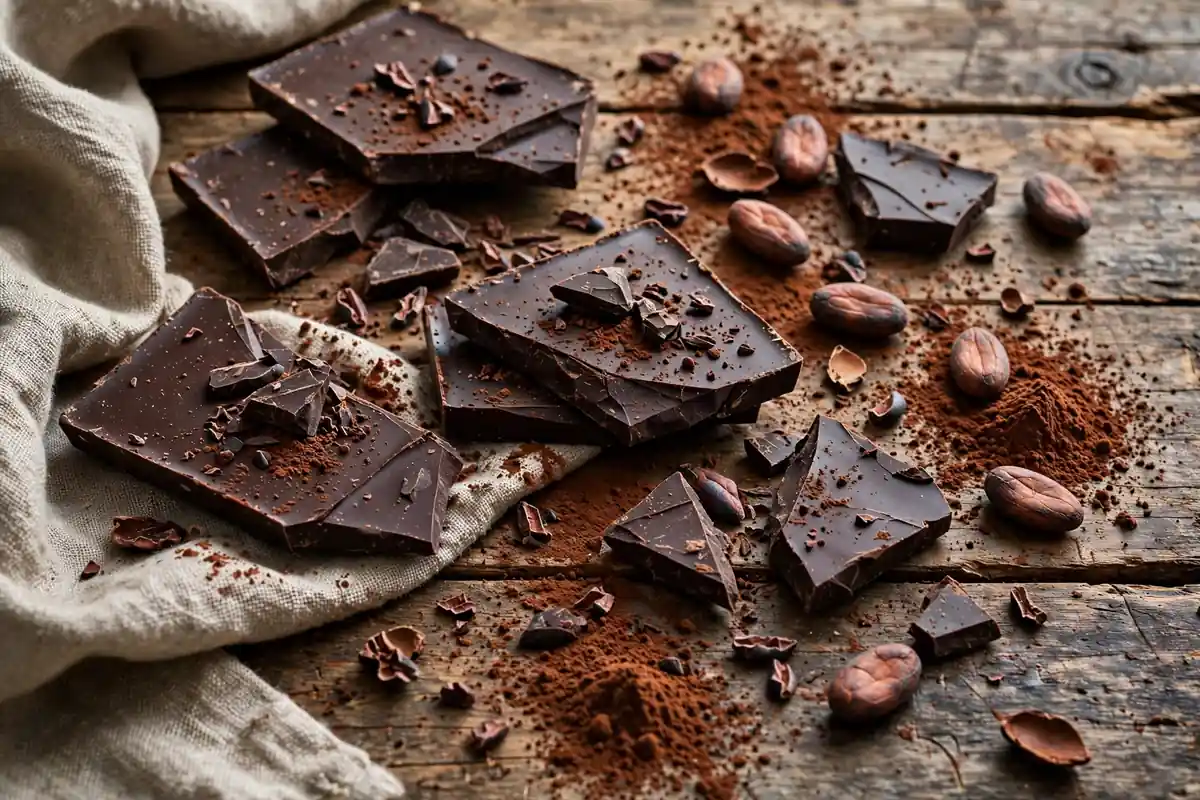
Before it described feelings, bittersweet described taste: the experience of something both bitter and sweet. Dark chocolate is the classic example — bitter cocoa with a sugary finish — and coffee drinkers know the flavor profile well.
The bittersweet vine (Solanum dulcamara) is a woody nightshade with purple flowers and red berries. Its stems taste bitter first, then sweet — hence the name. It’s poisonous, so admire it rather than sampling it. The plant’s dramatic two-stage flavor made it a natural namesake for the emotional state.
As a color, bittersweet is a pinkish-orange hue sitting between scarlet and orange. It even has its own Crayola history — a cheerful shade named for the vine’s berries.
Bittersweet in Art and Music
Artists love bittersweetness because complexity feels truthful. Pure joy or pure sorrow can feel flat on the page or screen; the mixture is where life actually happens. The Verve’s “Bittersweet Symphony” (1997) became the unofficial anthem of the state — its sweeping strings carry triumph and melancholy in equal measure.
In literature, nearly every coming-of-age novel runs on bittersweet fuel: growth always costs innocence, and the best books don’t pretend otherwise. In film, the great goodbyes and reunions — Casablanca’s ending, the opening montage of Up, the final act of La La Land — work precisely because they refuse to be only happy or only sad.
The pattern holds across mediums: audiences trust art that admits both halves. A story that’s only sweet feels naive; one that’s only bitter feels cruel. Bittersweet is the flavor of honesty.
Etymology: 600 Years of Flavor
The word is a compound of Old English biter (sharp, biting) and swete (pleasing to the senses). For its first centuries, it described taste exclusively — fruits and plants with a sharp-then-sugary flavor.
By the 1300s, writers had extended it to emotions — life, they noticed, is rarely one flavor. The metaphor was irresistible: just as the tongue can register bitter and sweet at once, so can the heart.
The plant was named for its taste (bitter stem, sweet aftertaste), and the color for the plant’s berries. So the emotional meaning, the botanical meaning, and the color all trace back to the same ancient observation: some things are two things at once.
Bittersweet vs Related Words
English has a whole palette of mixed-feeling words. Here’s how they differ:
| Word | Mix | Shade |
|---|---|---|
| Bittersweet | Joy + sorrow | Balanced; the classic blend |
| Poignant | Sharply moving | More piercing, often sadder |
| Nostalgic | Longing for the past | Focused on memory |
| Melancholic | Gentle sadness | Little joy in the mix |
| Ambivalent | Mixed feelings | Conflicted, not poetic |
| Wistful | Yearning | Quiet, gentle longing |
Bittersweet is the balanced one — equal parts sweet and bitter. Poignant leans sadder and sharper. Nostalgic is specifically about the past. Choose the word that matches the ratio you feel.
More Bittersweet Moments in Life
Once you know the word, you start seeing the feeling everywhere. A wedding — joy for the couple, ache at how everything is changing. Retirement — freedom, plus the quiet loss of daily purpose. The empty nest — pride in grown children, grief for the suddenly quiet house.
Reunions are bittersweet by design: happy to see everyone, sad for all the lost time in between. Even small things qualify — finishing a beloved book, the last episode of a great series, outgrowing a favorite jacket.
The trick is to savor these moments rather than rushing past them. Pause, notice both feelings, and let them coexist. The sweetness is sweeter when you acknowledge the bitter — that’s not pessimism, it’s depth.
How to Embrace Bittersweet Feelings
Most people’s instinct is to resolve mixed feelings — to pick a side. But bittersweetness works better when you let both halves exist. The first step is simply naming it: “This is bittersweet.” Labeling the feeling validates it and stops the internal argument about whether you “should” be happy or sad.
Mindfulness pairs naturally with bittersweet moments. Pause, notice the physical sensations — the lump in the throat alongside the smile — and observe them without judgment. You don’t have to fix the feeling; you just have to witness it. Many people find that writing helps: a few lines in a journal about what you’re gaining and what you’re losing can turn a confusing swirl into something legible.
It also helps to share the feeling. Telling a friend “I’m so happy and so sad right now” almost always gets an instant nod of recognition — because everyone has been there. Bittersweetness is one of the most universal human experiences, and naming it out loud turns private ache into connection.
Finally, resist the urge to rush past it. The discomfort of mixed feelings tempts us to scroll, distract, or numb. But the moments you remember most vividly decades later are rarely the purely happy ones — they’re the bittersweet ones, the ones where you felt everything at once.
Frequently Asked Questions
What does “bittersweet” mean?
Happiness mixed with sadness — pleasure accompanied by suffering or regret. It’s the feeling of graduation day, farewells, and beautiful endings.
How do you pronounce “bittersweet”?
BIT-er-sweet — three syllables, with the stress on the first.
Is feeling bittersweet healthy?
Yes. Psychologists consider mixed emotions a sign of emotional complexity and maturity. Bittersweet includes joy — it’s rich, not empty.
What’s the difference between bittersweet and nostalgic?
Nostalgia specifically longs for the past. Bittersweet can describe any mixed moment — past, present, or future. Nostalgia is often bittersweet, but not all bittersweet moments are nostalgic.
Where does the word “bittersweet” come from?
Old English biter (sharp) + swete (pleasing). It’s been in use for 600+ years, first describing taste and later emotions.
What is bittersweet chocolate?
Dark chocolate with a bitter-then-sweet flavor profile — the literal, edible version of the word’s original meaning.
What is the bittersweet plant?
A woody nightshade vine (Solanum dulcamara) with purple flowers and red berries. Its stems taste bitter first, then sweet. It’s poisonous — don’t eat it.
What does Susan Cain’s book “Bittersweet” argue?
That bittersweetness is a kind of superpower — that longing and impermanence are the wellspring of creativity, compassion, and deep connection.
Can bittersweet be a positive feeling?
Yes — joy is half the equation. Many people describe bittersweet moments as among the most beautiful and meaningful of their lives.
What’s the opposite of bittersweet?
Pure, unmixed joy or pure, unmixed sorrow. The opposite of bittersweet is emotional simplicity.
Source: For the dictionary definition, see Merriam-Webster’s entry for bitter-sweet.