Humility Meaning: Definition, Examples & How to Practice It
Quick Answer
Humility means the quality of being humble — having a modest, accurate view of your own importance rather than an inflated one. It is not thinking less of yourself; it is thinking of yourself less. Humility involves modesty, openness to learning, and treating others as equals.
- Dictionary definition: The state or quality of being humble
- Modern view: An accurate (not low) opinion of oneself
- Root: Latin humilis (“low”) → humus (“earth, ground”)
- Opposite: Pride, arrogance, vanity
What Does Humility Mean?
Humility is the quality of being humble — having a modest view of your own importance, achievements, and abilities. A humble person doesn’t boast, doesn’t look down on others, and doesn’t need constant recognition.
But humility is widely misunderstood. It is not:
- Thinking you are worthless or inferior
- Letting people walk all over you
- Refusing to acknowledge your own strengths
- False modesty performed for praise
Modern psychologists and philosophers define humility more precisely as having an accurate opinion of yourself — seeing your strengths and your limitations clearly, without exaggerating either. As the writer C.S. Lewis put it: “Humility is not thinking less of yourself, it’s thinking of yourself less.”
At its core, humility is about right-sized self-regard: you matter, but so does everyone else.

The Etymology of Humility: From the Earth
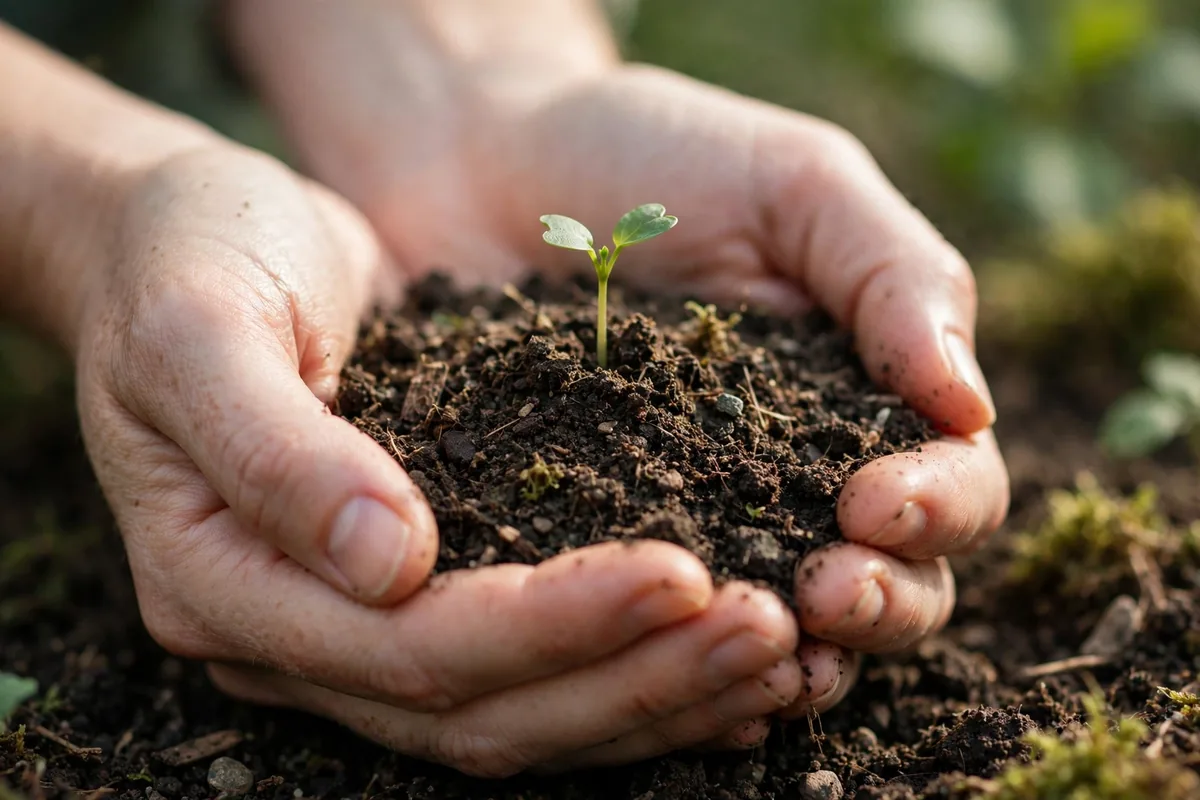
The word “humility” carries a beautiful origin story. It comes from the Latin noun humilitas, from the adjective humilis meaning “low” or “lowly” — which itself derives from humus, meaning “earth” or “ground.”
So etymologically, to be humble is to be “grounded” — close to the earth, not floating above it in self-importance. The same root gives us “human” (an earthly being) and “humus” (the rich soil itself). There’s poetry in that: humility literally means staying connected to the ground of reality.
The word entered English in the 13th–14th century via Old French (humilite), and for centuries it carried religious overtones of lowliness before God. The modern, broader sense — modesty about oneself in general — developed over time.
Humility vs Modesty, Meekness & Low Self-Esteem
These related concepts are often confused. Here’s how they differ:
| Concept | What it means | How it differs from humility |
|---|---|---|
| Humility | Accurate, modest view of oneself | The core virtue itself |
| Modesty | Not showing off; restraint in behavior/dress | More about outward behavior than inner attitude |
| Meekness | Gentleness, patience, non-resistance | About how you respond to others, not self-view |
| Low self-esteem | Negative view of your own worth | Distortion — humility is accurate, not negative |
| False modesty | Pretending to be humble for praise | Performance — the opposite of genuine humility |
| Servility | Excessive deference, self-abasement | Humility respects self and others; servility erases the self |
The key insight: humility is compatible with confidence. You can know you’re skilled at something and still be humble about it — by crediting others, staying teachable, and not using your ability to diminish anyone.
Humility in Philosophy and Religion
Nearly every major wisdom tradition prizes humility:
- Christianity: “When pride comes, then comes disgrace, but with humility comes wisdom.” (Proverbs 11:2). Humility before God is a central virtue.
- Islam: Humility (tawadu) is highly praised; arrogance (kibr) is considered a grave spiritual disease. The Prophet Muhammad is described as the exemplar of humble conduct.
- Buddhism: Humility flows naturally from understanding anatta (non-self) — recognizing the ego as an illusion reduces pride.
- Hinduism: The Bhagavad Gita lists humility (amanitvam) first among the qualities of wisdom.
- Judaism: Moses is described in the Torah as “very humble, more than any man on the face of the earth” (Numbers 12:3).
- Taoism: Laozi taught that water — which seeks the lowest place — is the model of virtue: “The highest good is like water.”
- Socrates: “I know that I know nothing” — intellectual humility as the beginning of wisdom.
Across these traditions, the pattern is identical: pride blinds, humility reveals.
What Psychology Says About Humility
Modern psychology has moved past the old dictionary definition of humility as “having a low opinion of oneself.” Researchers now study humility as a measurable, beneficial trait with several components:
- Accurate self-assessment — seeing strengths and weaknesses without distortion.
- Openness — being willing to learn from anyone, including critics.
- Egalitarianism — treating others as equals regardless of status.
- Low self-focus — not being preoccupied with how you’re perceived.
Studies link humility to better relationships (humble people are easier to be around and quicker to apologize), better learning (they seek feedback instead of avoiding it), and greater resilience (failure threatens the ego less when the ego is right-sized).
Psychologists also distinguish intellectual humility — the willingness to admit you might be wrong — as one of the strongest predictors of good judgment and openness to evidence.

Humility in Leadership and Success
Counterintuitively, humility is a leadership superpower. Management researcher Jim Collins, in his study of companies that achieved extraordinary long-term results, found that the most successful leaders combined fierce professional will with “compelling modesty” — they credited others for success and took personal responsibility for failure.
Humble leaders tend to:
- Ask questions instead of always having answers
- Admit mistakes publicly and quickly
- Share credit generously
- Hire people smarter than themselves without feeling threatened
- Listen more than they speak
The US military even teaches humility as a leadership trait: the best officers, the doctrine holds, are confident enough to be humble.
Humility in Daily Life: Examples
Humility isn’t abstract — it shows up in small, concrete moments:
- In conversation: Asking genuine questions and actually listening to the answers, instead of waiting for your turn to talk.
- At work: Saying “I don’t know, let me find out” instead of bluffing — and crediting teammates by name.
- In disagreement: Considering that you might be wrong before trying to prove you’re right.
- With success: Celebrating wins without needing everyone to know they were yours.
- With mistakes: Apologizing without excuses: “I was wrong, I’m sorry” — full stop.
- With strangers: Treating the cleaner with the same respect as the CEO.
How to Practice Humility
Humility is a skill, not just a trait — it can be deliberately cultivated:
- Ask for feedback — and receive it without defending yourself.
- Keep a “mistakes journal” — writing down errors makes them teachers instead of threats.
- Practice saying “I don’t know” — notice how rarely it causes the disaster you fear.
- Credit others specifically — name who helped, in front of others.
- Serve someone with nothing to gain — anonymous generosity is humility in action.
- Learn something you’re bad at — being a beginner regularly keeps the ego flexible.
- Listen to understand, not to reply — in your next three conversations, try it.
Synonyms, Antonyms & Related Words
| Category | Words |
|---|---|
| Synonyms | Modesty, humbleness, meekness, unpretentiousness, self-effacement |
| Antonyms | Pride, arrogance, vanity, conceit, hubris, egotism |
| Related | Humble (adj.), humbly (adv.), humiliate (verb — to make humble, often forcibly), humiliation (noun) |
Word family note: humble is the adjective (“a humble person”), humbly the adverb (“she accepted humbly”), and humility the noun naming the quality itself.
Example sentences:
- “He accepted the award with humility, thanking his entire team.”
- “It took real humility to admit the strategy had failed.”
- “Her humility made her the most respected person in the room.”
Famous Quotes About Humility
- “Humility is not thinking less of yourself, it’s thinking of yourself less.” — C.S. Lewis
- “True humility is not thinking less of yourself; it is thinking of yourself less.” — often attributed to Rick Warren
- “Pride makes us artificial and humility makes us real.” — Thomas Merton
- “A great man is always willing to be little.” — Ralph Waldo Emerson
- “Humility is the solid foundation of all virtues.” — Confucius
- “The higher we are placed, the more humbly we should walk.” — Marcus Tullius Cicero
Frequently Asked Questions
What is the meaning of humility in simple words?
Being humble — not thinking you’re better than others, being modest about your achievements, and treating everyone with equal respect.
What is the difference between humility and being humble?
They’re the same quality in different forms: humble is the adjective describing a person, humility is the noun naming the quality.
Is humility a strength or weakness?
A strength. Research links it to better relationships, better learning, better leadership, and greater resilience. Confusing it with weakness is one of the most common misconceptions.
What is the opposite of humility?
Pride — along with arrogance, vanity, and conceit.
Can you be confident and humble at the same time?
Yes — and the combination is powerful. Confidence is trusting your abilities; humility is not exaggerating them or using them to diminish others.
What does the Bible say about humility?
Extensively and positively — e.g., Proverbs 11:2: “When pride comes, then comes disgrace, but with humility comes wisdom.” Moses is described as exceptionally humble.
What is intellectual humility?
The willingness to recognize that your beliefs might be wrong — considered by psychologists one of the strongest predictors of good judgment.
How can I become more humble?
Ask for feedback, admit mistakes quickly, credit others by name, say “I don’t know” freely, and regularly put yourself in beginner positions.
Source: Definitions cross-checked against leading dictionaries. For the full dictionary entry, see Merriam-Webster’s definition of humility.
