Snafu Meaning: What Does Snafu Mean?
Quick Answer
SNAFU (pronounced sna-FOO) is a military acronym for “Situation Normal: All Fouled Up” — a chaotic mess that’s treated as business as usual. Born in WWII U.S. military slang, it now means any big, unexpected error or mix-up.
- Stands for: “Situation Normal: All Fouled Up”
- Pronounced: sna-FOO
- Origin: U.S. military, WWII (1940–44)
- Today: Noun, verb, or interjection for a mess
What Does “Snafu” Mean?
SNAFU — pronounced sna-FOO — is a military acronym that stands for “Situation Normal: All Fouled Up.” The sarcastic point of the phrase is that the situation is bad, but that’s normal: chaos isn’t the exception, it’s the routine. Business as usual.
A note on the wording: the original wartime version used a stronger F-word than “fouled.” The “fouled up” rendering is the polite version, still used in print and polite company, but everyone understands which word the F originally stood for.
The humor is gallows humor — soldiers laughing at chaos they couldn’t control. That tone survives today: when someone calls a botched product launch a snafu, there’s a shrug built into the word. It says the mess is real, but so is life’s habit of producing them.
Journalism made it a headline word. “Election snafu,” “tech snafu,” “travel snafu” — the construction turns any institutional failure into a three-word story. The word does useful work there: it names the mess without assigning blame, which is often exactly what an editor wants.

Origin: WWII Military Slang
The term was born between 1940 and 1944 in the U.S. Army, invented by cynical GIs who were mocking the military’s love of acronyms and bureaucracy. Mass mobilization had thrust millions of civilians into military life, and confusion was constant — the joke was that the mess wasn’t an anomaly at all, but simply “situation normal.”
First in print: The Kansas City Star on July 27, 1941, followed by Time magazine in June 1942. The acronym parodied the very habit it sprang from: soldiers drowning in official abbreviations answered with one of their own, and it stuck.
Like much military slang, snafu traveled home with the troops after the war and settled into civilian English — first in veteran bars and union halls, eventually in news headlines and office memos. Few barracks inventions have had a longer second career.
Private Snafu: The Cartoon
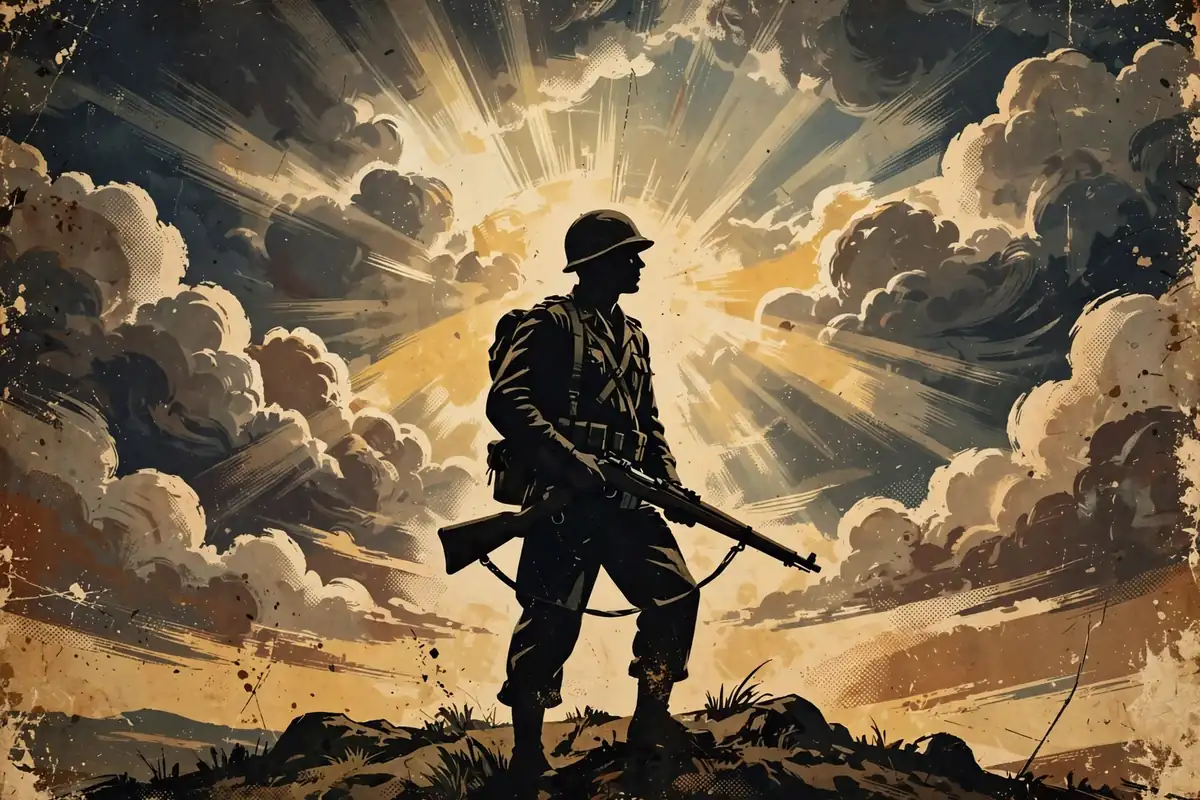
The word got an enormous boost from Private Snafu, a series of WWII instructional cartoons produced by Frank Capra and directed by Chuck Jones of Looney Tunes fame. The title character was a soldier who always did the wrong thing — loose lips, carelessness, gullibility — teaching real troops what not to do by negative example. If Private Snafu fell for a trap, the audience knew not to.
“Snafu” was the perfect name for the perpetual screw-up, and the cartoons cemented the term in American culture. Mel Blanc, the voice of Bugs Bunny and the rest of the Looney Tunes cast, voiced the character — which is why so many Americans heard the word before they ever read it in print.
How “Snafu” Is Used Today
Snafu is now mainstream vocabulary, flexible enough to serve as a noun, a verb, or an interjection. At work: “The launch turned into a snafu when the site crashed.” In tech: “A snafu in the ordering system blocked checkouts.” In travel: “Lost luggage — a classic airport snafu.” In bureaucracy: “A paperwork snafu delayed approval for months.” And as a verb: “They snafued the rollout.”
The tone is usually lighthearted: a big, unexpected problem with a shrug built in. It says “this is a mess,” but it also says “messes happen,” which is what separates it from angrier words for failure. Calling something a snafu admits the problem while declining to panic about it.
Snafu vs Fubar vs Susfu
Snafu belongs to a whole family of WWII acronyms, and the differences between them are a matter of severity. Snafu is the mild one — a messy, chaotic situation that is ongoing but manageable. FUBAR is worse: “Fouled Up Beyond All Recognition,” a total, unrecoverable loss. SUSFU — “Situation Unchanged: Still Fouled Up” — describes a mess with no progress. TARFU — “Things Are Really Fouled Up” — sits between snafu and fubar, and “Charlie Foxtrot” (from the NATO phonetic alphabet) is the radio-safe way to say “cluster foul-up.”
| Term | Expands To | Severity |
|---|---|---|
| SNAFU | Situation Normal: All Fouled Up | Messy — but ongoing, manageable |
| FUBAR | Fouled Up Beyond All Recognition | Total loss — unrecoverable |
| SUSFU | Situation Unchanged: Still Fouled Up | Still broken — no progress |
| TARFU | Things Are Really Fouled Up | Worse than snafu |
| Charlie Foxtrot | Cluster Foul-up | Extremely chaotic |
The rule of thumb is simple: if you can still fix it, it’s a snafu. If you can’t, it’s a fubar.

Is Snafu a Curse Word?
Technically, the F in the original expansion stands for a profane word, which is why style guides treat snafu as informal. In practice, though, the polite “fouled up” rendering is so firmly established that the word runs freely in news headlines and offices — The New York Times has put “snafu” in its titles.
Style guides generally classify it as informal rather than vulgar. Dictionaries print it without asterisks, and newsrooms treat it the way they treat any slang: fine for a headline about a travel mix-up, out of place in a formal editorial.
It comes down to judgment. In formal writing or truly polite company, say “fouled up” and skip the acronym’s history. In the workplace it is generally acceptable — just know your audience before you deploy it.
Famous Snafus in History
History is full of them. The 2000 U.S. presidential election produced the Florida recount — hanging chads and weeks of televised chaos — perhaps the most famous political snafu in modern American memory. The 1980 rescue attempt in Iran, Operation Eagle Claw, collapsed in the desert when aircraft collided, a military snafu that reshaped U.S. special-operations doctrine for decades.
1948 headline “Dewey Defeats Truman” — printed before the votes were fully counted — remains the textbook newspaper snafu, immortalized in the photograph of a grinning Harry Truman holding the mistaken edition aloft. Technology has supplied its share as well: the 2012 launch of the Healthcare.gov website, which crashed under its own traffic on day one, was called a snafu in headlines across the country.
Closer to everyday life: reply-all disasters, wrong attachments, and the crashed servers of countless tech launches are mini-snafus — small, survivable, and usually funny later. The word endures because the experience is universal: complex systems plus human error equals situation normal.
Frequently Asked Questions
What does snafu mean?
“Situation Normal: All Fouled Up” — a chaotic mess treated as routine. The joke is that the disaster is expected, not exceptional. It is now mainstream English for any big, unexpected mix-up.
How do you pronounce snafu?
sna-FOO — it rhymes with “voodoo,” with the stress on the second syllable. All-caps SNAFU is the acronym; lowercase “snafu” is the everyday noun.
Where did snafu come from?
WWII U.S. Army slang, coined between 1940 and 1944 by GIs mocking military bureaucracy. It first appeared in print in The Kansas City Star on July 27, 1941, and in Time magazine in June 1942.
Snafu vs fubar — what’s the difference?
A snafu is a messy, ongoing situation that is still manageable; a fubar — “Fouled Up Beyond All Recognition” — is a total, unrecoverable loss. Think of snafu as fixable chaos and fubar as gone beyond saving.
What was Private Snafu?
A series of WWII instructional cartoons produced by Frank Capra and directed by Chuck Jones, teaching soldiers what not to do through a character who always did the wrong thing. Mel Blanc voiced the title character. The cartoons cemented the term in American culture.
Is snafu offensive?
It is informal rather than formal. The original F-word was profane, but the standard printed expansion — “fouled up” — is the polite rendering used in news and offices. If in doubt around formal company, say “fouled up.”
Can snafu be a verb?
Yes — “they snafued the rollout.” Merriam-Webster lists it as both a noun and a verb. The past tense is “snafued” and the plural noun is “snafus.”
What does SUSFU mean?
“Situation Unchanged: Still Fouled Up” — the mess is still broken, with no progress. It is the pessimistic cousin of snafu, implying the chaos has stalled rather than resolved.
What does TARFU mean?
“Things Are Really Fouled Up” — a step worse than a snafu. It never crossed into mainstream English the way snafu did, but it survives in military slang alongside FUBAR.
Is snafu still used today?
Yes — it is fully mainstream, appearing in news headlines, offices, and everyday speech. The New York Times has run “snafu” in titles, and it functions as a noun, verb, or interjection.
What’s the plural of snafu?
Snafus — as in “a series of snafus.” Like most acronyms turned into words, it simply takes a regular -s ending.
Is snafu American or British?
American in origin, born in the U.S. Army during WWII. It has since spread into global English, so British speakers use it too — but the birthplace is American.
Is “snafu” in the dictionary?
Yes. Merriam-Webster lists it as both a noun and a verb, with the polite “fouled up” expansion. Its acceptance into dictionaries marks the journey from barracks slang to standard English.
Who voiced Private Snafu?
Mel Blanc — the voice of Bugs Bunny and the rest of the Looney Tunes cast. Frank Capra produced the series and Chuck Jones directed it, which is why the character looked and sounded like classic wartime animation.
Source: For the full history, see Wikipedia’s article on SNAFU.