Halal Meaning: What Does Halal Mean in Islam?
Quick Answer
Halal is an Arabic word meaning “permissible” — anything allowed under Islamic law. It’s most associated with food (meat slaughtered and prepared according to Islamic guidelines), but it also covers finance, cosmetics, medicine, and daily conduct. Its opposite is haram (“forbidden”).
- Literal meaning: “Permissible, lawful”
- Pronunciation: huh-LAHL (/həˈlɑːl/)
- Opposite: Haram (forbidden)
- Applies to: Food, drink, finance, cosmetics, lifestyle
What Does Halal Mean?
Halal (Arabic: حلال) translates to “permissible” in English. It describes anything allowed under Islamic law (Sharia) — derived from the Quran and the Sunnah (the teachings and practices of the Prophet Muhammad, peace be upon him).
While most non-Muslims meet the word at restaurants and grocery stores, halal is a whole way-of-life concept: it governs what Muslims eat and drink, how they handle money, what they put on their skin, and how they conduct business. The unifying idea is living within divinely set boundaries — with mindfulness about what one consumes in every sense.
In everyday speech, “halal” usually means “this is fine for a Muslim” — whether “this” is a meal, a bank account, or a cosmetic product.
Pronunciation
Halal is pronounced huh-LAHL (/həˈlɑːl/) — two syllables, stress on the second, with a broad “ah” vowel. Its opposite, haram, is huh-RAHM (/həˈrɑːm/).
Etymology
- Arabic root ḥ-l-l — carrying the idea of untying, releasing, making lawful
- Ḥalāl — “that which is lawful, permitted”
- First recorded in English 1797
The root’s imagery is lovely: something halal is “released” from restriction — you are free to partake in it. Its counterpart haram comes from a root meaning “forbidden, sacred, inviolable” — set apart from use.
Halal vs Haram
Islamic jurisprudence sorts actions into categories, with halal and haram as the two poles:
| Term | Meaning | Examples |
|---|---|---|
| Halal | Permissible, lawful | Properly slaughtered chicken, honest trade, marriage |
| Haram | Forbidden, unlawful | Pork, alcohol, theft, usury (riba) |
| Makruh | Disliked but not forbidden | Certain discouraged (not sinful) acts |
| Mushbooh | Doubtful/questionable | Products with uncertain ingredients — best avoided |
In daily speech, Muslims use “halal” broadly for anything in the first category — and “haram” for anything clearly in the second. When something’s status is unclear, the cautious principle is to avoid it until verified — hence the importance of certification.
Halal Food: The Rules
The dietary laws are the most widely known application. The core principles:
Always halal (permissible):
- Plant foods: Fruits, vegetables, grains, legumes — halal by default.
- Seafood: Fish and most sea creatures are considered halal by the majority of scholars.
- Properly slaughtered meat: Beef, lamb, goat, chicken, and other permitted animals — only if slaughtered according to Islamic guidelines (see below).
- Dairy and eggs: From halal animals, halal by default.
Haram (forbidden):
- Pork and its derivatives: Including gelatin, lard, and enzymes from pigs — a major reason Muslims read ingredient labels carefully.
- Alcohol and intoxicants: All intoxicating drinks and drugs.
- Carrion: Animals that died without proper slaughter.
- Blood: Consumed blood is forbidden.
- Carnivorous animals: Predators with fangs and claws (lions, dogs, etc.).
- Improperly slaughtered meat: Even a permitted animal becomes haram if not slaughtered correctly.
The gray zone: processed foods with hidden animal derivatives (gelatin in candy, whey, enzymes in cheese, alcohol-based flavorings) — this is where halal certification matters most.

Halal Slaughter (Zabiha): How It Works
Zabiha (or dhabiha) is the Islamic method of slaughter. Its requirements, as traditionally understood:
- Invocation: The name of God (“Bismillah, Allahu Akbar” — “In the name of God, God is greatest”) is pronounced over each animal.
- Swift cut: A single swift cut across the throat severs the carotid arteries, jugular veins, and windpipe — designed to be as quick as possible.
- Sharp blade: The knife must be sharp; causing unnecessary suffering is explicitly forbidden — kindness to animals is a religious obligation.
- Draining of blood: The animal is hung or positioned so blood drains fully, since consumed blood is haram.
- Sane, qualified slaughterer: Traditionally performed by a Muslim of sound mind (some schools also accept slaughter by Christians and Jews, “People of the Book”).
Animal welfare: Islamic tradition emphasizes mercy to animals — the animal should be calm, well-treated in life, not slaughtered in sight of other animals, and the blade kept from its view until the moment. Many scholars and certifiers frame zabiha as an early animal-welfare standard.
Modern debate: stunning before slaughter is accepted by many scholars and certifiers (if the animal remains alive at the cut) and required by law in some countries — others insist on slaughter without stunning. Practices vary by certifier and country.
Halal Beyond Food
Halal thinking extends across modern life:
- Islamic finance: Riba (interest/usury) is haram — so halal banking uses profit-sharing, leasing, and fee-based models instead of interest-bearing loans. Sukuk (Islamic bonds) and halal mortgages are a multi-trillion-dollar global industry.
- Cosmetics & personal care: Halal cosmetics avoid pork-derived gelatin, alcohol, and non-halal animal ingredients — and are often cruelty-free as well.
- Pharmaceuticals: Halal-certified medicines avoid haram gelatin capsules and alcohol-based ingredients where alternatives exist.
- Tourism: Halal tourism — hotels and destinations catering to Muslim travelers (halal food, prayer facilities, family-friendly environments) — is one of travel’s fastest-growing segments.
- Logistics: Halal supply chains keep halal products segregated from haram contamination through processing, transport, and storage.
Halal Certification
Because modern supply chains are complex, third-party halal certification exists to verify compliance:
- What certifiers check: Ingredients, slaughter methods, processing facilities, cleaning procedures, and segregation from haram substances.
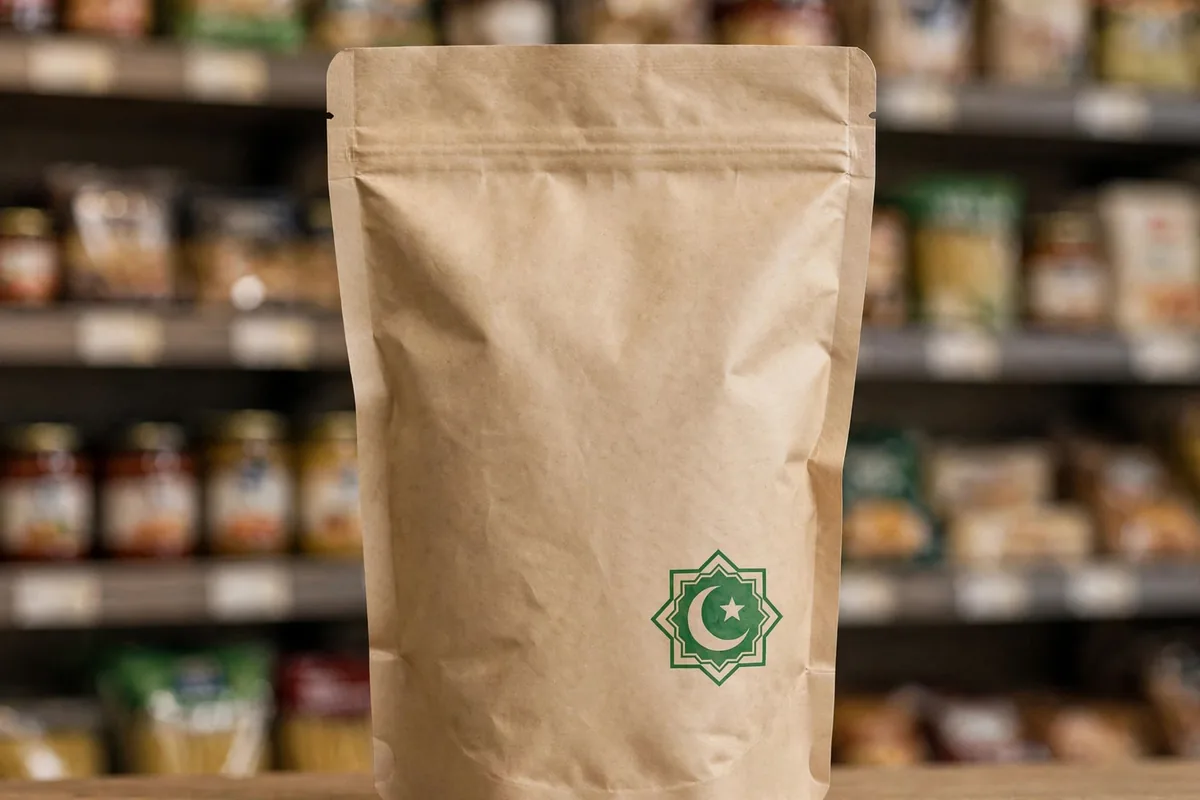
- The label: Certified products carry a halal logo — the visual marker Muslims look for in shops and restaurants.
- Global variation: Standards differ between certifiers and countries (Malaysia’s JAKIM, Indonesia’s MUI/BPJPH, and many others) — which is why some Muslims trust only specific certifiers.
- Market size: The global halal food market alone is valued in the trillions of dollars, serving nearly 2 billion Muslims — plus non-Muslim consumers drawn by hygiene and ethical standards.
Common Misunderstandings
- “Halal is just about meat.” Meat is the most visible part, but halal covers finance, cosmetics, medicine, and conduct — it’s a comprehensive ethical framework.
- “Halal food is blessed by a priest.” There’s no priesthood in Islam; slaughter involves an invocation by the slaughterer, not a blessing ceremony.
- “Halal and kosher are identical.” They overlap significantly (both involve ritual slaughter and pork prohibition), but the rules differ in details — many Muslims accept kosher meat when halal isn’t available, but the standards aren’t interchangeable.
- “Halal means the animal suffered.” The tradition explicitly mandates minimizing suffering — sharp blade, calm handling, no slaughter in view of other animals.
- “Only Muslims care about halal.” The global halal market includes many non-Muslim consumers who value its hygiene, traceability, and animal-welfare standards.
Halal in Daily Life: A Practical Guide
For Muslims navigating modern life — and for non-Muslims hosting Muslim friends — the practical questions:
- Reading labels: look for the halal logo first; without it, scan ingredients for gelatin, whey, enzymes, glycerin, and alcohol-based flavorings — the usual hidden haram suspects.
- Eating out: ask whether meat is halal-certified — many restaurants now advertise it. When in doubt, seafood and vegetarian dishes are the safe defaults.
- Traveling: halal travel apps list certified restaurants worldwide; airlines offer halal meal options (book ahead — usually labeled “MOML,” Muslim meal).
- Hosting Muslim guests: serve halal-certified meat or vegetarian dishes, keep alcohol separate (or skip it), and don’t be offended if they ask about ingredients — it’s diligence, not distrust.
- Finance: Islamic banks and halal investment funds screen out interest, alcohol, gambling, and other haram industries — ask your bank about Sharia-compliant options.
The spirit of it: halal living is ultimately about mindfulness — knowing what you consume, in every sense, and choosing within boundaries you believe are divinely set.
Quick Facts
| Fact | Detail |
|---|---|
| Means | “Permissible” (Arabic) |
| Opposite | Haram — forbidden |
| Core areas | Food, finance, cosmetics |
| Key practice | Zabiha slaughter |
| Look for | Halal certification logo |
Frequently Asked Questions
What does halal mean?
Arabic for “permissible” — anything allowed under Islamic law, most famously food prepared according to Islamic guidelines.
What is the opposite of halal?
Haram — forbidden. Pork, alcohol, and theft are haram.
What makes meat halal?
The animal must be a permitted species, slaughtered by the zabiha method (invocation, swift cut with a sharp blade, full blood drainage).
Is halal only about food?
No — it also governs finance (no interest), cosmetics, medicine, and daily conduct.
Can non-Muslims eat halal food?
Absolutely — halal food is simply food meeting Islamic standards; anyone can eat it.
What is halal certification?
Third-party verification that a product’s ingredients, processing, and handling comply with Islamic law — shown by a halal logo.
Is halal the same as kosher?
Similar but not identical — both involve ritual slaughter and forbid pork, but the specific rules differ.
Why is pork haram?
The Quran explicitly prohibits pork — observant Muslims avoid it and its derivatives entirely.
What should I serve Muslim guests?
Halal-certified meat or vegetarian dishes — keep alcohol separate, and welcome ingredient questions as diligence, not distrust.
What is a halal mortgage?
A Sharia-compliant home financing arrangement using profit-sharing or leasing models instead of interest-bearing loans (riba is haram).
Is gelatin halal?
Only if halal-certified — most commercial gelatin comes from pigs or non-halal slaughter, so observant Muslims check for certified sources or use plant-based alternatives like agar.
What’s the difference between halal and zabiha?
Halal is the broad concept (permissible); zabiha is specifically the Islamic slaughter method that makes meat halal.
Source: Overview compiled from established references on Islamic dietary law. For the encyclopedic article, see Wikipedia’s article on halal.