
ATF Meaning: What Does ATF Stand For?
Quick answer: ATF stands for the Bureau of Alcohol, Tobacco, Firearms and Explosives — a US federal law enforcement agency under the Department of Justice. Formed July 1, 1972, it investigates federal firearms and explosives crimes, arson and bombings, and illegal alcohol and tobacco trafficking, and it licenses the firearms and explosives industries. Its official site is atf.gov. (Also abbreviated BATFE.)
In this article
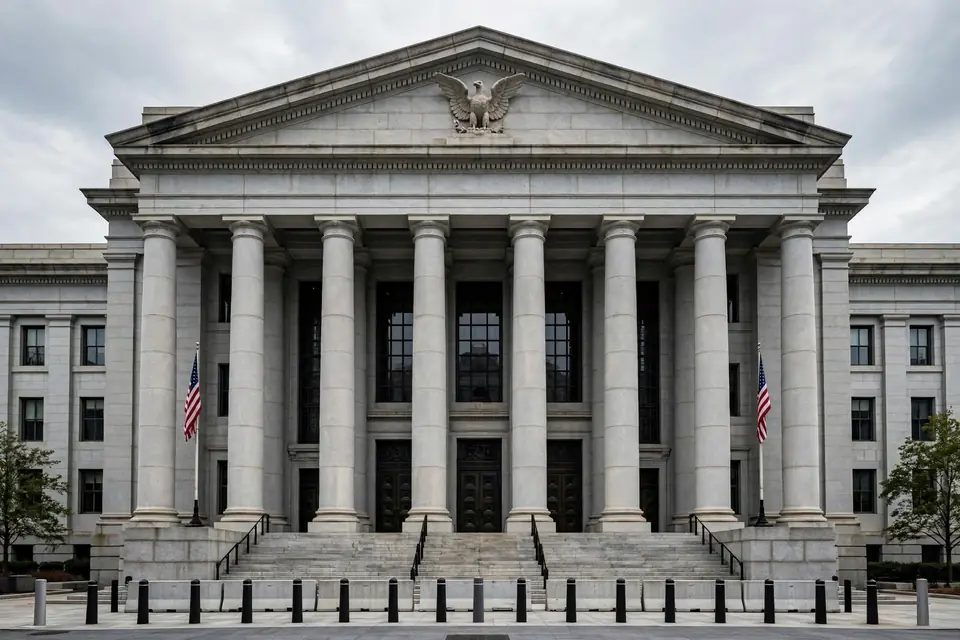
What Does ATF Stand For?
ATF = the Bureau of Alcohol, Tobacco, Firearms and Explosives. It is a federal law enforcement agency within the United States Department of Justice, headquartered at the Ariel Rios Federal Building in Washington, D.C.
Key facts:
- Formed: July 1, 1972.
- Employees: about 5,285 (2021).
- Budget: approximately US$1.5 billion (2021).
- Parent agency: Department of the Treasury (1972–2003), Department of Justice (2003–present).
- Also called: BATFE (unofficial).
- Website: atf.gov.
The name’s logic: each word in the title is a jurisdiction — the agency polices federal law around alcohol (tax evasion, trafficking), tobacco (contraband cigarettes), firearms (illegal manufacture, possession, trafficking), and explosives (bombings, unsafe storage). The “E” for Explosives was added as the mission expanded.
ATF vs. FBI vs. DEA: the three big DOJ agencies divide the work — the FBI handles general federal crime, counterterrorism, and intelligence; the DEA handles drugs; the ATF handles guns, explosives, arson, and alcohol/tobacco diversion. They overlap constantly — which is why joint task forces exist.
What Does the ATF Do?
The mission: to protect the public from crimes involving firearms, explosives, arson, and the diversion of alcohol and tobacco products — and to regulate lawful commerce in firearms and explosives.
Major functions:
- Enforce federal firearms laws — investigate the importation, manufacture, and possession of illegal firearms and ammunition; remove violent offenders from communities.
- Enforce explosives laws — investigate bombings and protect the public from criminal acts and unsafe storage of explosives.
- Investigate arson — ATF operates a unique fire research laboratory in Beltsville, Maryland, where full-scale mock-ups of criminal arson can be reconstructed.
- Fight alcohol and tobacco trafficking — investigate illegal trafficking and tax evasion; identify trafficking schemes for federal, state, and local agencies.
- Regulate via licensing — license the sale, possession, and transportation of firearms, ammunition, and explosives in interstate commerce.
- Support other agencies — work with task forces of state and local officers (e.g., Project Safe Neighborhoods); assist worldwide law enforcement partners.
Legal basis: Title 28, Section 599A of the U.S. Code establishes the ATF and directs it to investigate criminal and regulatory violations of federal firearms, explosives, arson, alcohol, and tobacco smuggling laws.
ATF in action — typical cases: straw purchasing rings (legal buyers purchasing for prohibited persons), illegal machine-gun conversions, firebombings and church arsons, cigarette smuggling operations dodging millions in taxes, and explosives thefts from construction sites. The common thread: federal jurisdiction over dangerous contraband.
The tracing center: ATF runs the National Tracing Center in West Virginia — the only facility authorized to trace firearms used in crimes. When police recover a crime gun, ATF traces it from manufacturer to dealer to buyer — a paper-trail investigation that has solved countless cases.

History of the ATF
1919 — Prohibition: the story starts with the Alcohol Prohibition Unit in the Bureau of Internal Revenue — the original “revenuers” chasing moonshiners.
1920s — Bureau of Prohibition: moved to the Department of Justice and renamed the Bureau of Prohibition, enforcing the alcohol ban.
1933 — Repeal: after Prohibition ended, the unit returned to the Treasury as the Alcohol Tax Unit — chasing untaxed liquor (“moonshine”) especially in the Southeast.
Mid-1900s — Alcohol and Tobacco Tax Division (ATTD): the unit grew — regulating lawful alcohol commerce under the Federal Alcohol Administration Act of 1935 while pursuing illegal stills.
1972 — ATF born: on July 1, 1972, the Bureau of Alcohol, Tobacco and Firearms was established as a separate Treasury bureau.
2003 — Move to Justice: the Homeland Security Act of 2002 moved ATF to the Department of Justice (effective January 2003) and added Explosives to the name and mission — creating the modern ATF.
The through-line: from moonshine stills to machine guns to bombings, the agency has always followed contraband — wherever tax evasion and violence meet.
Why the Treasury-to-Justice move mattered: under Treasury, ATF was partly a tax agency — its alcohol and tobacco work was about revenue. Under Justice, it became purely a law-enforcement agency focused on violent crime. The TTB (Alcohol and Tobacco Tax and Trade Bureau) stayed behind at Treasury to handle the tax side — which is why ATF’s alcohol role today is mostly criminal investigation, not regulation.
ATF Licensing and Regulation
The regulatory side: beyond investigations, ATF licenses an industry:
- Federal Firearms Licenses (FFLs) — required to manufacture, import, or deal firearms commercially.
- Explosives licenses and permits — for manufacture, dealing, and use.
- Compliance inspections — plant inspections, record-keeping audits, tax collection on alcohol and tobacco.
- Advertising and labeling — monitoring alcohol advertising and labeling practices.
NFA items: ATF administers the National Firearms Act — regulating machine guns, short-barreled rifles and shotguns, suppressors, and destructive devices through registration and taxation.
The Form 4473: anyone buying a gun from a licensed dealer fills out ATF Form 4473 — the firearms transaction record. It asks about criminal history, drug use, mental health adjudications, and more. Lying on the form is itself a federal crime — one of ATF’s most common prosecutions.
FFL types: there are nine types of Federal Firearms Licenses — from Type 01 (dealer/gunsmith) to Type 07 (manufacturer) to Type 03 (collector of curios and relics). Each carries different privileges and obligations.
For the public: most ordinary gun owners never deal with ATF directly — the agency focuses on traffickers, violent offenders, and the licensed industry. Related: see our guide to DWI meaning for another law-enforcement term.
Controversies
A note on tone: the ATF is one of America’s most controversial federal agencies. Below are the widely reported cases — presented factually, without taking sides:
- Ruby Ridge (1992): a standoff in Idaho following an ATF investigation; resulted in deaths and lasting criticism of federal tactics.
- Waco siege (1993): ATF investigated the Branch Davidians for illegal weapons manufacturing; the raid led to a gunfight (four ATF agents killed) and a 51-day standoff ending in fire.
- Operation Fast and Furious: a gunwalking operation in which firearms were allowed to flow to Mexican cartels to track trafficking networks — widely condemned after guns were linked to murders, including a US Border Patrol agent.
The pattern critics cite: aggressive tactics and operations with unintended consequences. Supporters counter that the agency handles genuinely dangerous work — armed traffickers, bomb-makers, arsonists — where risk is unavoidable.
Other Meanings of ATF
Outside law enforcement, ATF can mean:
- “After the fact” — internet slang abbreviation.
- Advanced Technology Framework — in software/testing contexts.
- Automatic transmission fluid — in automotive contexts (usually abbreviated ATF on the bottle).
Context decides: in news and legal contexts, ATF is always the bureau. In a group chat, it’s probably “after the fact.” In a garage, it’s transmission fluid.
ATF in the headlines: the bureau appears in news whenever gun policy is debated — rule changes on pistol braces, ghost guns, and bump stocks all run through ATF rulemaking. Understanding what ATF is helps you read those headlines accurately instead of guessing.
Frequently Asked Questions
What does ATF stand for?
Bureau of Alcohol, Tobacco, Firearms and Explosives.
What is the ATF?
A US federal law enforcement agency under the Department of Justice.
When was the ATF created?
July 1, 1972.
What does the ATF do?
Investigates firearms/explosives crimes, arson, bombings, and alcohol/tobacco trafficking; licenses the firearms industry.
Is the ATF part of the FBI?
No — both are DOJ agencies, but separate.
What is BATFE?
An unofficial longer abbreviation of ATF.
Where is ATF headquarters?
Washington, D.C. (Ariel Rios Federal Building).
What is the ATF’s website?
atf.gov.
Does the ATF regulate alcohol?
It investigates trafficking and tax evasion; routine alcohol regulation moved to the TTB in 2003.
What is an FFL?
Federal Firearms License — ATF-issued license to deal, manufacture, or import firearms.
What is the NFA?
National Firearms Act — regulates machine guns, suppressors, short-barreled firearms via ATF.
Did the ATF start with Prohibition?
Its roots go back to the 1919 Alcohol Prohibition Unit.
Why did ATF move to the DOJ?
The Homeland Security Act of 2002 reorganized it as a law-enforcement agency (2003).
What was Ruby Ridge?
A 1992 standoff following an ATF investigation — widely criticized.
What was the Waco siege?
A 1993 raid and 51-day standoff with the Branch Davidians; four ATF agents died.
What was Fast and Furious?
An ATF gunwalking operation; guns reached cartels — widely condemned.
How many people work at ATF?
About 5,285 (2021).
What is the ATF’s budget?
Approximately US$1.5 billion (2021).
Can ATF agents arrest people?
Yes — ATF Special Agents are federal law enforcement officers.
Does ATF handle state crimes?
It handles federal offenses, often in joint task forces with state/local police.
What does ATF mean in texting?
Usually “after the fact” — not the bureau.
What does ATF mean for cars?
Automatic transmission fluid.
What is the TTB?
Alcohol and Tobacco Tax and Trade Bureau — the Treasury agency that kept ATF’s old tax role after 2003.
What is a straw purchase?
Buying a gun for someone who can’t legally buy one — a federal crime ATF prosecutes.
What are ghost guns?
Unserialized, homemade firearms — a major ATF enforcement priority in recent years.
Does ATF do background checks?
No — the FBI runs NICS checks; ATF handles enforcement and licensing.
Source: For ATF’s history, mission, and structure, see Wikipedia’s ATF article.