Figaro Meaning: Who Is Figaro?
Quick Answer
Figaro is the clever barber-turned-valet created by French playwright Beaumarchais — hero of The Barber of Seville (1775) and The Marriage of Figaro (1784), immortalized by Mozart’s 1786 opera. His name also lives on in the Figaro chain and the French newspaper Le Figaro.
- Character: Witty servant who outsmarts masters
- Creator: Beaumarchais (1775, 1784)
- Operas: Mozart (1786), Rossini (1816)
- Name root: French figurer — “figuring out”
Who Is Figaro?
Figaro — comic character, a barber turned valet — is the clever servant who outsmarts his aristocratic masters. Britannica calls him “adroit, irrepressible, insubordinate.”
In the stories: in The Barber of Seville, he helps Count Almaviva woo Rosine; in The Marriage of Figaro, he foils the Count’s attempt to seduce his own bride-to-be, Susanna — turning the tables on the powerful.
The archetype: the “clever servant” (servus callidus) — an ancient comedy trope from Roman theater, perfected by Beaumarchais for the Enlightenment age.

The Plays: Revolutionary Comedy
| Play | Year | Plot in Brief |
|---|---|---|
| The Barber of Seville | 1775 | Figaro helps the Count win Rosine from her guardian |
| The Marriage of Figaro | 1784 | Figaro outwits the Count to protect his wedding to Susanna |
| The Guilty Mother | 1792 | Final installment — darker, moral reckoning |
- Censored: Marriage was banned for years — its mockery of aristocrats was explosive before the French Revolution.
- Figaro’s famous speech: his Act V monologue attacks inherited privilege — “What have you done to deserve so many advantages?”
- Revolutionary: Napoleon reportedly said the play was “the Revolution in action.”
Beaumarchais wrote the plays as a trilogy arriving at exactly the moment France was ready to explode. The Barber of Seville (1775) was a hit, but Louis XVI initially banned The Marriage of Figaro, recognizing its mockery of aristocratic privilege as dangerous. When it premiered in 1784, it was a sensation — five years later the Revolution began. The Guilty Mother (1792) is rarely performed today but completes Figaro’s story on a darker note.
The Operas: Mozart & Rossini
- Mozart — Le nozze di Figaro (1786): premiered 1 May 1786, Vienna — now among the most performed operas in history. Da Ponte’s libretto, Mozart’s genius.
- Rossini — The Barber of Seville (1816): the “Largo al factotum” aria — “Figaro! Figaro! Figaro!” — is one of opera’s most famous moments.
- Why they endure: perfect comedy, human characters, music that elevates farce to art.
Mozart’s Marriage of Figaro premiered in Vienna on 1 May 1786 to a mixed but ultimately triumphant reception — the audience demanded so many encores that the emperor had to limit them. Rossini’s Barber, premiered in Rome in 1816, suffered a disastrous first night, complete with a heckling claque and a broken guitar string, before becoming one of the most performed comic operas ever. Two masterpieces by two geniuses, drawn from two plays about the same character.

What Does the Name “Figaro” Mean?
- Coined by Beaumarchais from French figurer — “figuring out” (a skill Figaro has in abundance).
- Listed as a boy’s name meaning “barber” — from his original profession.
- Italian echo: figurata relates to dance/figure — Figaro the kinetic, quick-witted schemer.
- Not a traditional name — invented for the character, then adopted by the world.
Figaro as a Symbol
- Lower-class virtue vs aristocratic corruption — wit beats rank, merit beats birth.
- Daring, clever roguery — the scheming valet archetype perfected for the modern age.
- Enlightenment values: reason, equality, questioning authority.
- His name became shorthand for cleverness itself — to be a “Figaro” is to be resourceful.
The Figaro Chain
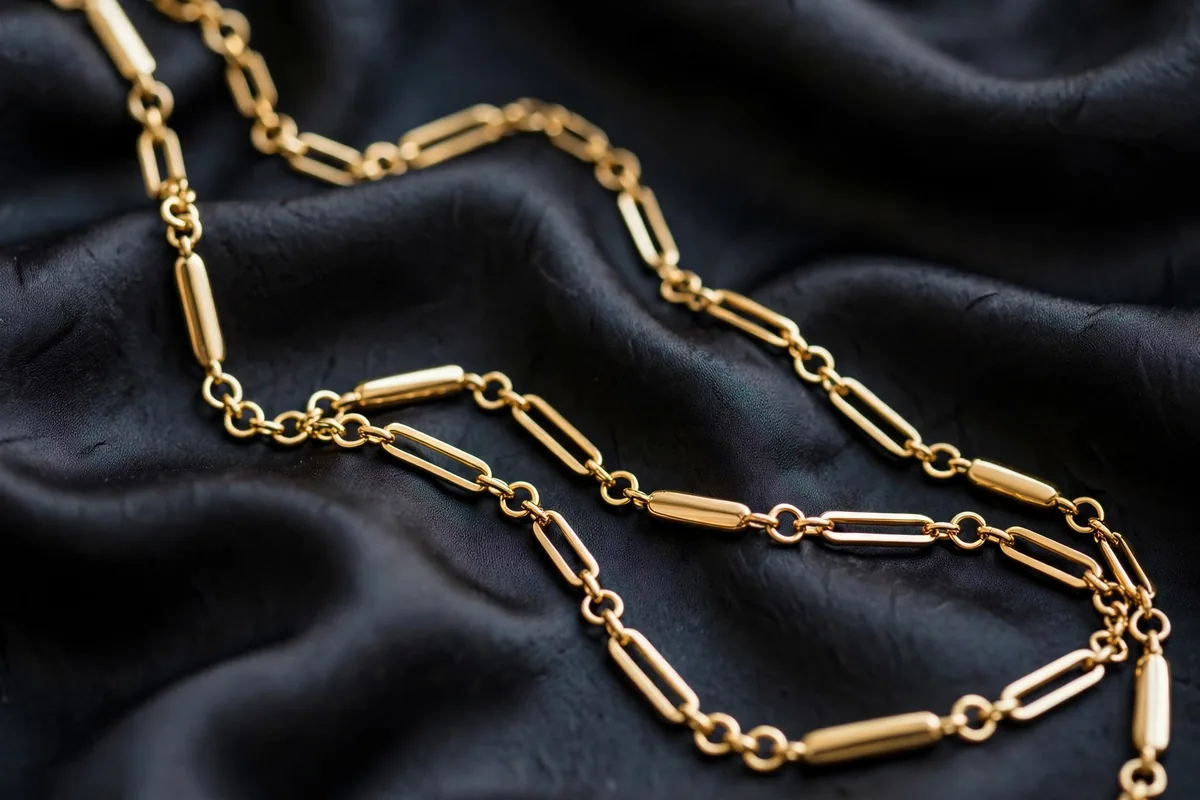
- Italian goldsmithing tradition — 3 short links + 1 elongated link, repeating pattern.
- Named after the opera character — cleverness and versatility reflected in the ever-changing link sizes.
- One of Italy’s signature jewelry exports worldwide — unisex, bold, timeless.
- Styling: worn solo or with pendants — the long link holds charms beautifully.
Le Figaro Newspaper
- France’s leading conservative daily adopted his name — wit and irreverence as brand.
- Founded in its modern form in 1854; still published today — 170+ years.
- The motto: “Sans la liberté de blâmer, il n’est point d’éloge flatteur” — “Without the freedom to criticize, there is no true praise” — from The Marriage of Figaro itself.
Figaro’s Lasting Legacy
- Theater: the template for every clever servant since — from Jeeves to Alfred.
- Music: two of the greatest operas ever written bear his name.
- Language: “figaro” entered dictionaries as synonym for a clever, scheming fellow.
- Culture: 250 years later, still performed, quoted, and worn around necks.
Key Characters Around Figaro
| Character | Role | Relationship to Figaro |
|---|---|---|
| Count Almaviva | Aristocrat | Master Figaro outwits |
| Susanna | Maid | Figaro’s bride-to-be, equally clever |
| Rosine/Rosina | Heroine | Count’s love interest |
| Dr. Bartolo | Guardian | Obstacle in Barber |
| Cherubino | Page | Comic romantic youth |
Famous Figaro Moments
- “Largo al factotum”: Rossini’s showpiece aria — Figaro introduces himself: “Make way for the factotum!”
- The letter duet: Mozart’s “Sull’aria” — Susanna and the Countess plot in beautiful harmony.
- Act V monologue: Figaro’s rage against privilege — the revolutionary heart of the play.
- The finale: forgiveness all around — comedy’s healing power.
Beaumarchais: The Man Behind Figaro
- Pierre-Augustin Caron de Beaumarchais (1732–1799) — watchmaker, musician, spy, arms dealer, playwright.
- Lived Figaro’s resourcefulness — rose from artisan to court through wit.
- Armed the American Revolution — secretly supplied the colonists.
- Figaro was his alter ego — the clever commoner beating the system.
Figaro Today
- Opera houses: both operas in the top 20 most performed worldwide.
- Film: Milos Forman’s Amadeus (1984) features the Marriage premiere.
- Jewelry: Figaro chains remain bestsellers — from streetwear to luxury.
- Press: Le Figaro still shapes French discourse daily.
Figaro Quick Facts
| Fact | Detail |
|---|---|
| Character | Figaro — barber/valet |
| Creator | Beaumarchais |
| Debut | 1775 (Barber of Seville) |
| Famous operas | Mozart (1786), Rossini (1816) |
| Name means | “Figuring out” (figurer) |
| Legacy | Chain, newspaper, archetype |
Figaro’s Influence on Later Works
- Jeeves (P.G. Wodehouse) — the clever valet perfected for England.
- Alfred Pennyworth — Batman’s resourceful butler with Figaro’s wit.
- Figaro in Disney’s Pinocchio — the cat named for the character.
- Every heist film’s mastermind — Figaro’s scheming DNA.
The Bottom Line on Figaro
Figaro — the clever barber who became a cultural icon:
- Character: Beaumarchais’s witty servant (1775)
- Music: Mozart & Rossini operas
- Objects: Figaro chain, Le Figaro newspaper
- Meaning: cleverness triumphing over privilege
Viva Figaro!
Famous Figaro Quotes
- “Largo al factotum!” — “Make way for the factotum!” (Rossini)
- “Se vuol ballare, signor contino” — “If you want to dance, my lord” (Mozart) — threat disguised as music.
- “What have you done to deserve so many advantages?” — the revolutionary question.
Related Characters to Explore
- Jeeves: Wodehouse’s valet — Figaro’s English heir.
- Sancho Panza: Cervantes’ squire — earthy wisdom.
- Leporello: Don Giovanni’s servant — Mozart’s other clever valet.
Where to Experience Figaro
- Opera houses: both works play yearly worldwide — check local listings.
- Streaming: Met Opera on Demand, Medici.tv — world-class productions.
- YouTube: “Largo al factotum” — countless legendary performances.
- Read: Beaumarchais’s plays in translation — witty even on the page.
Frequently Asked Questions
Who is Figaro?
Figaro is the clever barber-turned-valet created by French playwright Beaumarchais, hero of The Barber of Seville (1775) and The Marriage of Figaro (1784). He is the classic “clever servant” who outsmarts his aristocratic masters through wit. Mozart and Rossini turned his stories into two beloved operas.
Who created the character Figaro?
Pierre-Augustin Caron de Beaumarchais (1732–1799) — French watchmaker, musician, spy, and playwright — created Figaro for his stage comedies, pouring his own life into the character: he had risen from artisan to court circles through talent and audacity. Figaro was, in many ways, his alter ego: the clever commoner beating the system.
What does the name “Figaro” mean?
Beaumarchais coined the name from the French verb figurer, “figuring out” — the skill Figaro has in abundance. Baby-name lists also gloss it as “barber,” after his original profession. It was not a traditional name; Beaumarchais invented it, and the world adopted it.
Which operas feature Figaro?
Two of the greatest operas ever written: Mozart’s Le nozze di Figaro (The Marriage of Figaro, 1786), with Da Ponte’s libretto, and Rossini’s The Barber of Seville (1816). Each adapts a different Beaumarchais play — Mozart took Marriage, Rossini took Barber. Both rank among the most performed operas ever.
What happens in The Marriage of Figaro?
On the eve of Figaro’s wedding to Susanna, his master Count Almaviva tries to seduce the bride-to-be. Figaro, Susanna, and the Countess conspire to outwit and humiliate the Count. The comedy ends with the Count begging forgiveness — a servant’s triumph over inherited privilege.
Why was The Marriage of Figaro censored?
Louis XVI banned the play for years because its mockery of the aristocracy was politically explosive. Figaro’s Act V monologue — “What have you done to deserve so many advantages?” — attacked inherited privilege head-on in a France simmering toward revolution. Napoleon later called it “the Revolution in action.”
What is “Largo al factotum”?
“Largo al factotum” — “Make way for the factotum” — is Figaro’s famous entrance aria in Rossini’s The Barber of Seville. The barber cheerfully introduces himself as the town’s indispensable jack-of-all-trades, rattling off his services at breakneck speed. It is one of opera’s most famous baritone showpieces.
What is a Figaro chain?
A Figaro chain is an Italian jewelry design with a repeating pattern of three short links followed by one elongated link. Named after the opera character, it is one of Italy’s signature jewelry exports — unisex, bold, and timeless. The elongated link also holds pendants and charms beautifully.
Why is the French newspaper called Le Figaro?
France’s leading conservative daily adopted the character’s name as a brand of wit and irreverence. Its motto comes straight from the play: “Sans la liberté de blâmer, il n’est point d’éloge flatteur” — “Without the freedom to criticize, there is no true praise.” Founded in its modern form in 1854, it has run for over 170 years.
What does Figaro symbolize?
Figaro stands for wit triumphing over rank — lower-class virtue against aristocratic corruption. He embodies Enlightenment values: reason, merit over birth, the right to question authority. His name became shorthand for cleverness itself.
Is Figaro based on a real person?
No — Beaumarchais invented him, though he drew on the ancient “clever servant” archetype from Roman comedy and on his own life: a watchmaker’s son who talked his way into court circles and secretly armed the American Revolution.
How do you pronounce “Figaro”?
Say fee-GAH-ro, Italian style, stress on the middle syllable, final “o” open and rounded. Though the character is French, the operas — especially Rossini’s — fixed the Italian pronunciation in the world’s ear.
Where should I start — Mozart or Rossini?
Start with Rossini’s Barber of Seville for pure fun — it is fast, funny, and immediately lovable. Then graduate to Mozart’s Marriage of Figaro for depth: a richer, more human comedy that rewards repeated listening. Most opera lovers end up cherishing the pair.
Source: For the character’s story, see Britannica’s entry on Figaro.