DDF Meaning: What Does DDF Mean?
Quick answer: DDF stands for “Drug and Disease Free.” It’s dating-app slang — especially common on Grindr and in online personals — where someone signals they don’t use recreational drugs and believe they’re free of sexually transmitted infections (STIs). It dates to the early internet personals era as space-saving shorthand. Note: DDF is self-reported and unverified, and the term is criticized as vague and potentially stigmatizing — many now prefer specific language like “tested regularly” or “on PrEP.”
In this article
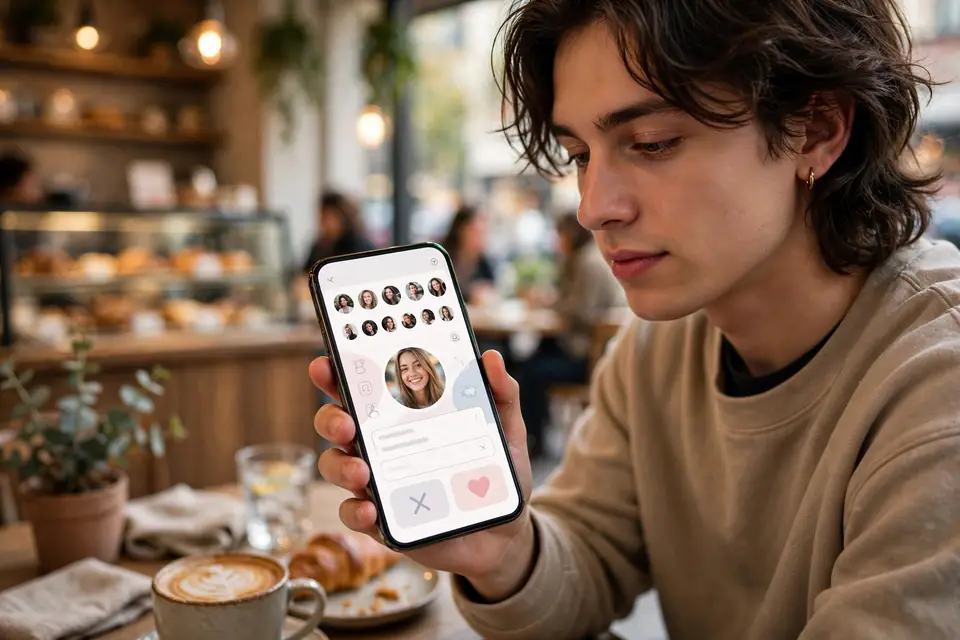
What Does DDF Mean?
DDF = “Drug and Disease Free.” In a dating profile — “32M, DDF, looking for same” — it communicates two claims at once:
- Drug-free: the person says they don’t use recreational drugs.
- Disease-free: the person believes they’re free of sexually transmitted infections (STIs).
It’s shorthand for a health disclaimer — three letters doing the work of an awkward paragraph. You’ll see it most on apps built for quick matching (Grindr especially), where profile space is tight and conversations move fast, but it appears across Tinder, Bumble, OkCupid, and older personals-style platforms too.
The usage is especially rooted in LGBTQ+ dating culture, where the history of the AIDS crisis made sexual-health communication a community priority. In that context, DDF emerged as a fast, discreet way to signal caution and care.
Where Did DDF Come From?
DDF grew out of the early-internet personals era — Craigslist personals, chat rooms, and forums of the 2000s — where character limits and fast scanning rewarded abbreviations. Saying “drug and disease free” in full every time was clunky; DDF was the efficient version, like LOL replacing “laughing out loud.”
As dating moved to apps in the 2010s, the term migrated with it. Grindr — with its minimal profiles and location-based matching — became DDF’s natural habitat. Academic research on the app notes that before Grindr added explicit HIV-status disclosure fields, users relied on informal shorthand like “ddf” to communicate health status in profiles.
The historical weight: DDF didn’t emerge in a vacuum. For gay and bisexual men who lived through the AIDS crisis of the 1980s–90s, health disclosure in dating wasn’t casual etiquette — it was survival culture. Community norms around asking, telling, and verifying grew out of genuine trauma and loss. DDF inherited that gravity: behind the breezy three letters sits a generation’s hard-learned caution. Understanding this history explains both the term’s persistence and why its critics tread carefully — the impulse behind DDF (care, safety, responsibility) is widely respected even by those who reject the wording.
The platform evolution: modern apps have partly outgrown the need for DDF. Grindr now offers structured fields for HIV status, last test date, and PrEP use; other apps prompt for testing recency directly. These fields do what DDF tried to do — but with specificity instead of shorthand. The acronym survives mainly where profiles are freeform and space is tight.
For another dating acronym with its own philosophy, see GGG meaning.

What DDF Signals (and What It Doesn’t)
What it signals: intent. Someone writing DDF is telling you health and sobriety matter to them — they’re asking for the same in return. It’s a filter and an invitation: this is my standard; let’s talk about yours.
What it doesn’t guarantee:
- It’s self-reported. There’s no verification — DDF is a claim, not a test result.
- Many STIs are asymptomatic. Someone can honestly believe they’re “disease free” and be wrong.
- Testing is a snapshot. A clean test last year says nothing about last month.
- “Disease” is vague. Does it mean all STIs? Just HIV? The term never specifies.
The window-period problem: even honest, recently-tested people can unknowingly transmit infections. Most STI tests have window periods — days to weeks after exposure during which tests can’t detect the infection. HIV tests, for instance, may miss very recent infections. So “tested clean last month” is genuinely reassuring but never absolute — which is why consistent protection and regular testing matter more than any single result, DDF label included.
Public-health-minded daters treat DDF as the start of a conversation, not the end of one — a prompt to discuss testing history, protection, and expectations explicitly rather than assuming three letters settled it.
Why DDF Is Controversial
DDF has drawn sustained criticism on two fronts:
1. Stigma. “Disease free” implies its opposite — that people living with STIs or HIV are somehow “diseased” or lesser. Critics argue the term reinforces shame, particularly toward people with HIV who are on effective treatment and undetectable (meaning they cannot transmit the virus). The language sorts people into clean/unclean — a moral framing of a medical matter.
2. Vagueness. Even setting stigma aside, DDF is imprecise to the point of uselessness as health information. It doesn’t say when someone was tested, what they were tested for, or what “drug free” covers (alcohol? marijuana where legal? prescription misuse?). A term that feels informative while informing little can create false confidence.
These criticisms have real momentum: many dating communities now actively discourage DDF in favor of specific, verifiable language — and some platforms’ profile fields (test dates, PrEP status, treatment status) are designed to replace it.

Better Alternatives to DDF
If the goal is genuine transparency, specificity beats shorthand:
- “Tested [month/year], all clear” — dated and concrete.
- “On PrEP” — taking pre-exposure prophylaxis for HIV prevention.
- “Undetectable” — for people living with HIV on effective treatment (U=U: undetectable = untransmittable).
- “Let’s swap recent results” — mutual, verifiable, respectful.
- “Sober / in recovery” — clearer than “drug free” about what you mean.
The principle: say what you actually know, and ask what you actually want to know. Clear dialogue builds more trust than any abbreviation. For the language of romantic devotion, see paramour.
Why specificity wins: vague labels let both people project their own assumptions onto the same three letters — one person hears “tested last week,” the other meant “feel fine, never tested.” Specific language collapses that ambiguity. It also normalizes testing as routine maintenance rather than a confession: when “tested in June” is just another profile line, nobody has to work up the courage to raise it.
How to Talk About Health Status Respectfully
Whether you use DDF or not, the underlying conversation matters. Some practical norms that dating communities have settled on:
- Disclose before, not after. Health status belongs in the conversation before meeting, not as a postscript.
- Be as specific as you’re comfortable being. “Tested in March, all clear” beats “DDF” — and “I’d rather discuss in person” beats silence.
- Don’t demand what you won’t share. Asking for someone’s status while offering none of your own reads as interrogation, not care.
- Respect “undetectable.” Someone living with HIV who is undetectable cannot transmit the virus — treating them as a risk anyway is stigma, not caution.
- Keep it kind. “Thanks for telling me — here’s where I’m at” keeps the door open; disappearing mid-conversation after a disclosure teaches people not to disclose.
The through-line: transparency is a two-way street, and the goal is informed consent — both people making clear-eyed decisions — not a purity test.
Related Dating Acronyms
| Acronym | Stands for | Meaning |
|---|---|---|
| DDF | Drug and Disease Free | Claims no drug use, no STIs |
| GGG | Good, Giving, Game | Dan Savage’s ideal-partner philosophy |
| NSA | No Strings Attached | Casual, no commitment expected |
| LTR | Long-Term Relationship | Seeking something serious |
| NPNC | No Pic, No Chat | Won’t talk without a profile photo |
Frequently Asked Questions
What does DDF mean?
“Drug and Disease Free” — dating slang signaling no recreational drug use and (claimed) freedom from STIs.
What does DDF mean on Grindr?
The same: a profile shorthand for drug and disease free, common in LGBTQ+ dating culture for quick health signaling.
Is DDF offensive?
Many consider it stigmatizing — “disease free” can imply people with STIs/HIV are lesser, and it’s vague as health information.
Can you trust someone who says DDF?
Treat it as a claim, not proof — it’s self-reported, STIs can be asymptomatic, and tests are snapshots in time.
What should I say instead of DDF?
Be specific: “tested [date],” “on PrEP,” “undetectable,” or propose swapping recent results.
Does DDF mean HIV negative?
Not necessarily — it broadly claims freedom from STIs generally; always ask for clarification rather than assuming.
Where did DDF come from?
Early-2000s internet personals and chat rooms, as space-saving shorthand; it migrated to dating apps in the 2010s.
Is DDF only used on Grindr?
No — it’s most associated with Grindr but appears across Tinder, Bumble, OkCupid, and personals platforms.
What does “clean” mean in dating profiles?
Similar to DDF — claims freedom from STIs/drugs — and similarly criticized as stigmatizing language.
Why do people still use DDF?
It’s fast, discreet, and widely recognized — three letters that signal values quickly, even if imprecisely.
Should I avoid profiles that say DDF?
Not necessarily — treat it as an invitation to discuss health expectations openly, and judge by the conversation that follows.
What does GGG mean in dating?
“Good, Giving, Game” — Dan Savage’s framework for an ideal partner; see our full article on GGG meaning.
Is it rude to ask someone their STI status?
No — it’s responsible, as long as you share your own too and keep the tone respectful, not accusatory.
What does “undetectable” mean?
An HIV-positive person on effective treatment with untransmittable virus levels (U=U) — they cannot pass HIV to partners.
Source: For DDF usage and context on Grindr, see BloggerWalk’s DDF explainer.