Dragonfly Meaning: Symbolism & Spiritual Significance
Quick Answer
Dragonfly meaning: transformation, adaptability, and change. Its life — years underwater as a nymph, then metamorphosis into a master of the air — symbolizes personal growth, renewal, and seeing through illusion.
- Core: Transformation & change
- Also: Adaptability, lightness, clarity
- Japan: Courage, strength, victory
- Note: Spiritual meanings are personal beliefs, not science
What Does “Dragonfly” Mean?
Symbolically, the dragonfly stands for transformation — the journey from a limited past into a new phase of life. Because it spends most of its existence as an aquatic nymph before emerging as a winged adult, it has become one of nature’s clearest emblems of personal growth and renewal. People also associate it with adaptability, lightness of being, and the ability to see through illusion.
Biology is what makes the symbol so convincing. The dragonfly doesn’t hide its transformation inside a cocoon; it climbs out of the water, splits its skin open along its back, and unfolds its wings in the open air. It is metamorphosis performed in plain sight, which is why the insect resonates so strongly with anyone going through a major life change — recovery, a career shift, or the end of a long chapter.
The name itself adds to the mystique. Nobody knows exactly how “dragonfly” came to be, though its fierce hunting style and dragon-like appearance probably contributed. Whatever the origin, the mythic resonance stuck, and the insect carries an almost legendary reputation across cultures.
The Life Cycle Behind the Symbol
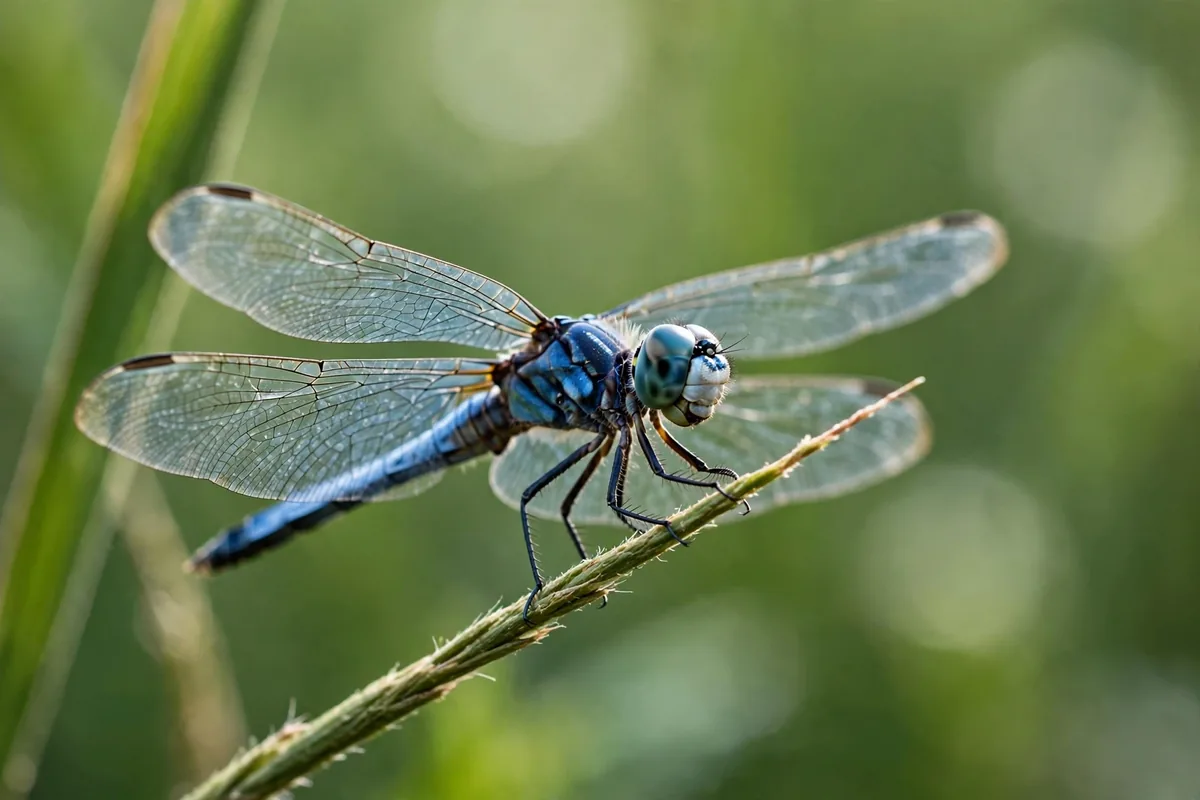
The story begins underwater. A dragonfly nymph lives beneath the surface for months — sometimes up to five years — as a fierce aquatic predator, hunting tadpoles and small fish, growing through a series of molts, and showing none of the grace it will later have in the air.
Then comes emergence, the moment the symbol is born. The nymph climbs up a reed, its skin splits down the back, and the adult crawls out headfirst. It pumps fluid into its crumpled wings, which expand and harden within hours, and then it takes flight — an animal that lived its whole life in water suddenly mastering the air.
Dragonflies undergo incomplete metamorphosis, meaning there is no pupal or cocoon stage; the progression runs egg to nymph to adult directly. And the adult’s winged life is strikingly brief — just weeks to a few months. That contrast between years of hidden preparation and a short, brilliant finale is exactly what gives the dragonfly its poignancy as a symbol of transformation.
Fascinating Dragonfly Facts
Dragonflies are ancient survivors. They were already flying 300 million years ago, long before dinosaurs appeared, and some prehistoric species had wingspans of up to two feet. Their staying power across hundreds of millions of years makes them one of evolution’s great success stories — a fact that feeds directly into their symbolism of resilience.
Their senses and flight abilities are equally remarkable. Each compound eye contains roughly 30,000 facets, giving the dragonfly near-360-degree vision — among the sharpest eyesight in the insect world. In the air they are astonishingly agile, able to fly up, down, backward, sideways, and hover in place like a helicopter, reaching speeds of up to 35 miles per hour. They are also ruthlessly effective hunters, with a catch rate around 95 percent, making them among nature’s most successful predators.
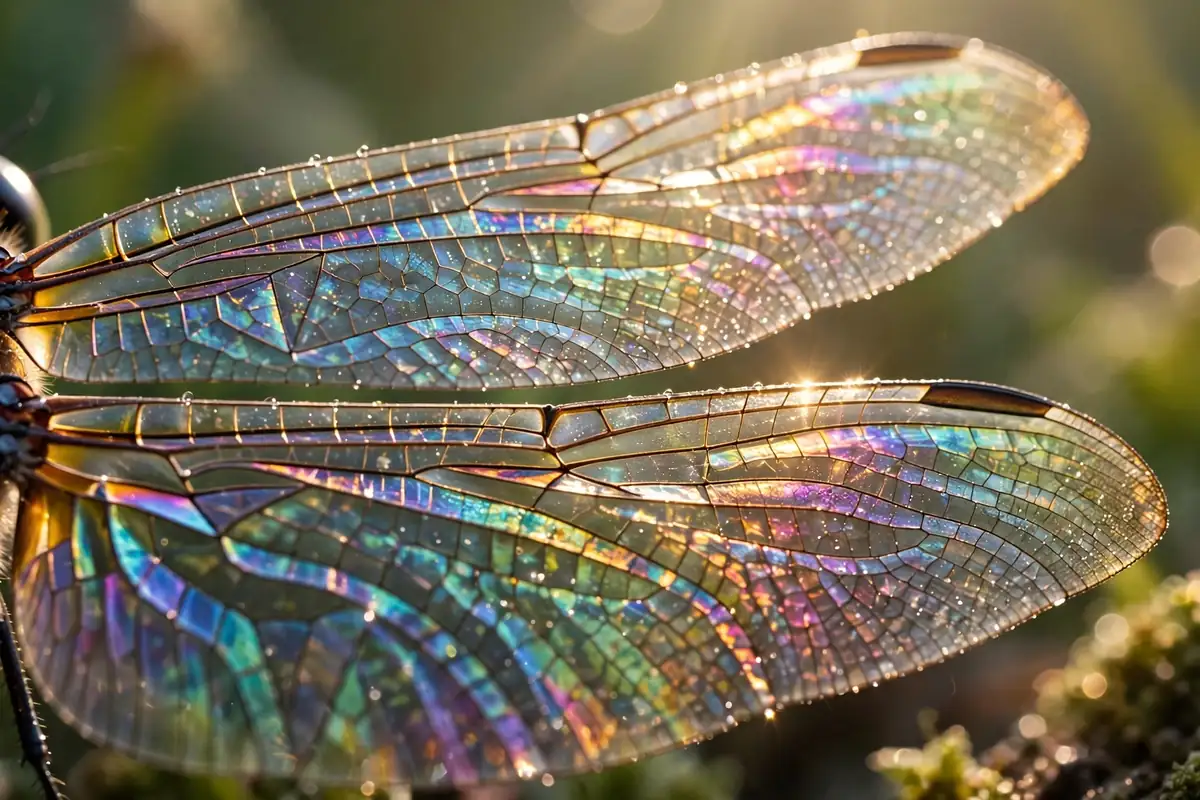
Their famous iridescence is structural rather than pigmented: microscopic structures in the wings and body bend light to produce shifting colors. This shimmering, changeable quality inspired the association between dragonflies and seeing through illusion.

Core Symbolic Meanings
The dragonfly’s symbolism draws directly from its biology. Each core meaning can be traced back to something the insect actually does — its metamorphosis, its vision, its flight, or its habitat. The table below summarizes the main interpretations and the real traits behind them.
| Meaning | Why |
|---|---|
| Transformation | The nymph-to-adult rebirth is nature’s most visible metamorphosis |
| Adaptability | Flies in six directions, hovers, and glides with total control |
| Seeing through illusion | Iridescent wings shift color with the light |
| Clarity & awareness | Near-360° compound vision |
| Lightness of being | Agile, joyful flight — a reminder to live lightly |
| Emotional balance | Lives in both water and air — heart and mind in balance |
| Swiftness | Speeds up to 35 mph — act decisively |
| Resilience | 300 million years of uninterrupted survival |
Taken together, these meanings form a coherent message: change is natural, awareness is power, and heaviness is optional. The dragonfly symbol works because the insect genuinely embodies every trait it is said to represent.
Dragonfly Colors & Their Meanings
In spiritual and symbolic traditions, the color of the dragonfly you encounter is said to refine the message. A blue dragonfly, for instance, is associated with calm and emotional healing, while a red one is read as a burst of energy and courage. These color meanings are interpretive traditions rather than scientific facts.
| Color | Symbolic Meaning |
|---|---|
| Blue | Calm, clarity, emotional healing |
| Green | Healing, renewal, growth |
| Red | Passion, energy, courage |
| Yellow/Gold | Joy, optimism, confidence |
| Purple | Intuition, higher consciousness |
| Black | Mystery, deep change, protection |
| White | Purity, new beginnings |
Cultural Meanings Worldwide
In Japan, where the dragonfly is called tombo, the insect is a symbol of courage, strength, and victory. Samurai adopted it as an emblem because the dragonfly cannot fly backward — it only moves forward — which made it a perfect representation of perseverance and the refusal to retreat. It remains a beloved motif in Japanese art, poetry, and seasonal festivals.
Native American traditions often treat the dragonfly as a spirit guide or messenger, associated with the winds of change, resurrection, and renewal. In Chinese culture it is considered auspicious, symbolizing prosperity, harmony, and new light. Celtic folklore linked it to the otherworld and to fairies, giving it a more mystical, liminal reputation.
European folk traditions were mixed: some older beliefs cast the dragonfly as sinister — the old English name “devil’s darning needle” hints at that suspicion. The modern view, however, is overwhelmingly positive, and contemporary spirituality treats the dragonfly as a messenger between the physical and spiritual realms, urging people to embrace change rather than fear it.
Seeing a Dragonfly: Interpretations
Many people interpret an unexpected dragonfly sighting as personally meaningful. The most common reading is that change or new beginnings are approaching — the insect’s transformation mirrors a transformation in your own life. Others take it as a reminder to stay adaptable, to bend with circumstances rather than breaking under them, or as a nudge to live in the present, given how brief the adult dragonfly’s winged life is.
Some see a dragonfly encounter as a call for clarity — to look past surface appearances the way light looks past the dragonfly’s shimmering wings. A smaller tradition treats it as a message from a deceased loved one. That last interpretation is a personal belief rather than a scientific fact, but the comfort people draw from it is real. Ultimately, the meaning of a sighting depends on your culture, your experience, and the context in which it happened; your own interpretation is the one that counts.
Dragonfly Tattoos
Dragonfly tattoos rank among the most requested nature tattoos, and for good reason: the design is delicate and visually striking, and the symbolism is deeply personal. Most people choose them to mark transformation — recovery from illness or addiction, the end of a difficult relationship, or the start of a genuinely new chapter.
The design possibilities are wide. Realistic renderings capture the insect’s intricate wings, while watercolor styles play up the iridescence and geometric or tribal versions abstract its elegant form. Placement usually follows the wings: shoulders, upper back, ankles, and wrists are popular, since the curved lines of the wings sit naturally on curved parts of the body.
Dragonflies in Dreams
Dream dictionaries commonly interpret a dragonfly as a sign that change is coming and that you should prepare to adapt. A dragonfly in free flight is read as freedom or rising above problems, while catching one suggests seizing an opportunity that might otherwise slip away. The insect’s lightness and agility tend to give these dreams an optimistic tone.
A note of caution is in order: dream meanings are subjective, and psychology offers no universal dictionary of dream symbols. A dragonfly in your dream may simply reflect something you saw that day. Treat these interpretations as prompts for reflection rather than predictions.
Frequently Asked Questions
What does a dragonfly symbolize?
Transformation, adaptability, and change. Its metamorphosis from an underwater nymph into a winged adult makes it a natural emblem of personal growth and renewal.
What is the spiritual meaning of a dragonfly?
In spiritual traditions it represents renewal and seeing through illusion, sometimes described as a messenger between the physical and spiritual realms. These are personal beliefs, not scientific findings.
What does a blue dragonfly mean?
In color symbolism, blue represents calm, clarity, and emotional healing. This meaning comes from interpretive traditions rather than biology.
What does it mean when a dragonfly lands on you?
Many people read it as a sign of change or good fortune. Biologically it likely just mistook you for a perch, but the symbolic reading is what most people remember.
Why is the dragonfly linked to transformation?
Its life cycle is a literal transformation: years underwater as a nymph, then a dramatic open-air emergence into a winged adult. It is nature’s most visible metamorphosis, making it an ideal metaphor for personal rebirth.
What do dragonflies mean in Japan?
Known as tombo, the dragonfly symbolizes courage, strength, and victory. Samurai adopted it as an emblem because it cannot fly backward — a symbol of perseverance.
Are dragonflies good luck?
In many cultures, yes: joy, prosperity, and renewal in Chinese tradition, and a positive omen in modern spirituality. Older European folklore was more ambivalent.
How long do dragonflies live as nymphs?
From several months to about five years underwater, depending on the species. The winged adult stage lasts only a few weeks to a few months.
What does a dragonfly tattoo mean?
Most commonly transformation, freedom, or new beginnings — often marking recovery, rebirth, or a new chapter. The design pairs a delicate image with deeply personal symbolism.
Do dragonflies really see in 360 degrees?
Nearly. Their compound eyes, with around 30,000 facets each, give almost full panoramic vision, among the best in the insect world.
What’s the difference between a dragonfly and damselfly?
Dragonflies rest with wings held flat and open and have stockier bodies; damselflies fold their wings above their backs and are more slender. Dragonflies are generally larger, stronger fliers.
Do dragonflies bite humans?
No. They have strong mandibles for catching prey but cannot bite or sting humans. The old folk name “devil’s darning needle” is pure superstition.
Why are they called “dragonflies”?
The exact origin is unknown, but it likely comes from their fierce, dragon-like appearance and predatory hunting style. The mythic-sounding name has stuck for centuries.
What’s the largest dragonfly ever?
The prehistoric Meganeura, which flew 300 million years ago with a wingspan of up to two feet. Modern species are far smaller, typically two to five inches.
Source: For the real metamorphosis behind the symbol, see Scientific American’s dragonfly metamorphosis feature.