Exhibitionist Meaning: What Does Exhibitionist Mean?
Quick Answer
Exhibitionist has two meanings: (1) in everyday use, someone who behaves extravagantly to attract attention; (2) in psychology, someone with a compulsion to expose themselves to non-consenting strangers — a paraphilic disorder (DSM-5) when it causes distress or involves non-consensual exposure.
- Everyday: Attention-seeking behavior; show-off
- Clinical: Compulsive exposure; “flasher”
- Root: Latin exhibere — “to hold out, display”
- First use: 1891
What Does “Exhibitionist” Mean?
Most English dictionaries, including Merriam-Webster, give two distinct senses of “exhibitionist” — and they live in very different worlds. The first is clinical: a person who experiences recurrent urges to expose themselves to strangers, or the behavior itself. The second is the one most people use daily: the act or practice of behaving so as to attract attention to oneself — the “show-off” sense.
The gap between those two meanings is enormous, which is why context is everything. Calling a flamboyant stage performer an exhibitionist is usually a compliment, or at worst a mild jab. Using the word in a police report means something entirely different. The same letters, two different conversations — and confusing them is where most misunderstandings of this word begin.
A simple test: ask whether consent is involved. The everyday sense — loud fashion, dramatic storytelling, attention-grabbing performance — happens with an audience that chose to watch. The clinical sense centers on non-consenting strangers. That single distinction separates a personality trait from a psychological disorder and a criminal offense.
Etymology
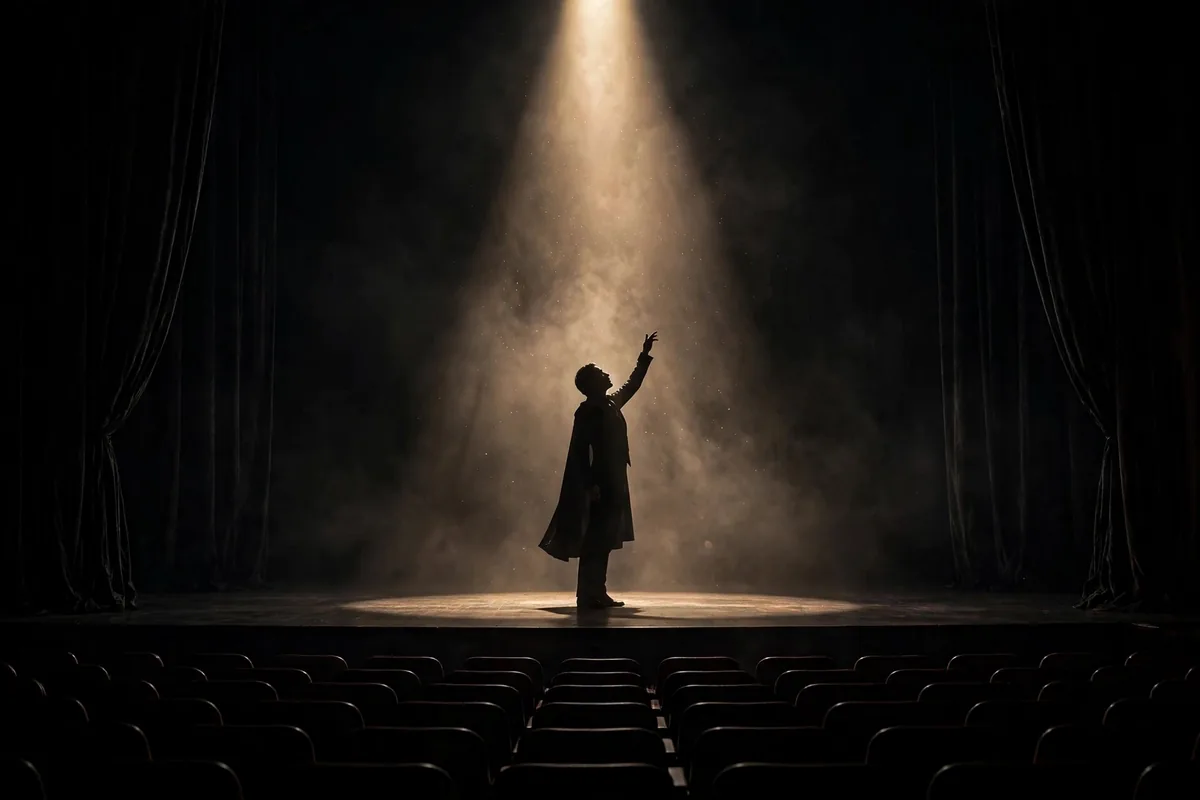
The word’s family tree starts with the Latin verb exhibere — “to hold out, to display, to present.” Add the suffix -ist (“one who”), and you get, quite literally, “one who displays.” The noun exhibition traveled the same road, which is why an art exhibition and an exhibitionist share a root: both are about putting something on display.
Originally, the word cluster had no psychological coloring at all — it described public displays of objects and art. The clinical sense emerged in the late 19th century, when early psychologists needed language for compulsive behaviors they were beginning to classify; the first known use of “exhibitionist” dates to 1891. The broad, everyday “attention-seeker” sense developed later and is now the dominant meaning in casual speech — a reminder that words often drift far from the specialist contexts that coined them.
Pronunciation
“Exhibitionist” is pronounced ek-suh-BISH-uh-nist — five syllables, with the primary stress landing on “BISH.” Say it slowly: ek — suh — BISH — uh — nist. The most common error is stressing the wrong syllable (“ex-hi-BI-shun-ist”), which instantly marks the speaker as unfamiliar with the word. The related noun “exhibition” follows the same pattern: ek-suh-BISH-un. Once you lock in that stressed “BISH,” the whole word family falls into place.
The Everyday Meaning
In ordinary conversation, an “exhibitionist” is simply a show-off — someone who acts extravagantly to draw eyes. The wardrobe is louder than the room requires, the stories are performed rather than told, the entrances are staged. It is a description of style and appetite for attention, not a diagnosis of anything.
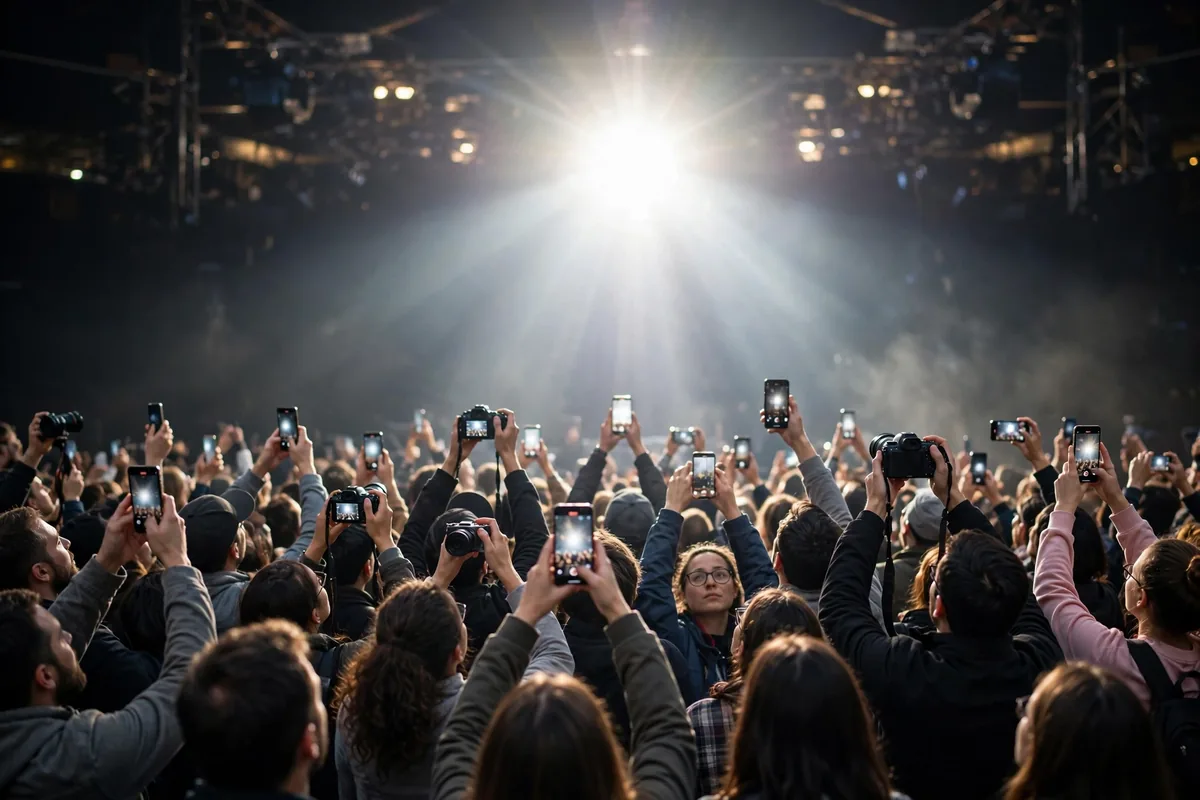
This sense shows up across modern life. Performers and artists who cultivate outrageous public personas — think of pop stars famous for spectacle — are routinely called exhibitionists, often admiringly; the label acknowledges that commanding attention is literally their craft. In the digital age, the word has stretched further: relentless oversharing for likes and validation is sometimes dubbed “socially sanctioned exhibitionism,” though psychologists would note this is metaphor, not medicine.
The motivations behind everyday exhibitionism are familiar human ones: desire for attention, validation, and admiration, or sometimes plain rebellion against norms. And critically, this usage carries no clinical weight. Being the loudest person at the party may be exhausting for everyone else, but it is not a disorder — it is a personality trait, and often a successful one in fields like entertainment, sales, and politics.
The Clinical Meaning
In psychiatry, exhibitionistic disorder is a recognized diagnosis in the DSM-5 (the Diagnostic and Statistical Manual of Mental Disorders), classified among the paraphilic disorders — conditions involving atypical patterns of arousal. The core feature is recurrent, intense urges or behaviors involving exposing oneself to unsuspecting strangers.
Two qualifiers matter enormously. First, the diagnosis applies when the pattern causes significant distress or impairment in the person’s life, or when they have acted on the urges with a non-consenting person. A private fantasy that harms no one is not a disorder; the clinical line is drawn at distress, dysfunction, or non-consent. Second, and most importantly: consent is the entire issue. What separates this condition from harmless self-expression is that the targets are strangers who did not agree to be involved.
Clinicians also note that exhibitionism is a “hands-off” behavior — it involves no physical contact — but that does not make it harmless. Being targeted is frightening and violating for victims, and the behavior is illegal in virtually every jurisdiction. The encouraging news is that effective treatment exists: therapy can address underlying drivers, which sometimes include past trauma or compulsive patterns, and help the person build control. There is no shame in seeking that help — only in refusing it.
Exhibitionism vs Voyeurism
Exhibitionism is often paired with its mirror image, voyeurism — and the two are easy to mix up because both involve non-consent and both are paraphilic disorders. The difference is direction: one displays, the other watches.
| Exhibitionism | Voyeurism | |
|---|---|---|
| Direction | Displaying oneself to others | Watching others unawares |
| Role | The one being seen | The one doing the seeing |
| Consent issue | Non-consenting viewers | Non-consenting subjects |
| Everyday analogy | The unwanted performer | The unwanted audience |
Think of it this way: the exhibitionist forces themselves into someone’s field of vision; the voyeur forces themselves into someone’s privacy. Both cross the same boundary — the other person’s right not to participate — from opposite sides.
Legal & Social Aspects
The law draws the same line the clinic does: consent and context. Indecent exposure — the legal term for the clinical behavior — is a criminal offense in most jurisdictions, with penalties ranging from fines to imprisonment depending on the place, the circumstances, and whether minors were involved. Repeat offenses are typically punished more severely, and convictions can carry registration requirements in some regions.
The everyday “show-off” sense, by contrast, is not illegal at all — it is merely a personality description. This is why context decides everything: the same bold, body-forward behavior that earns applause on a stage can constitute a crime on a street. Performers operate within venues, contracts, and audiences that consented to watch; the clinical exhibitionist targets people who consented to nothing.
Socially, the word’s double life creates real friction. Someone labeled an “exhibitionist” at work for dominating meetings is dealing with a workplace dynamics problem (set boundaries, don’t feed the drama); someone exposing themselves in a park is dealing with law enforcement. If you witness non-consensual exposure, the correct response is to report it to the authorities — it is not a quirk to be managed socially.

When to Seek Help
If you recognize these urges in yourself — especially if they involve non-consenting people, cause you distress, feel compulsive or out of control, or risk legal consequences — reaching out to a mental health professional is the right move. This is precisely what therapy is for: a confidential space to understand the pattern and change it.
Treatment works. Therapeutic approaches for exhibitionistic disorder address underlying causes — which can include past trauma, compulsive patterns, or difficulties with intimacy — and build concrete strategies for managing urges. Many people who seek help see significant improvement. The disorder does not define a person’s worth, and seeking help is a sign of responsibility, not weakness.
Concerned about someone else? You cannot therapy a loved one into change, but you can encourage professional support without judgment — and you should report any non-consensual exposure to the authorities, both to protect others and because legal consequences are sometimes the catalyst that pushes someone toward treatment.
Frequently Asked Questions
What does “exhibitionist” mean?
It has two meanings: in everyday speech, a show-off who seeks attention; clinically, a person with a compulsion to expose themselves to non-consenting strangers. Context tells you which one is meant.
How do you pronounce “exhibitionist”?
ek-suh-BISH-uh-nist — five syllables, stress on “BISH.”
Is exhibitionism a mental disorder?
In the DSM-5, exhibitionistic disorder is a paraphilic disorder — diagnosed when the urges cause distress or impairment, or when the person has acted on them with a non-consenting person.
What is the difference between an exhibitionist and an extrovert?
An extrovert is simply outgoing and energized by people. An exhibitionist (everyday sense) specifically craves the spotlight — and in the clinical sense, the word describes compulsive, non-consensual behavior, not sociability.
Exhibitionism vs voyeurism — what’s the difference?
Exhibitionism is displaying oneself to others; voyeurism is secretly watching others. Opposite roles, same core violation: non-consent.
Where does the word “exhibitionist” come from?
Latin exhibere (“to hold out, display”) + -ist (“one who”). First used in the clinical sense in 1891.
Is being an exhibitionist illegal?
The clinical behavior (indecent exposure to non-consenting people) is illegal in most places. The everyday “show-off” sense is not illegal at all.
Can exhibitionistic disorder be treated?
Yes. Therapy addresses underlying causes and builds urge-management strategies, and many people improve significantly. Seeking help is encouraged and stigma-free.
Is heavy social-media oversharing a disorder?
No. Posting constantly for validation may be called “exhibitionism” metaphorically, but it is not clinical exhibitionism — the audience chose to follow, and no non-consensual exposure occurs.
What should I do if I witness indecent exposure?
Report it to the authorities. Note what you safely can (location, description) and do not confront the person yourself.
Source: For the dictionary definition, see Merriam-Webster’s entry for exhibitionist.