IKYFL Meaning: What Does IKYFL Mean?
Quick answer: IKYFL stands for “I Know You F***ing Lying.” It’s texting slang for expressing disbelief, shock, or playful skepticism — the digital equivalent of looking at a friend and saying “Oh, come on.” Despite the profanity, it’s usually playful, not aggressive — used between friends reacting to something unbelievable. It emerged from Black Twitter in the mid-2010s and spread across TikTok, Instagram, and texting. Not for professional settings or kids.
In this article

What Does IKYFL Mean?
IKYFL = “I Know You F***ing Lying.” (Sometimes punctuated “I Know You’re F***ing Lying.”) It’s a reaction acronym — five letters that say: what you just said is too wild to be true, and we both know it.
The key to IKYFL is tone. Read literally, it sounds like an accusation. In practice, it’s almost always playful disbelief — closer to “no way!” than “you’re a liar.” The profanity is emphasis, not hostility: it intensifies the shock the way an exclamation mark intensifies a sentence. Think of it as the texting equivalent of a friend squinting at you with a grin.
Pronunciation note: people don’t usually say “icky-full” aloud — it’s written slang, typed in texts, DMs, and comments. Spoken, someone would just say the full phrase or a softer equivalent like “you’re lying!”
Why five letters work so well: IKYFL sits in the sweet spot of internet acronyms — short enough to type mid-reaction, long enough to be unmistakable. Compare it to “LOL” (too generic now, often means nothing) or “I don’t believe you” (too many keystrokes for a fast-moving chat). IKYFL delivers specific emotional information — disbelief + humor + intimacy — in five characters. That efficiency is why it survived while hundreds of other acronyms died: it does a job no shorter phrase does.
The profanity question: yes, it contains a swear word — asterisked here, unfiltered in the wild. But linguists note that profanity in slang often functions as intensification, not aggression — the same way “f***ing amazing” is praise. IKYFL’s edge is what makes it funny; a sanitized “I know you are lying” would land flat. The rudeness is performative — part of the joke, not the point.
How IKYFL Is Used
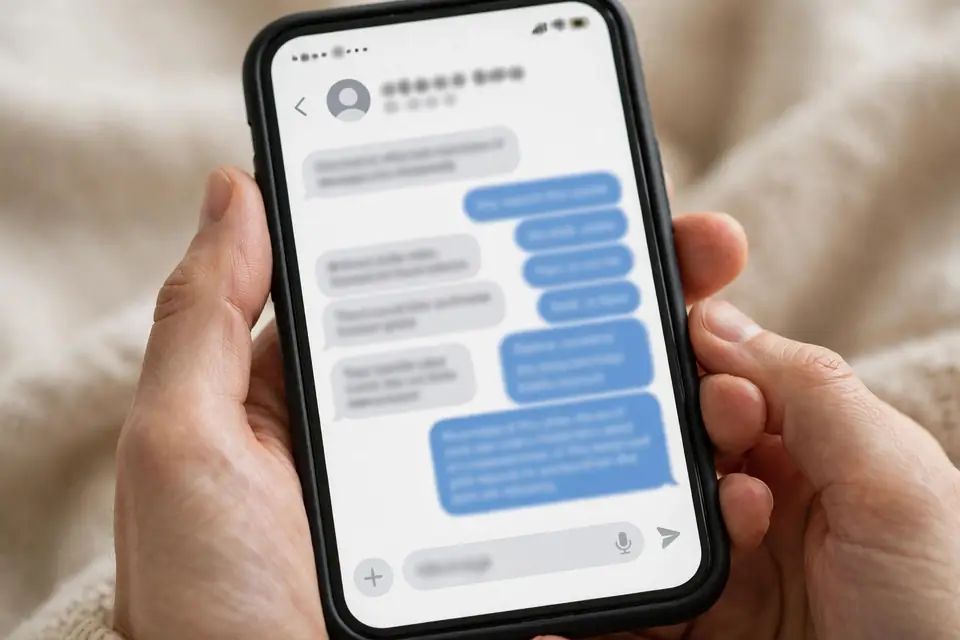
The playful callout (most common): a friend tells an escalating story — upgraded to first class, free suite upgrade, and then “two models invited us out.” You reply: “Okay… IKYFL.” Translation: the first two I believed; the third broke me. Everyone laughs; the story continues.
The shocked reaction: “For your birthday we got you… concert tickets!” — “OMG! IKYFL! You didn’t!” Here it means I can’t believe this is real — pure delighted shock, zero accusation.
The genuine side-eye (rarer): occasionally IKYFL carries real skepticism — someone’s excuse doesn’t add up and you’re not laughing. Context is everything: the same five letters can be banter or a boundary, and misreading which one damages relationships. With close friends, it’s almost always the former; with acquaintances, it risks landing as combative.
Where it lives: texts, DMs, TikTok comments, Twitter/X replies, Instagram captions — anywhere fast, informal, reaction-driven communication happens. It’s Gen Z and Millennial slang, and it thrives where brevity is the whole aesthetic.
Where Did IKYFL Come From?
IKYFL traces to Black Twitter in the mid-2010s — the influential cultural space where much of modern internet slang is coined, tested, and launched into the mainstream. Like many AAVE-derived expressions, it traveled from a specific community’s vernacular into general internet slang via memes, viral tweets, and short-form video.
The phrase itself — “I know you lying” — is AAVE grammar (African American Vernacular English), where the copula (“are”) is often dropped: “you lying” instead of “you’re lying.” The acronym preserves that phrasing exactly, which is part of why it feels authentic rather than constructed — it was spoken before it was abbreviated.
From Twitter it spread to Instagram, TikTok, and texting, following the standard slang lifecycle: community coinage → viral moments → mainstream adoption → your mom asking what it means. By the 2020s it was established enough to generate its own common misspellings (ikyf, iktfl, kyfl) — the surest sign a slang term has truly arrived is people typing it wrong.
The cultural-credit conversation: IKYFL’s journey raises the question that follows all AAVE-derived slang into the mainstream — who gets credit, and who gets paid? The pattern is well-documented: Black creators coin the language, the broader internet adopts it, and the originators rarely see recognition (let alone compensation). Knowing IKYFL comes from Black Twitter isn’t trivia — it’s basic respect for the source. Use the slang, but know where it came from, and don’t be the person “discovering” a phrase millions of people have used for a decade.
The Anatomy of a Perfect IKYFL Moment
Not every unbelievable statement earns an IKYFL — the best ones follow a pattern comedians would recognize: the escalation.
- Start believable. “They upgraded me to first class” — plausible, earns a “no way, that’s awesome!”
- Raise the stakes. “Then they gave us a free suite upgrade” — lucky, but still in the realm of possible.
- Break reality. “Then two models invited us out, all expenses paid” — IKYFL.
The humor lives in the gradient: IKYFL doesn’t just mean “I don’t believe you” — it means “I believed you right up until you didn’t deserve it.” It’s a compliment wrapped in a callout: your story was good enough to follow until it got too good. That’s why friends aren’t offended — being IKYFL’d means you’re an entertaining storyteller.
The solo IKYFL: sometimes it stands alone as a complete reply — just “IKYFL” with no follow-up. In group chats, it’s often followed by a pile-on: skull emojis, “no because fr,” crying-laughing faces. The acronym is a reaction button made of letters, doing what emoji reactions do but with more personality.
When to Use (and Not Use) IKYFL
Use it:
- Between close friends joking around in texts or DMs — where the playful tone is understood.
- Reacting to outrageous claims — the more unbelievable, the better the IKYFL lands.
- In casual social media comments where the mood is relaxed and everyone speaks slang.
Don’t use it:
- At work. Ever. It contains profanity — no email, no Slack, no professional context, no exceptions.
- With strangers or acquaintances who might read it as a genuine accusation of lying.
- Around kids — it’s not kid-friendly language, full stop.
- In serious conflicts — accusing someone of lying via slang acronym trivializes real issues; use plain, respectful words instead.
Polite alternatives when IKYFL doesn’t fit: “Are you serious?” / “No way!” / “I find that hard to believe” / “Really? Tell me more.” Same disbelief, zero profanity, works everywhere.
The tone-reading skill: IKYFL is a good test case for a broader digital literacy — reading tone through text. The same letters mean opposite things depending on relationship, timing, and punctuation (“IKYFL 😂” vs “IKYFL.”). People fluent in internet slang parse this instantly; newcomers take it literally and get hurt or offended. If you’re new to a group chat, lurk before you acronym — learn the room’s temperature before adding your own heat.

Related Slang Terms
| Term | Stands for | Meaning | Vibe |
|---|---|---|---|
| IKYFL | I Know You F***ing Lying | Playful disbelief | Shocked + funny |
| STG | Swear To God | Emphasis, “I’m serious” | Dramatic |
| FR | For Real | Agreement or shock | Casual |
| NGL | Not Gonna Lie | Honest reaction incoming | Thoughtful |
| NO CAP | — | “I’m not lying / for real” | Emphatic (the inverse of IKYFL!) |
| DEAD | — | “I’m laughing so hard” | Pure humor |
| WTF | What The F*** | Shock or anger | More aggressive |
Fun pairing: NO CAP (“I’m not lying”) is IKYFL’s mirror image — one claims truth, the other doubts it. Together they’re the call-and-response of internet skepticism. For more texting shorthand, see GNG meaning.
Frequently Asked Questions
What does IKYFL mean in texting?
“I Know You F***ing Lying” — playful disbelief or shock at something unbelievable.
Is IKYFL an insult?
Usually not — between friends it’s playful banter; with strangers it can read as aggressive, so know your audience.
Where did IKYFL come from?
Black Twitter, mid-2010s — AAVE-derived slang that spread across social media and texting.
How do you pronounce IKYFL?
It’s written slang — people type it; aloud they’d say the full phrase or “you’re lying!”
Is IKYFL appropriate for work?
No — it contains profanity; never use it professionally.
What does “I know you feel like” mean as IKYFL?
A rare alternative reading of the letters, but 99% of the time IKYFL means the “lying” version.
What’s the difference between IKYFL and no cap?
They’re opposites: “no cap” claims “I’m telling the truth”; IKYFL replies “I don’t believe you.”
Is IKYFL Gen Z slang?
Yes — popular with Gen Z and Millennials across TikTok, Twitter/X, and Instagram.
Can IKYFL be serious?
Sometimes — context decides; genuine skepticism uses the same letters as playful banter.
What are common misspellings of IKYFL?
ikyf (missing L), iktfl, kyfl (missing I) — the correct form is five letters: I-K-Y-F-L.
Is IKYFL kid-friendly?
No — it contains profanity and is strictly casual adult slang.
What should I say instead of IKYFL?
“Are you serious?” / “No way!” / “I find that hard to believe” — same energy, no profanity.
Is IKYFL AAVE?
The phrase originates in AAVE (“I know you lying” uses AAVE grammar) via Black Twitter, mid-2010s.
Can IKYFL be a compliment?
Often yes — being IKYFL’d usually means your story was entertaining enough to follow until it got too wild.
Source: For usage examples and context, see The Word Counter’s IKYFL entry.