LGBTQIA Meaning: What Does LGBTQIA Stand For?
Quick Answer
LGBTQIA stands for Lesbian, Gay, Bisexual, Transgender, Queer/Questioning, Intersex, Asexual — an inclusive acronym for diverse sexual orientations and gender identities. Often written LGBTQIA+ to include more identities.
- L: Lesbian · G: Gay · B: Bisexual
- T: Transgender · Q: Queer/Questioning
- I: Intersex · A: Asexual/Aromantic/Agender
- +: Additional identities not explicitly listed
What Does LGBTQIA Mean?
LGBTQIA is an initialism naming a broad community of sexual orientations and gender identities beyond heterosexual and cisgender. The I and A make explicit two groups often left out of shorter acronyms.
No single acronym is “correct” — different people, organizations, and regions prefer different versions, and language keeps evolving as understanding deepens.
The purpose: visibility — naming identities that were historically erased, criminalized, or pathologized.
Each Letter Explained in Detail
| Letter | Stands For | Meaning |
|---|---|---|
| L | Lesbian | Woman attracted to women — emotionally, romantically, sexually |
| G | Gay | Person attracted to the same gender (often men attracted to men, but broader) |
| B | Bisexual | Attracted to more than one gender — not necessarily equally |
| T | Transgender | Gender identity differs from sex assigned at birth |
| Q | Queer / Questioning | Non-normative identity, or actively exploring identity |
| I | Intersex | Born with sex characteristics not fitting typical male/female definitions |
| A | Asexual / Aromantic / Agender | Little/no sexual attraction, romantic attraction, or gender identification |
Important distinctions:
- Sexual orientation (who you’re attracted to) ≠ gender identity (who you are)
- Intersex is about biology, not orientation or identity
- Asexual people may still have romantic relationships
- “Queer” was once a slur — now reclaimed by many (but not all)
What Does the “+” Mean?
- Wildcard for identities not explicitly listed — pansexual, non-binary, two-spirit, demisexual, and more.
- Signals the acronym doesn’t cover every identity in a diverse community.
- Acknowledges that language is always catching up to lived experience.
- Some prefer “LGBTQIA+” while others use even longer forms or different frameworks entirely.
Acronym Variations Compared
| Variant | Letters Added | Common Use |
|---|---|---|
| LGBT | — | Shortest common form, media |
| LGBTQ | Q | Widely used, general |
| LGBTQ+ | + | Inclusive shorthand |
| LGBTQIA | I, A | Explicit inclusion |
| LGBTQIA+ | I, A, + | Most comprehensive common form |
| LGBTQIA2S+ | 2S | Adds Two-Spirit (Indigenous term) |
Note: “A” is sometimes read as ally, but asexual/aromantic/agender is the standard community reading — allies are supporters, not members.
History of the Acronym
- 1960s–70s: “Gay” as umbrella term — Stonewall (1969) sparks modern movement.
- 1980s: “Gay and lesbian” — recognizing distinct experiences.
- 1990s: “LGBT” emerges — adding bisexual and transgender.
- 2000s: “LGBTQ” — queer reclaimed, questioning included.
- 2010s: “LGBTQIA+” — intersex and asexual made explicit.
- Today: ongoing evolution — some prefer “queer community” as simpler umbrella.
Pride Flags & Symbols
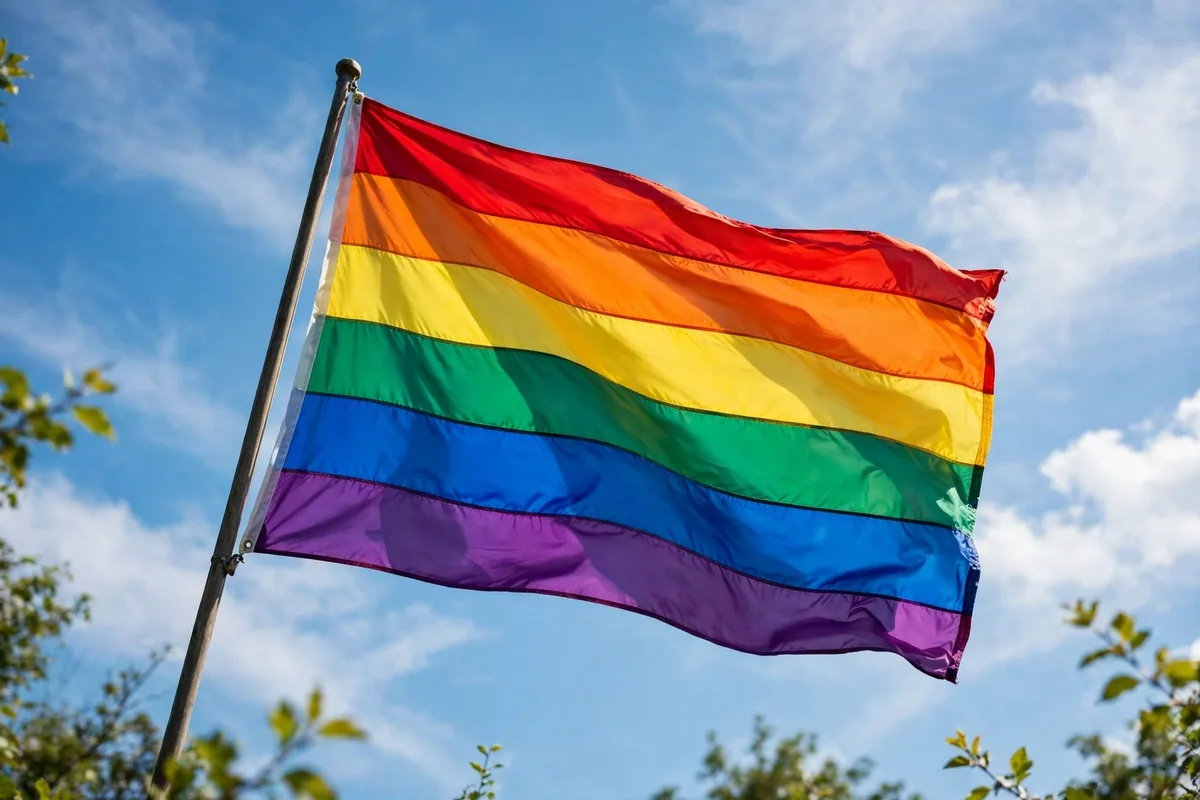
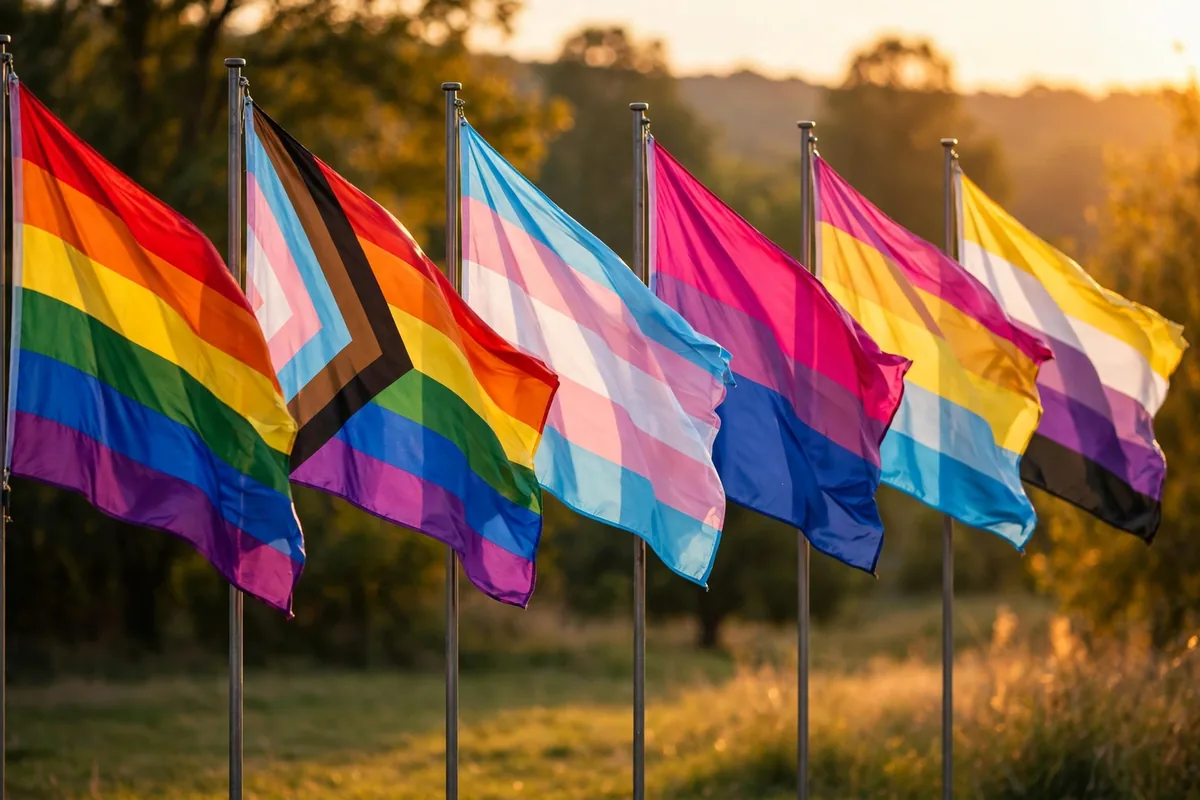
- Rainbow flag (1978, Gilbert Baker) — the universal symbol; each color has meaning.
- Progress Pride flag — adds trans, intersex, and marginalized communities.
- Individual flags: trans (blue/pink/white), bisexual (pink/purple/blue), asexual (black/gray/white/purple), intersex (yellow/purple circle).
- Symbols: lambda, pink triangle (reclaimed from Nazi persecution), labrys.
How to Be an Ally
- Listen — center LGBTQIA voices, don’t speak over them.
- Respect pronouns and names — ask if unsure, correct yourself gracefully.
- Educate yourself — don’t expect individuals to be your teachers.
- Speak up — challenge homophobia and transphobia when safe to do so.
- Support — vote, donate, show up for the community.
Key Terminology Guide
| Term | Definition |
|---|---|
| Cisgender | Gender identity matches sex assigned at birth |
| Non-binary | Gender outside male/female binary |
| Pansexual | Attraction regardless of gender |
| Demisexual | Attraction only after emotional bond |
| Genderfluid | Gender identity changes over time |
| Two-Spirit | Indigenous term for diverse identities |
LGBTQIA Rights: Global Snapshot
- Progress: 30+ countries recognize same-sex marriage.
- Challenges: 60+ countries still criminalize same-sex relations.
- Trans rights: varying widely — from protections to restrictions.
- Intersex: growing movement against non-consensual infant surgeries.
- The trend: slow but steady progress globally.
Pride: Celebration and Protest
- Origin: Stonewall riots (1969) — protest against police raids.
- Today: Pride parades worldwide — celebration and visibility.
- June: Pride Month — commemorating Stonewall.
- Beyond parades: advocacy, education, community building.
- Critique: some argue Pride is too commercial — “rainbow capitalism.”
Coming Out: What It Means
“Coming out” = revealing one’s LGBTQIA identity to others. Not a single event — it’s ongoing (every new job, friend, doctor).
Support: if someone comes out to you — listen, affirm, don’t out them to others.
Resources: The Trevor Project, GLAAD, PFLAG — support for youth, families, allies.
Common Myths Debunked
- Myth: “It’s just a phase.”
Reality: identities are valid regardless of duration. - Myth: “Bisexual means 50/50.”
Reality: attraction varies — no fixed ratio. - Myth: “Asexual means no relationships.”
Reality: many ace people have romantic partnerships. - Myth: “Trans is new.”
Reality: gender diversity exists across cultures and history. - Myth: “Intersex is rare.”
Reality: as common as red hair (~1.7%).
Inclusive Language Guide
| Instead of… | Say… | Why |
|---|---|---|
| “Preferred pronouns” | “Pronouns” | Not a preference — it’s identity |
| “Gay lifestyle” | “Gay person” | Not a lifestyle — it’s who they are |
| “Biological male/female” | “Assigned male/female at birth” | More accurate, less reductive |
| “Tolerate” | “Accept / celebrate” | Tolerance is minimum |
LGBTQIA Youth: Support Matters
- Statistics: LGBTQIA youth face higher rates of bullying, homelessness, mental health challenges.
- Family acceptance: the #1 predictor of wellbeing — supportive families save lives.
- Schools: GSAs (Gender-Sexuality Alliances) provide safe spaces.
- Resources: The Trevor Project (crisis line), It Gets Better Project.
Intersectionality: Overlapping Identities
Kimberlé Crenshaw’s concept: identities intersect — race, class, disability, sexuality.
Example: a Black trans woman faces different challenges than a white gay man.
Why it matters: one-size advocacy fails — listen to marginalized voices within the community.
LGBTQIA in Media: Representation Matters
- Then: stereotypes, tragic endings, bury your gays trope.
- Now: complex characters, happy endings, diverse stories.
- Impact: representation reduces prejudice — seeing is believing.
- Still needed: more trans, intersex, asexual stories.
LGBTQIA in the Workplace
- Protections: vary by country/state — know your rights.
- Coming out at work: personal choice — assess safety first.
- Ally actions: pronouns in email signatures, inclusive policies, ERG groups.
- The business case: inclusive workplaces perform better.
The Bottom Line on LGBTQIA
LGBTQIA — Lesbian, Gay, Bisexual, Transgender, Queer/Questioning, Intersex, Asexual:
- Purpose: visibility for diverse orientations and identities
- +: includes identities not explicitly listed
- Evolution: language grows with understanding
- Respect: use the terms people choose for themselves
Remember: behind every letter are real people — listen, respect, celebrate.
Now you know LGBTQIA — use that knowledge with kindness.
LGBTQIA Quick Facts
| Fact | Detail |
|---|---|
| Acronym | LGBTQIA |
| Stands for | Lesbian, Gay, Bisexual, Transgender, Queer/Questioning, Intersex, Asexual |
| + | Additional identities |
| Origin | 1960s movement → evolving |
| Longest | LGBTQIA2S+ |
Resources & Further Learning
- GLAAD — media reference, terminology guides
- The Trevor Project — crisis support for youth
- PFLAG — families and allies
- Human Rights Campaign — advocacy and research
- Intersex Society — intersex education
- AVEN — asexual visibility network
Learning the terminology is a practical form of allyship: it helps you address people as they wish to be addressed and understand the issues each community faces. Start with one resource above and keep listening.
Frequently Asked Questions
What does LGBTQIA stand for?
Lesbian, Gay, Bisexual, Transgender, Queer/Questioning, Intersex, Asexual. The acronym names a broad community of sexual orientations and gender identities beyond heterosexual and cisgender. The I and A make explicit two groups often left out of shorter versions.
What does the “A” stand for in LGBTQIA?
Asexual (also aromantic and agender) — not “ally.” Asexual people experience little or no sexual attraction; aromantic people experience little or no romantic attraction. Allies are supporters of the community, not members of it.
What does the “+” mean in LGBTQIA+?
It is a wildcard for identities not explicitly listed — pansexual, non-binary, Two-Spirit, demisexual, and more. The plus signals that the acronym cannot cover every identity in a diverse community and that language is always catching up to lived experience.
What is the difference between LGBTQ and LGBTQIA?
LGBTQIA explicitly adds intersex and asexual/aromantic/agender people. Some also read the longer form as a stronger statement of inclusion. No single version is “correct” — usage varies by person, organization, and region.
What is intersex?
Born with sex characteristics that don’t fit typical binary male/female definitions — chromosomes, hormones, or anatomy. Intersex is about biology, not sexual orientation or gender identity, and it is about as common as red hair (roughly 1.7% of people).
What does asexual mean?
Little or no sexual attraction to others — a valid sexual orientation. Many asexual people still form deep romantic partnerships; asexuality describes attraction, not the capacity for love or relationships.
What does transgender mean?
A person whose gender identity differs from the sex assigned at birth. Being transgender is about identity — who someone is — and is distinct from sexual orientation, which describes who someone is attracted to.
What is the difference between sex and gender?
Sex refers to biological traits (chromosomes, anatomy); gender refers to identity and social role. The distinction matters because the two don’t always align — which is exactly what the T, non-binary, and genderfluid identities describe.
Why not just say “gay community”?
Because it excludes the community’s diversity. Lesbian, bisexual, transgender, intersex, and asexual people have distinct histories and needs; the longer acronym gives each group visibility instead of folding them into one label.
What does “Two-Spirit” (2S) mean?
An Indigenous North American term for people embodying diverse gender identities and sexual orientations, with deep roots in Native cultures. It appears in longer acronym forms like LGBTQIA2S+, primarily in Canada and the US.
Can straight people be part of LGBTQIA?
Allies — straight, cisgender supporters — are welcome as supporters but aren’t members of the community. One exception: transgender people can be straight (attracted to a different gender) and are full community members.
Is it okay to ask someone about their identity?
Respectfully, yes — but never demand answers. Let people share on their own terms, accept what they tell you without debate, and do your own learning rather than expecting individuals to educate you.
Source: For the full list of acronym variants, see Wikipedia’s list of LGBTQ acronyms.