Phlox Meaning: What Does “Phlox” Mean?
Quick Answer
Phlox (from Ancient Greek phlox, “flame”) is a flowering plant symbolizing harmony, unity, and agreement — in Victorian flower language: “our souls are united.”
- Literal meaning: “Flame” (Greek φλόξ)
- Symbolism: Harmony, unity, partnership
- Victorian message: “Our souls are united”
- Pronounced: “Flocks”
What Does “Phlox” Mean?
Wikipedia’s botanical definition: Phlox (from Ancient Greek φλόξ, “flame”) is a genus of 67 species of perennial and annual plants, mostly native to North America (with one Siberian exception).
But “phlox” means more than a plant — it’s a symbol. In the Victorian language of flowers (floriography), phlox carried the message “our souls are united” — making it a flower of harmony, agreement, and partnership. The name itself — “flame” — refers to the flowers’ vivid, flame-like color clusters.
The Name: “Flame” in Greek
- Etymology: from Ancient Greek φλόξ (phlox) — “flame” — named for the intensely colored flower heads that look like flickering flames in a garden bed.
- Pronunciation: “FLOCKS” — one syllable, rhymes with “flocks.” (Not “flox-ee” or “floxx.”)
- Taxonomy: family Polemoniaceae — named by Carl Linnaeus himself in 1753.
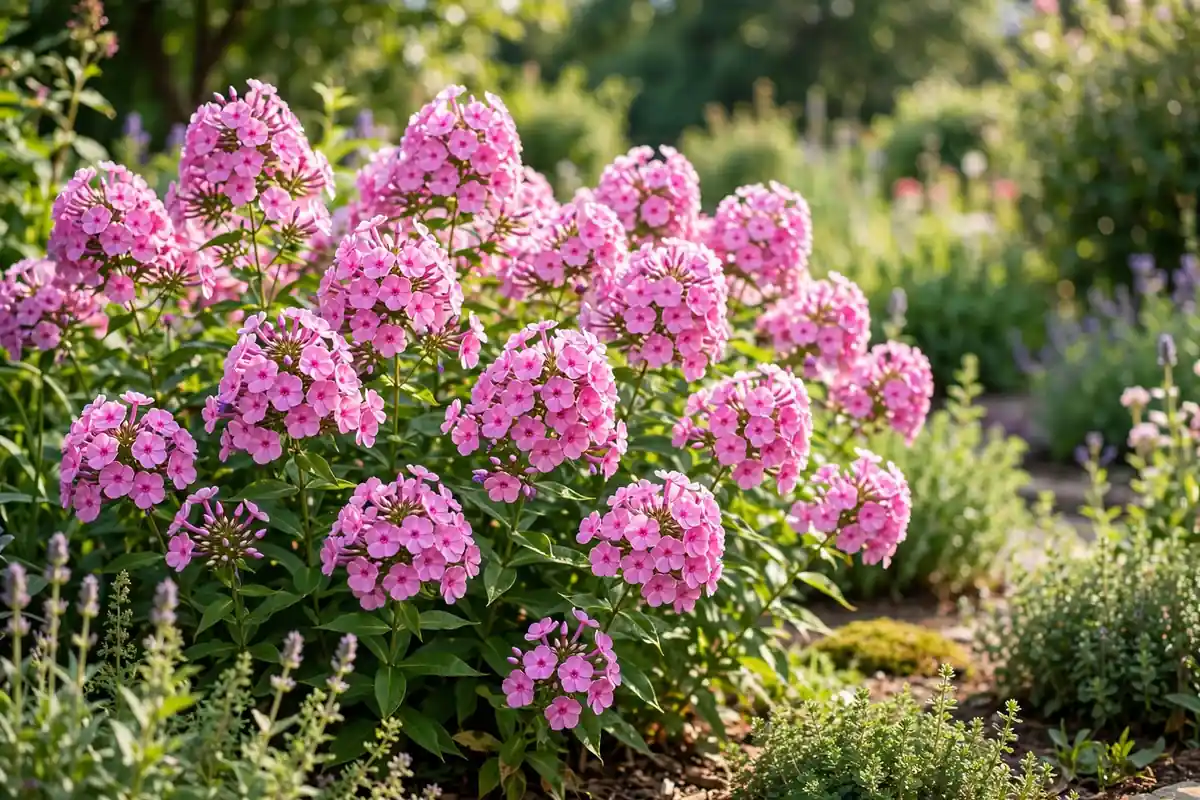
- The flame metaphor: garden phlox blooms in dense, fiery clusters — pinks, reds, purples massed together like embers. The Greek name is visually exact.
Symbolism & Meaning
- Harmony & unity: phlox blooms grow in tight clusters — dozens of small flowers crowded together, symbolizing togetherness and agreement.
- Partnership: the Victorian message “our souls are united” made phlox a wedding and anniversary flower — given to affirm bonds.
- Sweet dreams: the soft, cloud-like flower masses suggest peace and rest — phlox in a bedroom garden for tranquil sleep.
- Kindness & goodwill: given as a friendly gesture — less romantic than roses, warmer than lilies.
- New beginnings: as a spring bloomer (creeping phlox), it signals renewal — the garden waking up.
- Perseverance: garden phlox is notoriously hardy — surviving neglect, returning yearly. A quiet symbol of endurance.
Meanings by Color
| Color | Meaning | Best For |
|---|---|---|
| Pink | Romantic love, affection, admiration | Partners, anniversaries |
| Red | Passionate love, desire, intensity | Bold romantic gestures |
| White | Purity, innocence, sympathy | Weddings, memorials |
| Blue/Lavender | Patience, wisdom, calm | Friendship, encouragement |
| Purple | Dignity, admiration, mystery | Respect, formal occasions |
The universal thread: regardless of color, phlox always carries the base note of harmony and unity — the color modifies, never replaces, the core meaning.

Myths & Legends
- Odysseus’s torches: Greek legend says Odysseus, descending into Hades, carried torches — and where he cast them down, phlox flowers sprang up. The flowers became symbols of bravery — light carried into darkness.
- The Chickasaw fire: a Native American legend tells of phlox marking an escape route from a prairie fire — the red flowers showing the safe path through smoke. Phlox as guidance.
- Feng shui: practitioners place phlox in the marriage and family corners of gardens — the harmony symbolism translated into spatial energy.
- The “flame flower” motif: across cultures, flame-colored flowers symbolize passion contained — fire’s energy in a gentle form. Phlox is the temperate version of this archetype.
Growing Phlox
- Two main types: garden phlox (Phlox paniculata — tall, summer-blooming) and creeping phlox (Phlox subulata — low, spring-blooming ground cover).
- Sun: full sun to partial shade — more sun = more flowers.
- Soil: well-drained, fertile — phlox hates wet feet (root rot is the #1 killer).
- The mildew problem: garden phlox is notorious for powdery mildew — plant with air circulation, water at the base, and choose mildew-resistant varieties.
- Hardiness: zones 3–8 — genuinely tough perennials that return yearly with minimal care.
- The symbolism in planting: gardeners planting phlox for meaning often choose pink (harmony) near entryways — a welcome of unity.

Phlox in Weddings & Gifts
- Bouquets: phlox’s clustered blooms make excellent filler flowers — adding texture and volume while carrying the “our souls are united” message.
- When to give: weddings, anniversaries, housewarmings (harmony in the new home), reconciliations (the agreement symbolism).
- What to say: “Phlox means ‘our souls are united’ — I wanted you to have that.” The explanation is part of the gift.
- What NOT to expect: phlox is not a traditional romantic flower like roses — it’s partnership, not passion. Choose red roses for seduction; pink phlox for devotion.
Phlox Varieties: A Field Guide
| Variety | Type | Blooms | Best For |
|---|---|---|---|
| Garden phlox (P. paniculata) | Tall perennial (2–4 ft) | Summer — big fragrant clusters | Borders, cutting gardens |
| Creeping phlox (P. subulata) | Ground cover (6 in) | Spring — carpet of color | Rock gardens, slopes, edging |
| Woodland phlox (P. divaricata) | Shade perennial (1 ft) | Spring — fragrant blue | Shade gardens, naturalizing |
| Annual phlox (P. drummondii) | Annual (1 ft) | Summer — Texas native | Containers, bedding |
The symbolism across varieties: all phlox share the harmony meaning — but creeping phlox (spring, renewal) leans toward new beginnings, while garden phlox (summer, abundance) leans toward celebration of existing bonds.
Phlox in History
- Indigenous use: Native American tribes used various phlox species medicinally — for stomach ailments, skin conditions, and as a blood purifier. The plant was practical before it was symbolic.
- European discovery: early American botanists sent phlox seeds to Europe in the 1700s — where gardeners fell hard for the American wildflower. By the Victorian era, phlox was a garden staple on both continents.
- The Victorian language: floriography peaked in the 1800s — and phlox’s “our souls are united” made it a wedding favorite. Brides carried it; hosts planted it for harmonious gatherings.
- Modern breeding: centuries of hybridization produced hundreds of cultivars — ‘David’ (white, mildew-resistant), ‘Bright Eyes’ (pink with red eye), ‘Blue Paradise’ (the bluest blue).
- Today: phlox remains a top-20 perennial — beloved by pollinators (butterflies, hummingbirds) as much as by symbolists.
Frequently Asked Questions
What does “phlox” mean?
From Ancient Greek phlox — “flame.” The flower symbolizes harmony, unity, and agreement.
How do you pronounce “phlox”?
“FLOCKS” — one syllable, rhymes with “flocks.”
What is the Victorian meaning of phlox?
“Our souls are united” — a message of partnership and harmony, used at weddings and family gatherings.
What does white phlox symbolize?
Purity and innocence — common in weddings and memorial arrangements.
What does pink phlox mean?
Romantic love and affection — the most-gifted color.
Is phlox a good gift?
Yes — for weddings, anniversaries, housewarmings, and reconciliations. It says “we’re united” without the intensity of roses.
What’s the Greek myth about phlox?
Legend says Odysseus’s torches, cast down in Hades, became phlox flowers — symbolizing bravery (light carried into darkness).
Is phlox hard to grow?
No — it’s a hardy perennial (zones 3–8). The main challenge is powdery mildew — plant with good air circulation.
How do you use “phlox” in a sentence?
“She planted pink phlox by the door — a wish for harmony in the new home.”
What flowers pair well with phlox?
Coneflowers, black-eyed Susans, and ornamental grasses — classic cottage garden companions. For meaning, pair with white roses (unity + purity).
Is phlox toxic?
Mildly. Phlox isn’t a major toxin, but it’s not edible — keep away from curious pets and children. (The medicinal uses were traditional, not recommended.)
When does phlox bloom?
Creeping phlox: spring (April–May). Garden phlox: summer (July–September). Woodland phlox: spring. Plant both types for season-long color.
Why is my phlox not blooming?
Usually too little sun or too much nitrogen (leafy growth, no flowers). Move to full sun and ease off the fertilizer.
Phlox in the Language of Flowers
Phlox’s “our souls are united” sits within the broader Victorian floriography system:
- The context: Victorians couldn’t speak openly about feelings — so flowers spoke. A bouquet was a coded message.
- Phlox’s role: the harmony flower — given when unity needed affirming: weddings, reconciliations, family gatherings.
- Combined messages: phlox + ivy (fidelity) = “our united souls are faithful.” Phlox + white rose (purity) = “pure unity.” Victorians composed bouquets like sentences.
- The modern revival: floriography is trending again — brides researching “meaningful bouquets” rediscover phlox’s message. The Victorian code still resonates.
Phlox Folklore & Superstitions
- Dream gardens: planting phlox near bedroom windows was said to bring sweet dreams — the soft blooms guarding sleep.
- Harmony hedges: some traditions plant phlox along property lines shared with neighbors — a living wish for good relations.
- The flame protection: the “flame” name led to folk beliefs that phlox protected against fire — sympathetic magic (like protects against like).
- Wedding superstition: brides who grew their own phlox were said to have stronger marriages — the care invested in the flowers mirrored care for the union.
Related flower meanings on SpellProf: anemone meaning, butterfly tattoo meaning.
Source: For the genus and name origin, see Wikipedia’s article on Phlox.