FTM Meaning: What Does FTM Mean?
Quick answer: FTM stands for “Female to Male.” It describes a transgender man — someone who was assigned female at birth (AFAB) but whose gender identity is male. The term dates to the late 20th century and is still used in medical literature and some communities, though many people now prefer “trans man.” Note: some find “female-to-male” outdated or offensive for implying trans men were “originally” female — always use the language a person uses for themselves. FTM can also mean “First-Time Mom” (parenting) or “Free Throws Made” (basketball).
In this article
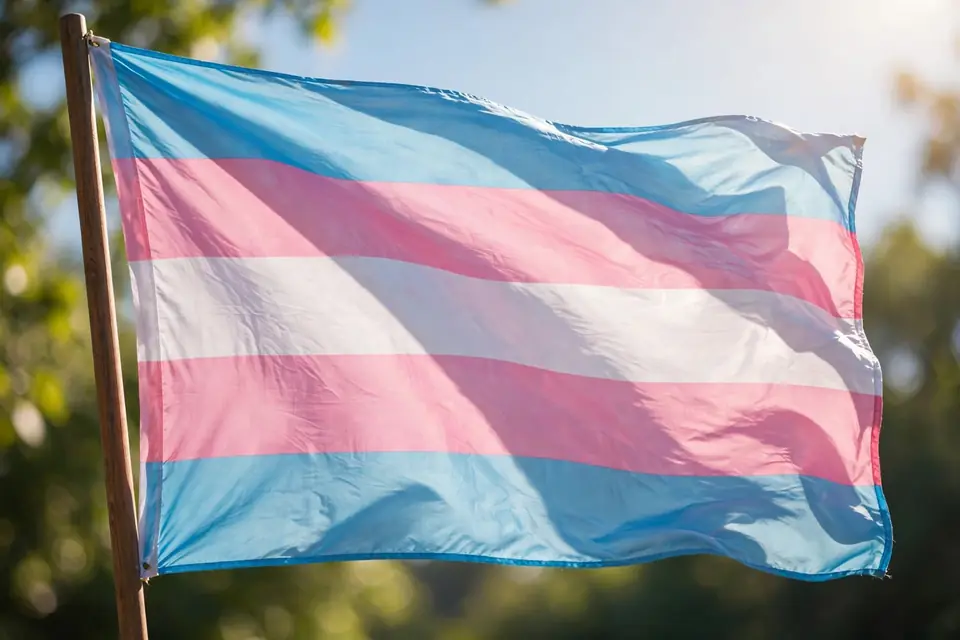
What Does FTM Mean?
FTM = “Female to Male.” It refers to a transgender man: a person who was assigned female at birth (AFAB) — based on physical characteristics observed at birth — but whose gender identity is male.
To understand FTM, two concepts help:
- Assigned sex at birth: the sex recorded on a birth certificate, based on anatomy. AFAB = assigned female at birth; AMAB = assigned male at birth.
- Gender identity: a person’s internal sense of their own gender — which may or may not match their assigned sex. When it doesn’t match, the person may identify as transgender.
FTM became widely used from the mid-1990s to early 2000s as accessible shorthand in LGBTQ+ communities, online forums, support resources, and medical documentation — a quick way to indicate transition direction. You’ll still see it in profiles, healthcare discussions, and awareness materials today.
Transition is personal and varied: some FTM individuals pursue social transition (name, pronouns, presentation), legal transition (documents), or medical steps (testosterone, surgeries such as top surgery) — many do some, all, or none of these. There is no single “FTM experience,” and no checklist anyone must complete to be valid in their identity.
Where you’ll encounter the term: FTM appears in medical and clinical literature (where precision about assigned sex matters for care), research papers, support groups and community spaces (especially older-established ones), social media bios, and awareness campaigns. In everyday conversation and media, “trans man” has largely taken over — but FTM remains the term many people search for, which is exactly why this article exists: to meet the question where it’s asked and guide readers toward respectful, current language.
A Note on Language
Language around gender has evolved, and FTM sits in an interesting spot: still used, but increasingly qualified.
Why some people prefer other terms: as Dictionary.com’s usage note explains, “female-to-male” can feel offensive to some because it implies trans men were “originally” female and have only now become male — framing their identity as a change rather than a recognition of who they’ve always been. Especially among younger trans people, “trans man” is now the more popular term.
Why FTM persists: it’s concise, widely recognized, embedded in medical literature, and some trans men do identify with it and use it for themselves. In healthcare and research contexts, it remains functional shorthand.
The rule that settles it: use the term a person uses for themselves. If someone says “I’m FTM,” that’s the right word for them. If someone says “I’m a trans man,” use that. When in doubt, “trans man” is the safest default — it’s identity-first, widely accepted, and carries none of FTM’s baggage.
A parallel from the same community: similar evolution happened with “transsexual” → “transgender” — the older term survives in clinical settings and among some individuals who claim it, while the newer term dominates everyday use. FTM is on the same trajectory: not erased, but gently superseded. The pattern to notice: language moves from clinical description toward self-determined identity, and respectful speakers move with it.
For broader LGBTQ+ terminology, see LGBTQIA meaning.

FTM vs MTF vs Trans Man
| Term | Stands for | Describes | Current usage |
|---|---|---|---|
| FTM | Female to Male | Transgender man (AFAB, identifies male) | Still used; some prefer “trans man” |
| MTF | Male to Female | Transgender woman (AMAB, identifies female) | Still used; some prefer “trans woman” |
| Trans man | — | Transgender man | Preferred by many; identity-first |
| Transmasculine | — | Broader: anyone AFAB with masculine identity/expression | Growing in use; includes nonbinary people |
Key insight: FTM/MTF describe direction of transition (from→to), while “trans man”/”trans woman” describe identity itself. That shift — from direction to identity — is the heart of the language evolution: it centers who someone is rather than where they started.
The History of FTM as a Term
FTM first appears in English in the 1970s, emerging alongside the broader transgender movement’s early organizing. Before it, clinical language dominated — terms like “female transsexual,” coined in medical contexts that treated transition as a condition to be diagnosed rather than an identity to be recognized.
The 1990s–2000s were FTM’s peak era: community organizations, pioneering figures like Lou Sullivan (whose 1980s zine Information for the Female-to-Male Crossdresser and Transsexual circulated through queer networks), and early internet forums made FTM the standard community term. It was practical and empowering — a word trans men chose for themselves at a time when few words existed at all.
The shift since the 2010s: as transgender visibility grew, language moved toward identity-first framing. “Trans man” centers who someone is; FTM, to modern ears, can center where someone started. Neither is “wrong” — but the cultural preference has clearly moved, especially among younger people. Think of it like any language evolution: the community refines its words as its self-understanding deepens.
Other Meanings of FTM
Context determines which FTM you’re seeing:
- First-Time Mom: in parenting forums and mom groups, FTM means a woman having her first child — “FTM, baby due in June!” Completely unrelated to gender identity; the parenting context makes it obvious.
- Free Throws Made: in basketball statistics, FTM counts successful free throws (paired with FTA, free throws attempted). You’ll see it in box scores and fantasy sports.
- Technical/business: various company-specific uses (e.g., in telecom or manufacturing) — always defined by their context.
How to tell: in LGBTQ+, healthcare, or social-media-bio contexts, FTM almost always means Female to Male. In a parenting group or a sports stat line, it doesn’t. Read the room, not just the letters.
Why one acronym has so many lives: three-letter combinations are scarce — only 17,576 exist — so collisions are inevitable. FTM’s multiple meanings are a feature of abbreviation economics, not confusion: each community independently reached for the same compact shape. The disambiguation rule is simple and universal: the surrounding conversation is the dictionary. Nobody reading a box score wonders about gender identity; nobody in a trans support group wonders about free throws.

Respectful Language Tips
- Use current names and pronouns. Never use a trans person’s former name (“deadname”) — use the name they use now.
- Don’t ask about surgeries or anatomy. A trans person’s medical history is private — you wouldn’t ask a cisgender stranger either.
- “Transgender” is an adjective, not a noun. Say “transgender man,” not “a transgender” — and never “transgendered.”
- Avoid “born a woman/man.” “Assigned female at birth” is accurate without implying their identity changed.
- Don’t out people. Someone’s trans status is theirs to share — never disclose it for them.
- Apologize briefly and move on if you slip up on pronouns — then get it right going forward. Long guilty speeches center you, not them.
Why these small things matter so much: for trans people, everyday interactions carry a cumulative weight — each correct pronoun is a small affirmation; each misdirected one is a small erasure. Allies sometimes feel the stakes are mysteriously high for “just words.” They’re high because recognition is the thing itself: being seen as who you are isn’t a courtesy layered on top of respect — for trans people, it is respect, in its most concrete form.
For related gender-expression terminology handled with the same care, see femboy meaning.
Frequently Asked Questions
What does FTM stand for?
“Female to Male” — most commonly describing a transgender man (AFAB, identifies as male).
What is an FTM transgender person?
A transgender man: someone assigned female at birth whose gender identity is male.
Is FTM offensive?
It can be — some find “female-to-male” outdated for implying trans men were “originally” female. Many prefer “trans man.” Always mirror the individual’s own language.
What does AFAB mean?
“Assigned Female at Birth” — the sex recorded at birth based on physical characteristics.
What’s the difference between FTM and trans man?
They usually describe the same people; FTM emphasizes transition direction, “trans man” emphasizes identity. Many prefer the latter.
What does MTF mean?
“Male to Female” — describing a transgender woman (AMAB, identifies as female).
Do all FTM people have surgery?
No — transition is individual; some pursue medical steps, others don’t, and all are valid.
What pronouns do FTM people use?
Most commonly he/him, but always ask or check their bio — never assume.
What does FTM mean in parenting?
“First-Time Mom” — a woman having her first child; unrelated to gender identity.
What does FTM mean in basketball?
“Free Throws Made” — the count of successful free throws in a game.
Is it okay to ask someone if they’re FTM?
Generally no — it’s personal. If relevant, let them volunteer it; never press.
What is transmasculine?
A broader term for AFAB people with masculine identity or expression, including some nonbinary people.
When was the term FTM first used?
First recorded in 1970–75; it became the standard community term in the 1990s–2000s.
Should I say “FTM” or “trans man”?
“Trans man” is the safer default; use “FTM” only if the person uses it for themselves.
Source: For the definition and usage guidance, see Dictionary.com’s female-to-male entry.