Copypasta Meaning: What Copypasta Means Online
Quick answer: Copypasta is a block of text that gets copied and pasted across the internet so many times — on forums, in chats, and across social media — that it becomes a shared joke or meme in its own right. The name is a play on “copy/paste” (the “pasta” comes from the same joke as “creepypasta”). The defining feature is repetition: the same text, reposted by many different people, until recognizing it feels like being part of an inside joke — a mock-serious rant, a movie script pasted as a comment, a wall of text flooding a live chat.
In this article
What Does Copypasta Mean?
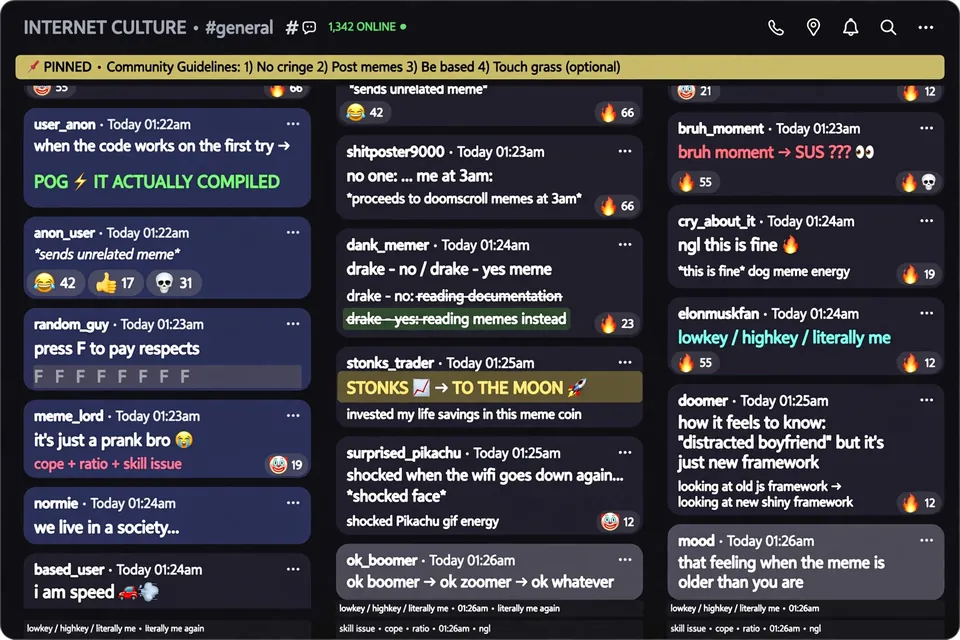
Copypasta is internet slang for a block of text that gets copied and pasted all over the internet — pasted into comment sections, chat rooms, forum threads, and social media posts — until the repetition itself turns the text into a joke, a reference, or a ritual. The word is a portmanteau of “copy/paste” with “pasta” tacked on in the same spirit as “creepypasta” (horror stories shared the same way); “pasta” is just a silly, memetic suffix that stuck.
The core idea is simple: anyone can copy text and paste it anywhere. Most copied text disappears. But some blocks are funny, dramatic, or absurd enough that hundreds of strangers independently decide to paste them too — and then the text belongs to internet culture: folklore people recognize on sight. Posting the entire script of The Bee Movie as a comment, unprompted, is a classic: the “joke” is entirely in the repetition and the audacity.
It helps to place copypasta among other internet-language concepts. Just as our guide to meaning in text covers how abbreviations reshape online writing, copypasta covers how whole passages become slang — passed around like a catchphrase. If you have seen a comment section fill with identical paragraphs and wondered what was happening, you were watching copypasta at work.
Where Did Copypasta Come From?
Copypasta was born in the forum and imageboard era of the mid-2000s. Before social media feeds, the internet’s joke factory was made of message boards, chat rooms, and Usenet groups — and the copy-paste trick was already part of that culture: funny rants and ASCII art circulated for years before anyone named the practice.
The word emerged around 2006: an Urban Dictionary entry from April 2006 defines “copypasta” as text copied and pasted across the internet — a sign the term was already circulating on boards like 4chan and gaming forums. Those anonymous, fast-moving communities were the perfect breeding ground: a funny block of text in one thread could be copied into the next, then the next board, then other sites entirely.
By the early 2010s, copypasta had migrated from forums to Twitch chats, Reddit, Facebook, and Twitter, each platform adding its own twist to the ritual of pasting. The “pasta” suffix stuck too, giving internet culture a tidy pair: copypasta for the general phenomenon, creepypasta for its horror branch.
How Copypasta Spreads
Copypasta spreads through a repeatable cycle — part technology, part social behavior:
- The source text. Someone writes or finds a block of text that is dramatic, absurd, or oddly specific — memorable enough to survive being read more than once.
- The first pastes. A few people copy it and paste it where it does not quite belong. The mismatch between the text and its setting is often the joke.
- The mutation. People tweak it: swapping names, updating references, localizing it for a different community. Many famous copypastas exist in dozens of versions.
- The ritual. The text becomes a reference. People paste it to signal membership — “I know what this is, and I know you know.”
What powers the cycle is the zero cost of copying: a copypasta needs nothing but a clipboard. That is why it thrives in live chats and fast-moving threads. Our breakdown of PMO meaning slang shows the opposite end of internet language — short slang that evolves fast — while copypasta shows the reverse: long text that survives because everyone keeps reposting it verbatim.

Famous Copypasta Examples
A few copypastas have become so famous that their first lines are recognizable internet-wide. Treated as folklore rather than literature, here is the canon:
- The Navy SEAL rant. Perhaps the most famous copypasta ever: an absurdly over-the-top monologue in which the speaker brags about elite military credentials in escalating, cartoonish detail. Its opening line — “What the fuck did you just fucking say about me, you little bitch?” — is instantly recognizable to anyone who has spent time on forums. The joke is the gap between the speaker’s furious seriousness and the ridiculousness of the claims: a parody of online tough-guy posturing, posted ironically wherever someone takes themselves too seriously.
- The entire Bee Movie script. Posting the complete script of the 2007 animated film The Bee Movie as a single comment — humor built on pure excess. The joke is the commitment: someone actually sat there and pasted it. The “According to all known laws of aviation” opening monologue is its shorter sibling, deployed as a preamble to anything.
- The “high IQ” Rick and Morty text. A mock-serious essay claiming that appreciating the cartoon Rick and Morty requires enormous intelligence — now pasted ironically whenever someone is being insufferably snobbish about media.
- Twitch chat walls. Short copypastas dominate live-stream chats: repeated phrases and multi-line stories flooding the chat at scripted moments — crowd rituals, the chat equivalent of chanting at a stadium.
- Greentext stories. On 4chan and Reddit, greentext anecdotes and catchphrases like “a wild [person] appears” became copypasta through sheer volume: the same formats reposted thousands of times with new contents.
Notice what these share: none has value as information. Their value is social — jokes you participate in by reposting, where the repetition is the medium.
Copypasta vs. Creepypasta vs. Memes
Copypasta sits inside a small family of copy-driven internet phenomena, and people mix up the terms. The clean distinction:
| Copypasta | Creepypasta | Meme (classic) | |
|---|---|---|---|
| Medium | Blocks of text | Blocks of text | Usually an image with a caption |
| Point | The repetition is the joke | To scare or unsettle | A reusable format or joke template |
| Authorship | Anonymous, collective | Sometimes credited | Varies; formats get remixed |
| Typical home | Chats, comments, forums | Forums, Reddit, narrations | Social feeds, group chats |
| Relationship | The umbrella term | A subgenre (horror) | A sibling format |
So: every creepypasta is technically a copypasta, but not every copypasta is a creepypasta — most are funny, absurd, or ritualistic. And while memes and copypasta both spread by copying, a meme carries a visual format that gets remixed, while a copypasta is the same words, over and over, with the sameness as the point.
How to Recognize a Copypasta
You will spot copypasta faster once you know its tells:
- Suspicious polish. The text reads written once and carefully — consistent voice, rehearsed rhythm — while everything around it is casual chat. Copypasta is pre-composed; real comments are not.
- Context mismatch. A five-paragraph rant appears under a video about gardening. The displacement is deliberate.
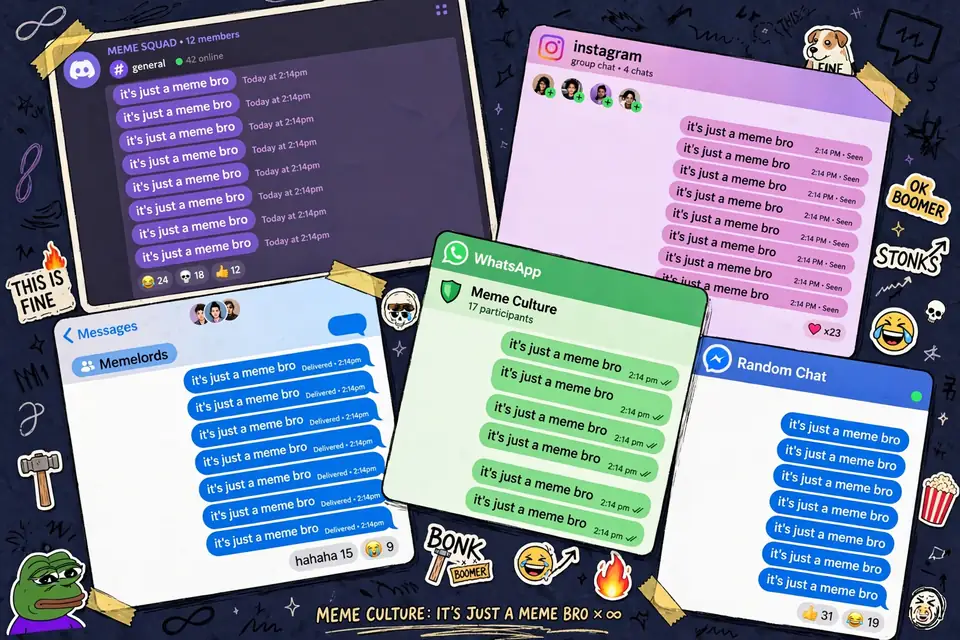
- Recognition in the replies. The surest tell: others react to the act of posting, not the content — replying “classic” or quoting the first line back.
- Exact repetition. Search a distinctive phrase in quotes. If the same paragraph appears on ten sites, it is copypasta, not an original thought.
- Wiki pages tracking it. The famous ones are catalogued on meme wikis. If Know Your Meme has an entry for the text, the mystery is solved.
Newcomers sometimes argue with copypasta — replying seriously to a text posted as a joke. Regulars find this hilarious, which is why recognizing the signs quickly is its own small internet survival skill.
Why People Post Copypasta
Copypasta looks like spam, but its motives are mostly social. The main reasons people paste:
- Belonging. Pasting the right text at the right moment proves you speak the community’s language — a low-effort way to say “I am one of you.”
- Disruption as play. Dropping a wall of text into a serious thread is a prank: the Bee Movie script works as a comment because the absurdity of its presence is the punchline.
- Performance. In live chats, pasting in sync with thousands of others is participation in a crowd event, like singing along at a concert.
- Preservation. Reposting keeps a beloved text alive. Internet folklore has no museums; repetition is how the classics survive.
At its best, copypasta is collective comedy — thousands of strangers cooperating on a joke that only works because everyone knows their part. Like all games it has etiquette: it is funny only if the audience recognizes it as play, which is why posting it in support threads or serious discussions turns play into nuisance.
Copypasta in the Modern Era
Copypasta has survived every platform shift because every platform has a text box. What changes is the flavor:
- Twitch and YouTube live chats. The current capital of copypasta: fast, anonymous, and crowd-driven — built for synchronized pasting that erupts and vanishes in seconds.
- Discord servers. Smaller and tribal: copypasta as in-group canon, pasted to welcome newcomers or commemorate server lore — many servers have dedicated copypasta channels.
- TikTok comments. Copypasta adapted to short-form video: repeated comment chains flooding thousands of unrelated videos, spreading faster than anything in the forum era.
- Reddit. Copypasta is catalogued and celebrated here — entire subreddits archive and trade the classics.
- Corporate and political parody. A newer branch: mock press releases and fake apology statements in deadpan corporate voice, pasted wherever the real versions appear — the text sounds official while saying nothing.
The constant across two decades: text is cheap, repetition is funny, and communities love rituals. As long as those three facts hold, copypasta will keep finding new boxes to paste into.
Frequently Asked Questions
What does copypasta mean?
Copypasta is a block of text copied and pasted across the internet until the repetition makes it a shared joke or meme. The name blends “copy/paste” with “pasta,” in the same spirit as “creepypasta.”
Where did the word copypasta come from?
It emerged around 2006 on forums and imageboards like 4chan, with the earliest widely cited definition on Urban Dictionary in April 2006.
What is the most famous copypasta?
The Navy SEAL rant — a mock-serious monologue of escalating military bragging. The entire Bee Movie script and the “high IQ” Rick and Morty text are also classics.
What is the difference between copypasta and creepypasta?
Creepypasta is a subgenre of copypasta — horror stories spread the same way. Copypasta overall is broader: mostly funny, absurd, or ritualistic text.
Is posting copypasta spam?
It depends on context. In meme communities and live chats it is a participatory ritual; in serious discussions it is just spam.
How do you recognize a copypasta?
Look for suspiciously polished text in casual settings, a mismatch with the conversation, replies reacting to the act of posting, and the same paragraph appearing verbatim across many sites.
Is copypasta still a thing?
Very much so — in Twitch chats, Discord servers, TikTok comments, and Reddit. Every platform shift just gives it a new place to paste.
Can I get banned for posting copypasta?
Yes. Modern spam filters treat repeated text as spam regardless of intent, and platforms will time out or ban accounts that paste walls of text.
Source: For a catalog of documented copypasta and their histories, see Know Your Meme’s copypasta entry.