MDNI Meaning
Quick answer: MDNI stands for “minors do not interact” — a boundary tag used in social-media bios, captions, and hashtags to ask under-18s not to engage with the account. It is common on TikTok, Instagram, X, Tumblr, Discord, and Snapchat, especially among creators who discuss mature themes or share adult-oriented art and writing. MDNI is a social boundary, not a legal warning: it requests that minors stay away but cannot actually stop them from viewing. It is closely related to DNI (“do not interact”), a broader tag that can name any group a creator does not want engaging with their content.
In this article
- What Does MDNI Mean?
- Breaking Down the Letters
- Where You See MDNI: Bios, Captions, Hashtags
- Why Creators Use MDNI
- MDNI vs DNI: What’s the Difference?
- Is MDNI Legally Enforceable?
- MDNI in Real Profiles and Posts
- How to Respect (and Use) MDNI Responsibly
- Common Misconceptions About MDNI
- A Note for Parents
- Frequently Asked Questions
What Does MDNI Mean?
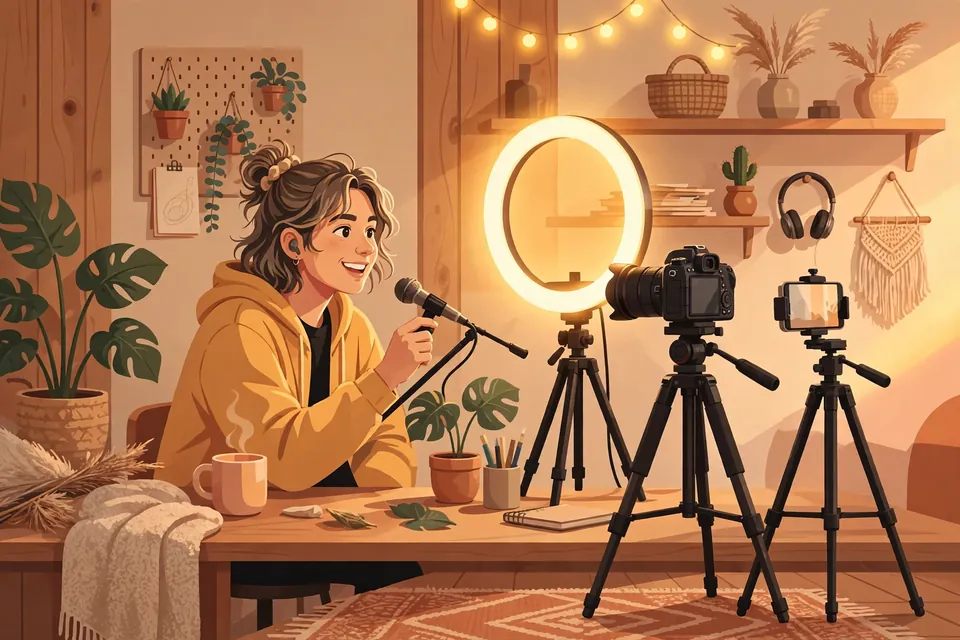
MDNI is one of the most widely used boundary tags in online culture. Short for “minors do not interact,” it is a four-letter notice creators place in their social-media profiles, video captions, hashtags, and community rules to ask anyone under 18 not to engage with them or their content.
Unlike chat slang, MDNI almost never appears in conversation — it is a label, not a reply. It sits quietly in a bio line (“22 | horror artist | MDNI”) or at the end of a caption. Chat slang like WYS (“what you saying”) lives in the message thread; MDNI lives above it, in the profile.
The message it carries is straightforward: this space is intended for adults. Creators who use it are drawing a line around content that deals with mature themes — adult-oriented art and writing, frank discussion of heavy topics, explicit language, or anything else they believe is not appropriate for younger audiences. By posting MDNI, the creator is saying, “If you are under 18, please do not follow, message, comment, or otherwise interact here.”
Crucially, MDNI is a request, not a lock. It has no technical power — it cannot block, filter, or age-verify anyone. Its strength comes entirely from shared social understanding: most users recognize the tag and honor it.
Breaking Down the Letters
The acronym is deliberately plain — each letter maps to one word of the request:
- M — Minors: anyone under the age of 18.
- D — Do: an instruction, not a suggestion.
- N — Not: the negative that sets the boundary.
- I — Interact: follow, message, comment, reply, duet, stitch — any form of engagement.
Put together, the letters spell out a complete instruction: if you are a minor, do not interact. The format follows the same compact style as the broader DNI tag (“do not interact”), which MDNI extends by naming exactly who should stay away: minors.
Where You See MDNI: Bios, Captions, Hashtags
MDNI shows up in a handful of predictable places, and recognizing the pattern is the fastest way to understand it:
- Profile bios: the single most common spot. Look for bio lines like “MDNI | 18+”, “minors DNI”, “adults only | MDNI”, or “18+ only, MDNI” — bios are the first thing a visitor reads, so the boundary goes front and center.
- Video captions: creators add MDNI to captions on posts that discuss mature topics, often alongside content warnings.
- Hashtags: #MDNI makes the boundary searchable and visible to people browsing the tag.
- Discord server rules: many adult-oriented servers list MDNI in their rules channels — sometimes as rule one — alongside an 18+ age requirement.
- Tumblr about pages and pinned posts: fandom communities with adult-oriented art or fiction use MDNI on their main pages, as do creators reposting the tag in Snapchat and Instagram stories.
The thread connecting all of these is visibility: MDNI is always placed where an audience encounters it before engaging — never buried.
Why Creators Use MDNI
Why do creators bother with a four-letter tag instead of just posting their content? Several practical reasons:
- Setting an audience boundary: platforms mix ages together by default. A creator discussing mature themes has no built-in way to say “adults only,” so MDNI fills the gap with a clear, recognizable signal.
- Protecting younger users: many creators genuinely do not want minors engaging with content they consider inappropriate for them. The tag is a low-effort way to state that upfront.
- Fandom and art communities: spaces built around adult-oriented art, writing, and discussion — from horror communities to romance-writing circles — use MDNI to keep the community adult-focused without constant moderation arguments.
- Heavy topics: MDNI is not only about explicit content. Creators discussing addiction, trauma, grief, or mental health in frank adult terms use the tag because the conversation itself is aimed at adults.
- Personal comfort and community standards: some creators simply prefer an adult audience, and in many online spaces tagging mature content is the done thing — a norm that shows the creator takes audience age seriously.
MDNI vs DNI: What’s the Difference?
MDNI and DNI are siblings, and mixing them up is common. DNI stands for “do not interact” — the broader, older tag. Where MDNI names one specific group (minors), DNI can name any group, topic, or behavior the creator wants to exclude: “DNI if you’re under 18,” “racists DNI,” “DNI if you hate my fandom.”
| MDNI | DNI | |
|---|---|---|
| Who it addresses | Minors only | Any group the creator names |
| Stands for | Minors do not interact | Do not interact |
| Common spots | Bios, captions, hashtags, server rules | Bios, carrds, pinned posts |
| Scope | Age boundary only | General boundary |
In practice the two are often paired: “DNI | MDNI” or “minors DNI” all communicate the same age boundary. Think of MDNI as the age-specific flavor of the DNI family.
Is MDNI Legally Enforceable?
This is the part most people get wrong: MDNI has no legal force whatsoever. It is a social convention — a norm enforced only by community expectations and the good faith of the people who see it.
Nothing about the four letters stops a minor from viewing or following the account; the tag cannot verify age, block accounts, or report violations. Platforms do have their own age systems — minimum ages of 13, restricted modes, and adult-content toggles — but those operate independently of any tag a creator writes in a bio.
That distinction matters for creators. An MDNI tag is a reasonable, responsible step, but it is not a safety system. Creators who need real age control should use the platform’s actual tools: private accounts, age-restricted content settings, and follower approval. The tag communicates intent; the settings do the enforcement.
MDNI in Real Profiles and Posts
The tag is easiest to recognize once you have seen a few real-world patterns:
- A digital artist’s Instagram bio: “24 | she/her | dark fantasy art | MDNI | 18+”
- A TikTok caption: “storytime about my early twenties (mature themes) #MDNI”
- An X profile: “adults only. MDNI. no minors, no exceptions.”
- A Discord server’s rules channel: “1. You must be 18 or older. 2. MDNI — minors will be removed.”
- A Tumblr pinned post: “This blog discusses adult topics. MDNI.”
Notice how each example pairs the tag with context — an age marker, a content hint, or both. These disclaimer lines also circulate as ready-made snippets that creators copy into new profiles, a sharing pattern our guide to copypasta explains.
How to Respect (and Use) MDNI Responsibly
Knowing what MDNI means is only half of it — the other half is what to do with the knowledge.
If you are under 18 and see the tag: the respectful move is to not engage. Do not follow, comment, message, or reply. The creator has told you plainly that their space is not for you, and ignoring that is the online equivalent of walking into a room after being asked to stay out.
If you are an adult creator using the tag: pair it with real controls. MDNI works best as the visible half of a two-part system — the tag announces the boundary, and your account settings enforce it. Use private or followers-only modes, enable any age-restriction features the platform offers, and keep content warnings on individual posts. Take the tag seriously, but do not mistake it for a lock.
The common thread is good faith. MDNI only works because most people honor it, and every person who respects the tag keeps the system credible for the creators who rely on it.
Common Misconceptions About MDNI
Several myths follow MDNI around. Clearing them up:
- “It’s a texting abbreviation.” No. Unlike abbreviations you drop into conversation, MDNI is a profile label. It lives in bios, captions, and rules — not in chat replies. See our guide to meaning in text for genuine texting abbreviations.
- “It’s rude or hostile.” It is not an insult. MDNI is a boundary, stated plainly. Most creators who use it are not expressing dislike of young people; they are managing the age-appropriateness of their space.
- “It always means explicit content.” Not necessarily. Adult-oriented covers a wide range — frank discussion of addiction, trauma, or mental health, horror fiction, commentary with strong language — not only explicit material.
- “It legally protects the creator.” It does not. The tag creates no legal shield and imposes no legal duty on viewers. It is a social signal with no enforcement power — and responsible creators across art, writing, gaming, and discussion communities use it precisely because they take audience age seriously.
A Note for Parents
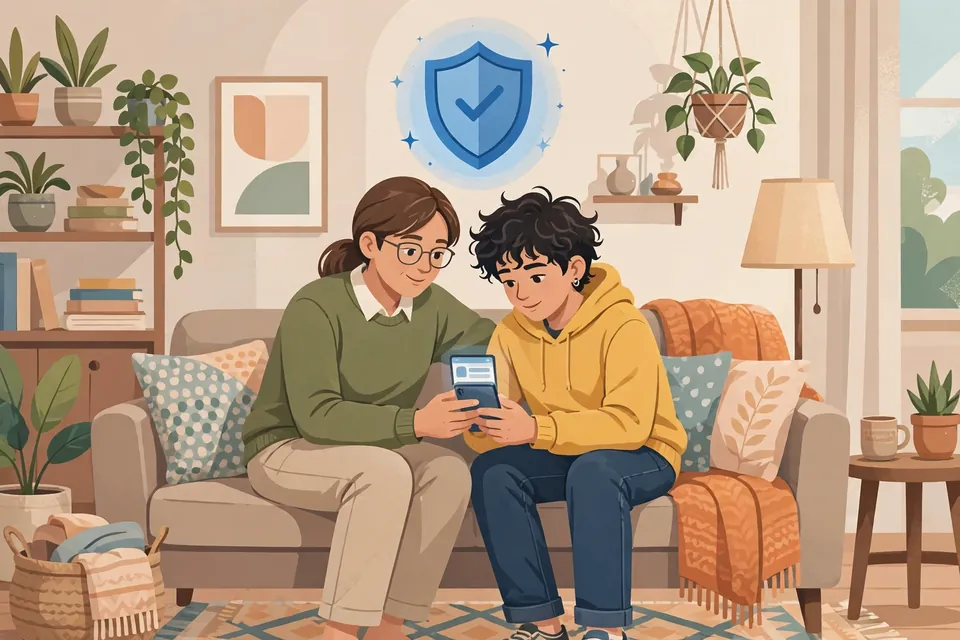
A short note for parents: MDNI is actually useful information for you. When you see it on an account your teen follows, it tells you the creator intends that space for adults — a natural opening for a conversation about why some online spaces are age-restricted and how to recognize them. But do not treat the tag as protection — it cannot stop a curious teen from viewing the account, and many adult-oriented accounts never tag themselves. Real safeguards are platform parental controls and open conversation.
Frequently Asked Questions
What does MDNI stand for?
“Minors do not interact” — a boundary tag asking under-18s not to engage with the account or its content.
Where is MDNI used?
Across nearly every major platform: TikTok and Instagram bios and captions, X profiles, Tumblr about pages, Discord server rules, and Snapchat stories.
What is the difference between MDNI and DNI?
DNI (“do not interact”) is broader — it can name any group or behavior a creator excludes. MDNI is the age-specific version: minors only. The two are often paired.
Is MDNI rude?
No. It is a boundary, not an insult — creators use it to manage the age-appropriateness of their space, not to express hostility.
Does MDNI mean the content is explicit?
Not always. It also marks heavy topics — addiction, trauma, grief, mental health — discussed in frank adult terms, plus strong-language commentary.
Can minors still view content marked MDNI?
Technically, yes. MDNI cannot verify age or block anyone; it relies on viewers honoring the request and on platform age tools for actual enforcement.
Should I put MDNI on my profile?
If you regularly post adult-oriented content or want an adult audience, yes — it is clear and widely understood. For general-audience accounts it is unnecessary. Either way, pair it with real privacy and age-restriction settings.
What does “18+” next to MDNI mean?
It reinforces the boundary: the space is intended for adults 18 and over. “MDNI | 18+” states the rule and the audience in one line.
Is MDNI only a TikTok thing?
No. It gained visibility on TikTok but is now cross-platform — Instagram, X, Tumblr, Discord, and Snapchat all carry the tag.
Source: For background on how the tag is used on TikTok, see Dexerto’s explainer on what MDNI means.