
Arigato Meaning: What Does Arigato Mean in Japanese?
Quick answer: Arigato (ありがとう) means “thank you” in Japanese — the casual, everyday form. Pronounced ah-ree-gah-toh, with even syllables and a lengthened final “oh.” For politeness, add gozaimasu: arigatou gozaimasu (ありがとうございます) = “thank you very much.” The word comes from 有り難い (arigatai) — “rare, precious,” literally “difficult to exist” — with Buddhist roots: gratitude for goodness despite life’s hardship. It is not from Portuguese obrigado (a common myth — arigato predates Portuguese contact).
In this article
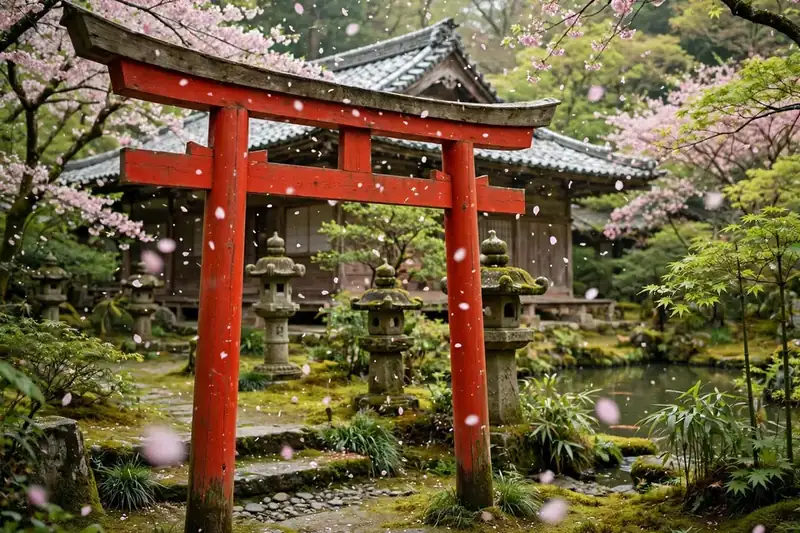
What Does Arigato Mean?
Arigato (written ありがとう in hiragana, 有難う in kanji) is the Japanese word for “thank you.” It is the casual, everyday form — what you’d say to friends, family, classmates, or in relaxed settings, roughly equivalent to English “thanks.”
The script: ありがとう breaks into a-ri-ga-to-u — five morae (syllable beats). The final う (u) lengthens the “o” — which is why you’ll see it romanized both as arigato and arigatou/arigatō. All three spellings refer to the same word.
The politeness spectrum: Japanese gratitude is graded by formality — the longer the phrase, the more polite:
- Arigatou (ありがとう) — casual “thanks” (friends, family)
- Arigatou gozaimasu (ありがとうございます) — polite “thank you very much” (strangers, staff, seniors)
- Doumo arigatou gozaimasu (どうもありがとうございます) — very polite, heartfelt thanks
- Doumo (どうも) — versatile short form; can mean thanks, hello, or sorry depending on context
Rule of thumb for visitors: when in doubt, use arigatou gozaimasu. Being slightly too polite never offends in Japan; being too casual sometimes does.
The Beautiful Etymology: “Difficult to Exist”
The root: arigato descends from the classical adjective 有り難い (arigatai) — meaning “rare, precious, hard to come by.” It compounds 有り (ari, “to exist/be”) + 難い (katai/gatai, “difficult”) — literally “difficult to be/exist.”
The Buddhist origin: in Buddhist teaching, human life itself is rare and precious — difficult to attain, easily lost. To call something arigatai was to recognize it as a precious rarity against the hardness of existence. Saying “arigato” originally meant something like: “what you’ve done is a rare and precious thing, given how hard life is.” Gratitude, in this framing, isn’t mere politeness — it’s recognition of grace amid difficulty.
The obrigado myth: you’ll sometimes read that arigato comes from Portuguese obrigado (“thank you,” literally “obliged”). It’s a charming coincidence — but false. Arigato was in use well before Portuguese contact with Japan (mid-1500s). The similarity is one of language’s great false cognates.
Why it matters: knowing the etymology transforms a tourist phrase into something profound. Every casual “thanks” in Japanese carries, buried in its history, a philosophy of gratitude — that kindness is precious because existence is hard.
Arigatai in classical literature: the word appears in Heian-period texts (794–1185) — including Buddhist sermons and court literature — always carrying that sense of rare preciousness. A Heian courtier wouldn’t have used it for “pass the salt”; it was reserved for things that moved the heart: a lover’s letter, a reprieve, a kindness that arrived like light through clouds. The modern casualization of arigato is itself a story — profundity worn smooth by daily use, like a stone polished by a river.
Arigato vs Arigato Gozaimasu: Formality Levels
| Phrase | Politeness | Use with | English equivalent |
|---|---|---|---|
| Arigatou | Casual | Friends, family, peers | “Thanks” |
| Doumo | Casual–neutral | Anyone, briefly | “Thanks!” / “Cheers” |
| Arigatou gozaimasu | Polite (standard) | Strangers, staff, seniors | “Thank you very much” |
| Doumo arigatou gozaimasu | Very polite | Big favors, formal settings | “Thank you so very much” |
| Arigatou gozaimashita | Polite (past) | After completed service | “Thank you for what you’ve done” |
The past-tense nuance: gozaimashita (past tense) thanks someone for something already completed — common in service contexts (leaving a restaurant, finishing a class). Gozaimasu (present) suits ongoing or just-happened kindness.
Kansai variant: in the Osaka/Kyoto region, you’ll hear ōkini (おおきに) — the Kansai dialect’s warm, distinctive “thank you.”
How to Pronounce Arigato
Phonetic: ah-ree-gah-toh — IPA [aɾiˈɡa.to]. Key points:
- Even syllables: Japanese has no heavy stress — give each mora (a-ri-ga-to-u) roughly equal weight, unlike English’s stressed rhythms.
- The “r”: the Japanese り is a flap — between English “r” and “d/l.” Don’t over-roll it.
- The long “o”: hold the final “toh” slightly longer — that’s the う doing its work.
- Gozaimasu: goh-zah-ee-mahs — and note the final “u” is often whispered or dropped in natural speech (“gozaimas”).
Common mistake: stressing it like English — “ah-ri-GAH-toh” with a punch on “gah.” Keep it flat and even; the melody of Japanese gratitude is gentle, not emphatic.
The pitch accent: Tokyo Japanese gives arigato a pitch pattern — low-high-high-high-low (a-RI-GA-TO-o) — rather than English-style stress. You don’t need to master this as a beginner, but hearing it helps: listen for the rise on “ri” and the fall on the final “o” in native speech. Even approximate pitch sounds noticeably more natural than English stress patterns.
When NOT to Use Just “Arigato”
The etiquette: plain arigatou to the wrong person can sound childish or dismissive — it’s what children say. Upgrade in these situations:
- Teachers, bosses, elders: always arigatou gozaimasu or higher.
- Strangers who seem formal: default to the polite form.
- Service staff: arigatou gozaimasu (or gozaimashita when leaving) shows respect for their work.
- Anyone who went out of their way: doumo arigatou gozaimasu matches the effort.
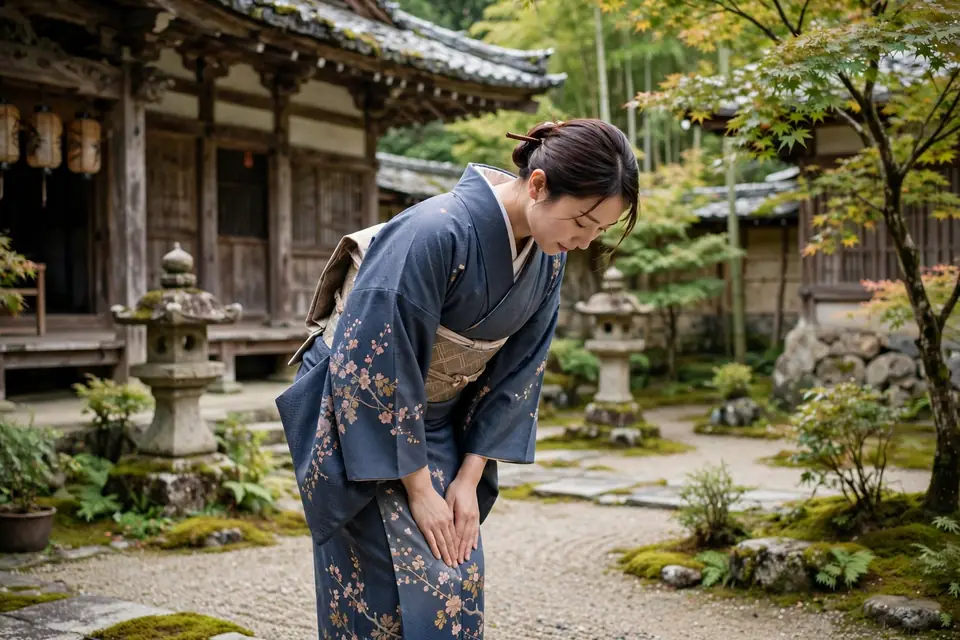
The bow: in Japan, thanks are physical as well as verbal — a slight bow with your arigato multiplies its sincerity. A small nod suffices casually; a deeper bow marks real gratitude. Watch and mirror — the bow’s depth is a language of its own.
Receiving gifts: Japanese etiquette often involves initial refusal before accepting — and effusive thanks after. The dance of humility and gratitude is part of the gift itself.
How to Respond to Arigato
- Dou itashimashite (どういたしまして) — the standard “you’re welcome” (formal/polite).
- Iie, iie (いいえ、いいえ) — “no, no” (i.e., “it was nothing”) — humble and very Japanese.
- Kochira koso (こちらこそ) — “likewise” / “thank YOU” — returning the gratitude.
- A nod and smile — perfectly acceptable casually; warmth needs no grammar.
The cultural note: effusive “you’re welcome” is less common than in the West — deflecting thanks with humility (iie iie) is often the more natural Japanese response. Gratitude given is gratitude minimized — that’s the aesthetic.
Sumimasen — the other “thank you”: visitors are often confused to hear Japanese speakers say sumimasen (すみません — “excuse me/sorry”) where they’d expect thanks. This is because receiving kindness can feel like imposing a burden — sumimasen acknowledges the trouble you caused someone by needing their help. It’s gratitude expressed as apology: “sorry to trouble you, and thank you.” Understanding this dual system — arigato for the gift, sumimasen for the burden — unlocks a deeper layer of Japanese social grammar.
Arigato Around the World
The global traveler: arigato is among the most recognized Japanese words worldwide — up there with sushi, samurai, and sayonara. The 1980s Japan boom (electronics, sushi, the TV miniseries Shōgun) carried it into Western vocabularies, and anime and J-pop keep it there for every new generation.
In pop culture: from Styx’s 1983 hit “Mr. Roboto” (“domo arigato, Mr. Roboto”) to countless anime scenes, the word has become shorthand for Japan itself in the Western imagination — sometimes affectionately, sometimes as exoticizing cliché. Using it respectfully, with correct pronunciation and appropriate formality, is the difference between appreciation and caricature.
The deeper lesson: learning to say thank you properly in another language is never just vocabulary — it’s a first step into another moral world. Arigato teaches what English “thanks” doesn’t: that gratitude can be graded, bowed, deflected, and philosophized — and that the rarest thing of all might be recognizing preciousness in the ordinary.
Frequently Asked Questions
What does arigato mean in English?
“Thank you” — the casual, everyday Japanese expression of gratitude.
How do you pronounce arigato?
ah-ree-gah-toh — even syllables, lengthened final “oh,” no heavy stress.
What is the difference between arigato and arigato gozaimasu?
Arigato = casual “thanks”; arigatou gozaimasu = polite “thank you very much.”
What does arigato literally mean?
From arigatai — “rare, precious,” literally “difficult to exist” — with Buddhist roots.
Does arigato come from Portuguese obrigado?
No — a false cognate; arigato predates Portuguese contact with Japan.
Is it rude to say just “arigato”?
To friends, no; to elders, bosses, or formal strangers, it can sound childish — use gozaimasu.
What does doumo mean?
“Very much” — and as a standalone, a versatile casual “thanks” (also usable as hello/sorry by context).
How do you write arigato in Japanese?
ありがとう (hiragana) or 有難う (kanji).
What is the most polite way to say thank you in Japanese?
Doumo arigatou gozaimasu (どうもありがとうございます) — for great favors and formal settings.
How do you say “you’re welcome” in Japanese?
Dou itashimashite (formal) or iie, iie (“it was nothing” — humble).
Should I bow when saying arigato?
A slight bow adds sincerity; deeper bows mark deeper gratitude — mirror what you see.
What is ōkini?
The Kansai region’s (Osaka/Kyoto) distinctive, warm way to say thank you.
What does “arigato gozaimashita” mean?
Past-tense polite thanks — “thank you for what you’ve done” (used after completed service).
Can I just say “domo”?
Yes, casually — it’s a versatile short form, though gozaimasu is safer with strangers.
Source: For usage guidance on saying thank you in Japanese, see Busuu’s guide to thank you in Japanese.