
Gringo Meaning: Definition, Origin, and Is It Offensive?
Quick answer: Gringo (feminine: gringa) is a Spanish and Portuguese word meaning a foreigner — most often, in Latin America, an English-speaking foreigner, especially an American. It most likely comes from griego (Spanish for “Greek”), via the old expression “hablar en griego” (“to speak Greek”, i.e. to speak incomprehensibly). Whether it is offensive depends entirely on context, tone, and country: it can be neutral, affectionate, or insulting, and many expats use it of themselves. It was first recorded in a Spanish dictionary in 1787 — the popular “Green Grow the Rushes” and “green coats” origin stories are myths.
In this article
- What Does Gringo Mean?
- Where Does the Word Gringo Come From?
- The Origin Myths (and Why They Are Wrong)
- What Gringo Means in Different Countries
- Is Gringo Offensive?
- Gringo, Gringa, Gringos: Grammar Guide
- Words Like Gringo Around the World
- Gringo in Pop Culture
- Common Phrases and Examples
- What to Do If Someone Calls You Gringo
- Frequently Asked Questions
What Does Gringo Mean?
At its simplest, gringo means “foreigner” in Spanish — and, in Brazil, in Portuguese. But the word carries layers of history, and its exact target shifts as you cross borders.
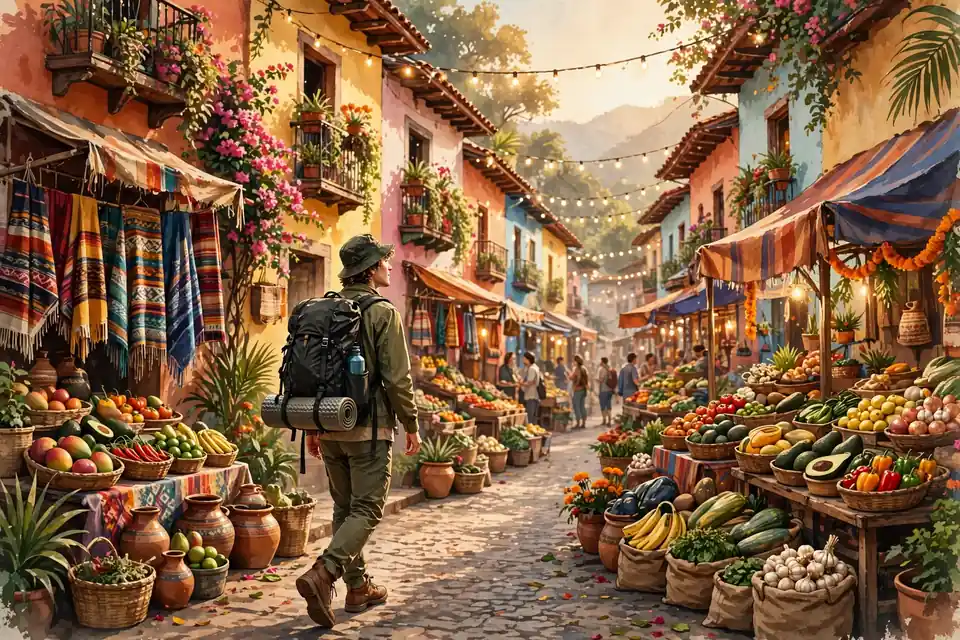
In Mexico, Central America, and much of South America, a gringo is typically a foreigner from an English-speaking country — above all the United States. A shopkeeper in Oaxaca calling you “el gringo” usually means nothing more than “the American guy” — it is a practical label, the way a New Yorker might say “the tourist.”
In Brazil, the meaning is broader: a gringo is any foreigner at all, including other Latin Americans. A Brazilian might call an Argentine, a Japanese tourist, or a French backpacker a gringo with equal ease. The feminine form gringa follows the same rules.
In Spain, gringo is understood but rarely used day-to-day; Spaniards have their own word for (often northern-European) tourists, guiri.
Dictionaries split on the tone. The Oxford English Dictionary calls it a contemptuous name for an Anglo-American; Merriam-Webster labels it “often disparaging”; the Royal Spanish Academy defines it more neutrally as a foreigner. That disagreement is the whole story of the word: gringo is a context word. Spat through clenched teeth it is an insult; offered with a grin by a taco vendor — “¿Qué quieres, gringo?” — it is practically a term of endearment.
Where Does the Word Gringo Come From?
The most widely accepted etymology traces gringo back to the Spanish word griego, meaning “Greek.” Spanish has long used “Greek” the way English uses “it’s Greek to me” — shorthand for incomprehensible speech. The idiom hablar en griego meant to talk gibberish, and gringo appears to be a phonetic reshaping of griego applied first to unintelligible speech, then to the foreigners producing it.
The paper trail supports this. The word was first recorded in 1787 in the Diccionario castellano con las voces de Ciencias y Artes, where it was defined as the name given in Málaga to foreigners whose accent kept them from speaking Castilian easily — and in Madrid, specifically to the Irish. That predates the Mexican-American War (1846–1848) by decades, which matters because the most popular origin stories all date the word to that conflict.
Linguists describe the sound change in two steps: griego → grigo (a common simplification in Spanish), then grigo → gringo, possibly influenced by jeringonza, an old Spanish word-game name also associated with gibberish. The first recorded use in English comes from John Woodhouse Audubon’s Western Journal of 1849–1850, where he reports his party being “hooted and shouted at” and called “Gringoes” while passing through Cerro Gordo, Veracruz.

The Origin Myths (and Why They Are Wrong)
Few words attract as many folk etymologies as gringo. They are colorful, memorable, and — etymologists agree — wrong. Here are the famous ones:
1. “Green Grow the Rushes, Ho.” The best-known legend claims Mexicans coined the word after hearing U.S. soldiers sing this folk song during the Mexican-American War. It is impossible: the word was in print sixty years before that war began.
2. “Green coats” / “Green go home.” Variants say Mexicans shouted “Green coats!” at U.S. soldiers’ uniforms, or “Green, go!” None of these phrases produce the sound gringo naturally, and again, the timeline fails.
3. The Irish “San Patricios” theory. A romantic version credits the Saint Patrick’s Battalion — Irish soldiers who fought for Mexico — whose green banners supposedly inspired the cry. The battalion was real; the etymology is not supported by evidence.
4. The Greek-sailor theory. Some claim it referred to Greek sailors in Spanish ports. This at least points toward griego, but the documented path runs through the “unintelligible speech” sense rather than actual Greeks.
Why do the myths persist? Because folk etymologies feel true — they tie the word to a vivid historical scene people already know. The real story, a slow sound-shift from “Greek” to “gibberish” to “foreigner” over centuries, is less cinematic but far better documented.
What Gringo Means in Different Countries
The target of the word moves with the map. This table summarizes the most common usage:
| Country / Region | Who is a “gringo”? | Tone |
|---|---|---|
| Mexico | Usually an American; sometimes any foreigner | Neutral to playful; can be hostile in political contexts |
| Brazil | Any foreigner, of any nationality | Mostly neutral, often affectionate |
| Argentina / Uruguay | Historically, English or American immigrants; also used for blond/light-skinned people | Often neutral or even fond |
| Spain | Understood, rarely used; guiri is the local equivalent | Varies |
| Colombia / Venezuela | American or European foreigner | Context-dependent |
| Portugal | Any foreigner (from Brazilian influence) | Neutral |
| United States | Used by Latino communities for non-Latino Americans; “gringo” is sometimes used self-referentially by expats | Disputed — playful to pointed |
A useful rule of thumb: in Spanish-speaking Latin America, gringo usually points north to the United States; in Brazil, it points outward in every direction.
Note the related terms in neighboring slots: gabacho (Mexico, for Americans — often harsher), yanqui (political contexts), and yuma (Cuba).
Is Gringo Offensive?
This is the question behind most searches, and the honest answer is: it depends on who says it, how, and where.
When it is neutral or friendly: vendors, taxi drivers, and new acquaintances across Latin America use gringo as a simple descriptor — “the gringo wants two tacos.” Millions of American and European expats in Mexico and Costa Rica call themselves gringos cheerfully. In these contexts the word has been bleached of sting through sheer everyday use.
When it stings: tone does the work. Said with contempt during an argument about tourism or U.S. foreign policy, gringo lands as an accusation — the foreigner as outsider or intruder. In 1969, Chicano movement leader José Ángel Gutiérrez used “gringo” for people and institutions embodying racist power. The writer Gustavo Arellano has called it “technically a slur” whose “power to offend nowadays is minimal” — a neat summary of its ambiguous status.
The asymmetry question: some English speakers argue the word gets a pass that equivalents aimed at other groups would not. Linguists tend to describe gringo as an exonym with variable offensiveness rather than a slur in the strong sense — its charge comes from context, not from the syllables themselves.
Practical guidance: as a visitor, do not use it to describe people until you have heard locals use it warmly first; as the person being called it, read the room — almost always it is descriptive, not hostile.

Gringo, Gringa, Gringos: Grammar Guide
Spanish grammar does the rest once you know the base word:
- Gringo — masculine singular: un gringo simpático (a friendly gringo)
- Gringa — feminine singular: la gringa de la esquina (the gringa on the corner)
- Gringos — masculine or mixed plural: los gringos del hotel
- Gringas — feminine plural
- Gringada — a collective/augmentative: can mean “a bunch of gringos” or “a very gringo thing to do”
The word also works adjectivally: comida gringa (gringo food), precios gringos (gringo prices — the tourist markup). In Mexican food culture, there is even a dish called the gringa: a flour tortilla filled with al pastor pork and cheese — named, the story goes, because two American women once asked a Mexico City taquería for tacos made with flour instead of corn tortillas.
Words Like Gringo Around the World
Nearly every culture has a word for “the foreigner”:
| Word | Language / Place | Means |
|---|---|---|
| Gabacho | Mexican Spanish | American; often more derogatory than gringo |
| Guiri | Spain | Northern-European tourist |
| Yuma | Cuba | American; also the USA itself |
| Gaijin | Japanese | Foreigner (short for gaikokujin) |
| Laowai | Chinese (Mandarin) | Foreigner, “old outsider” |
| Farang | Thai | Westerner/foreigner |
| Mzungu | Swahili | White foreigner in East Africa |
Like gringo, most of these slide along the same scale from neutral descriptor to insult depending on delivery. The no mames guide and our chisme meaning article cover more Mexican Spanish slang with the same regional flavor.
Gringo in Pop Culture
The word has traveled far beyond street markets: Carlos Fuentes’ novel Old Gringo (filmed in 1989 with Gregory Peck) about Ambrose Bierce in revolutionary Mexico; the 2018 dark comedy Gringo starring David Oyelowo; the backpacker Gringo Trail through Mexico and Central America; and Molotov’s drummer dubbing himself “El Gringo Loco.” Travel slang even has gringo pricing — the inflated tourist markup quoted to obvious foreigners.
Common Phrases and Examples
- ¿Eres gringo? — “Are you American?” (the classic icebreaker)
- Una gringa me preguntó cómo llegar. — “A foreign woman asked me for directions.”
- McDonald’s es un restaurante gringo. — “McDonald’s is a gringo restaurant.” (adjectival use)
- ¡No seas gringo! — roughly, “Don’t be such a tourist!” (teasing)
- Precio gringo — the inflated “gringo price” quoted to tourists
What to Do If Someone Calls You Gringo
Don’t flinch — nine times out of ten you have just been labeled the way locals label every visible foreigner, with no more malice than a weather report. Listen for tone, not vocabulary: “¡Órale, gringo!” from a bartender is hospitality; the same word hissed during an argument about rent prices is about gentrification, not the dictionary. And don’t throw it back carelessly — expats use it of themselves constantly, but as a visitor, let locals use it warmly first before adopting it yourself.
Frequently Asked Questions
What does gringo mean in Spanish?
A foreigner, most often an English-speaking foreigner or American in Latin America. In Brazil it means any foreigner.
What is a gringa?
The feminine form of gringo — a foreign woman. It is also the name of a Mexican dish: a flour tortilla with al pastor pork and cheese.
Where did the word gringo come from?
Most likely from Spanish griego (“Greek”), via the idiom hablar en griego (“to speak incomprehensibly”). First recorded in a Spanish dictionary in 1787.
Is gringo a bad word?
It can be, depending on context. Often it is neutral or even affectionate; delivered with hostility it becomes an insult. Many expats use it of themselves without any negative sense.
Did gringo come from “Green Grow the Rushes”?
No. That folk etymology is disproven by the word’s appearance in a 1787 dictionary, decades before the Mexican-American War it supposedly came from.
What do Mexicans call Americans besides gringo?
Gabacho (often more derogatory), yanqui (political contexts), and regionally norteño (northerner).
Is gringo used in Spain?
It is understood but rarely used; Spaniards more often say guiri for foreign tourists.
What is the difference between gringo and gabacho?
Both can mean “American” in Mexican Spanish, but gabacho is generally harsher, while gringo is the everyday default.
Can I call myself a gringo?
Many expats do, playfully. As a visitor, let locals use it first before adopting it yourself.
What does “gringo pricing” mean?
Travel slang for inflated prices quoted to obvious foreigners — the tourist markup found in markets and taxi ranks worldwide.
Source: For the dictionary definition and etymology, see Wiktionary’s entry on “gringo”.