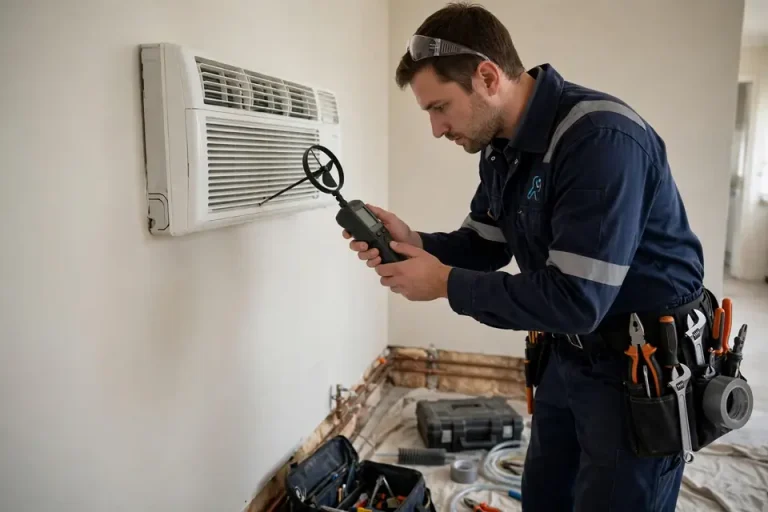
SRO Meaning: What Does SRO Mean?
Quick answer: SRO stands for Single Room Occupancy — a type of low-cost housing where residents rent small, furnished single rooms (typically 80–140 sq ft) in a multi-tenant building and share kitchens and bathrooms. It’s the cheapest form of non-subsidized rental housing in many US cities, aimed at low-income residents and single adults. The term is most associated with New York City, where SROs have a long, contested history. SRO can also mean Standing Room Only (events) or Self-Regulatory Organization (finance).
In this article
What Does SRO Mean?
SRO = Single Room Occupancy. It’s a housing category, not a building style: any residential building where each tenant rents one private room as their primary residence while sharing kitchens, bathrooms, or both with other tenants.
The federal definition (US Department of Housing and Urban Development) turns on what’s missing: an SRO unit “contains no sanitary facilities or food preparation facilities, or contains either, but not both.” In plain English — a conventional apartment has its own bathroom and kitchen behind a locked door; an SRO room is missing at least one, often both. Only one person may reside in each SRO unit.
Why it matters: SROs occupy a critical niche between homeless shelters and conventional apartments — stable, private housing at the lowest possible cost. For low-income workers, seniors on fixed incomes, people with disabilities, and formerly homeless individuals, an SRO is often the only affordable roof available in an expensive city.
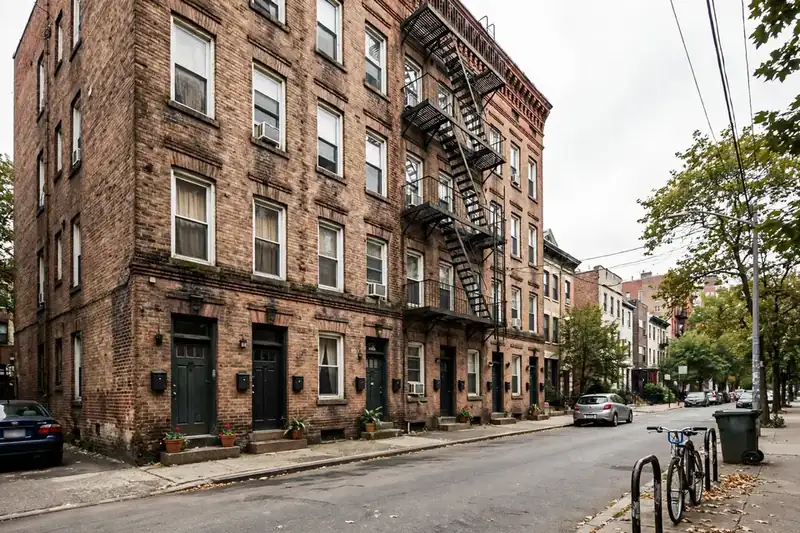
A day in SRO life: picture a five-story brick building from the 1920s, converted long ago from a residential hotel. Your room is on the third floor — about the size of a large walk-in closet, with a twin bed, a dresser, a chair, and a window facing an air shaft. The bathroom is down the hall (shared with eight other tenants on your floor), the kitchen is one floor down (four burners, two fridges, a whiteboard for labeling shelves). It’s not luxurious — but the door locks, the rent is payable on a dishwasher’s wages, and nobody can evict you for having a roommate dispute, because there are no roommates. For millions of people over the last century, that combination has been the difference between housed and homeless.
What Is SRO Housing Like?
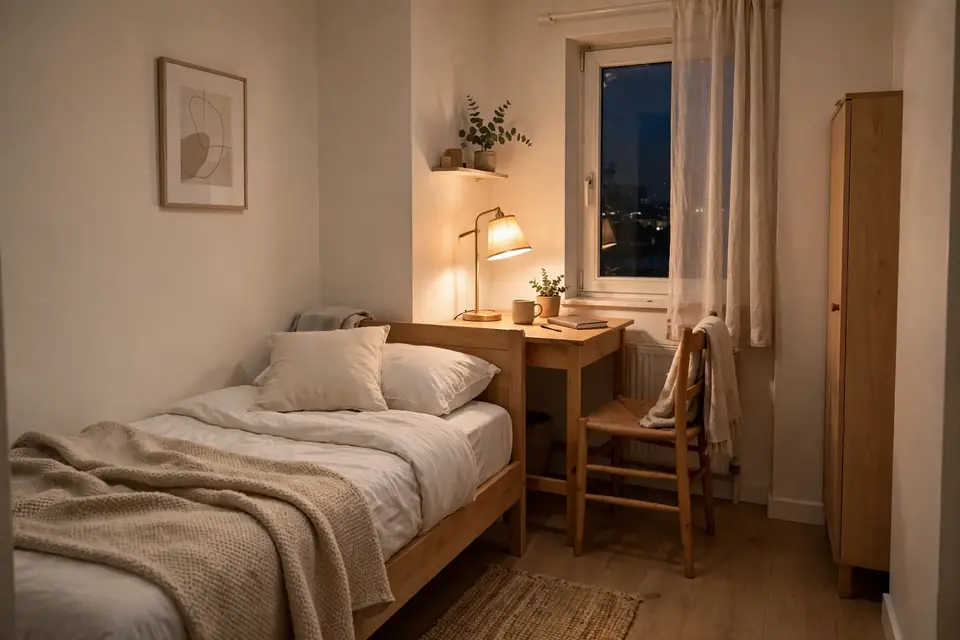
The room: small and furnished — typically 80 to 140 square feet (7–13 square meters), with a bed, chair, and sometimes a small desk. Newer or renovated units may add a mini-fridge, microwave, or sink. Your room locks; it’s yours exclusively — you sleep there, keep your belongings there, live there, sometimes for years.
The shared spaces: you walk down the hallway to communal bathrooms, showers, and kitchens. This is the defining trade-off of SRO life: private sleeping space, shared everything else. Each tenant holds their own separate lease — unlike a roommate arrangement, you’re not jointly responsible for anyone else’s rent.
Who lives there: contrary to the stereotype of transience, many SRO residents stay for years. The population includes low-wage workers, elderly residents, people with disabilities, and individuals transitioning out of homelessness — people for whom SROs are the cheapest option when housing vouchers and subsidized units aren’t available.
The cost: SROs are the least expensive non-subsidized rentals in their markets. Even in New York City, median SRO rents were reported at $450–$705 per month (2013 figures) — a fraction of conventional apartment rents. That gap is the entire point of the housing type.
SRO vs Other Housing Types
| SRO | Studio / Efficiency | Roommate Share | Residential Hotel | |
|---|---|---|---|---|
| Private bathroom | No (shared) | Yes | Often shared | Sometimes |
| Private kitchen | No (shared) | Yes | Shared | Rarely |
| Lease | Individual | Individual | Joint or individual | Nightly/weekly |
| Length of stay | Long-term home | Long-term | Long-term | Transient |
| Cost | Lowest | Moderate | Low-moderate | Varies |
| Best for | Solo low-income renters | Solo renters wanting privacy | People splitting costs | Short stays |
Common confusions cleared up: an SRO is not a hotel room — hotels serve transient guests for days or weeks, while SRO residents live there as their primary home, sometimes for years. And an SRO is not a studio apartment — studios include their own bathroom and cooking facilities; SROs by definition don’t. If you’re navigating rental listings, see what “contingent” means on a house for related housing terminology.
The History of SROs
The rise: SROs grew from America’s rooming houses, boarding houses, and residential hotels — the 19th and early-20th century answer to housing single workers in industrial cities. They were everywhere: countless urban buildings offered cheap single rooms to laborers, newcomers, and people living alone.
The great disappearance: between 1955 and 2013, almost one million SRO units were eliminated in the US — lost to regulation, conversion, or demolition. Starting in the 1970s and 1980s, gentrification accelerated the process: SRO buildings in newly desirable neighborhoods were sold and converted into condominiums, wiping out the cheapest housing exactly where it was needed most. Researchers draw a direct line between SRO loss and rising homelessness — San Diego’s SROs, for example, were largely destroyed in the 1970s–80s for developments like Horton Plaza, despite a 1985 preservation ordinance.
Why they were targeted: SROs sat on valuable urban land while generating low rents — a combination developers found irresistible and cities often enabled through zoning and code enforcement. Minimum room-size rules, bathroom-per-unit requirements, and hotel-conversion bans were sometimes used as tools to eliminate SROs rather than improve them.
SROs Today
Preservation fights: cities that lost their SRO stock are now trying to protect what’s left. Preservation ordinances, conversion moratoriums, and nonprofit acquisition have saved thousands of units — but the stock remains a fraction of its peak.
Supportive SROs: many surviving SRO buildings have been converted into permanent supportive housing — nonprofits acquire old SRO hotels and add on-site services like case management, counseling, and clinical support for formerly homeless tenants. San Francisco’s Tenderloin and SoMa neighborhoods are the national model: private rooms plus professional support, aimed at people transitioning out of homelessness.
The affordability argument: housing researchers increasingly argue SROs should be re-embraced, not just preserved — updated versions (sometimes rebranded as “micro-units” or “co-living”) could add affordable supply in cities where conventional construction can’t pencil out at low rents. Boston’s 2025 housing research explicitly examined SROs as a scalable affordability tool for the 21st century.
The stigma problem: SROs still carry a reputation as “housing of last resort,” which makes new construction politically difficult even where the economics work. Advocates counter that the stigma describes neglect, not the housing type — well-managed SROs with services are stable, dignified homes.
The co-living parallel: here’s the irony housing advocates love to point out — upscale co-living companies now sell the SRO model to young professionals at premium prices: small private bedrooms, shared kitchens and lounges, community events, individual leases. The concept is identical; the branding and finishes differ. When the same floor plan is marketed as “innovative co-living” for tech workers but stigmatized as “flophouse” for low-income tenants, the difference is class, not architecture — a point that reframes the entire SRO debate.
Other Meanings of SRO
- Standing Room Only: at concerts, theaters, and events, SRO means all seats are sold — only standing-room tickets remain. (“The show is SRO tonight.”)
- Self-Regulatory Organization: in finance, an SRO is a non-governmental body that regulates an industry — e.g., FINRA oversees US broker-dealers. SROs set rules, monitor compliance, and discipline members under government oversight.
- Senior Responsible Owner: in UK project management, the SRO is the executive accountable for a program’s success.
How to tell: in housing and homelessness discussions, SRO means Single Room Occupancy. At a venue, it’s Standing Room Only. In finance or government, it’s one of the organizational meanings. Context disambiguates instantly — the parent keyword “sro nyc” points firmly at housing.
Frequently Asked Questions
What does SRO stand for?
Single Room Occupancy — most commonly; also Standing Room Only or Self-Regulatory Organization depending on context.
What is SRO housing?
Low-cost housing where tenants rent small private rooms (80–140 sq ft) and share kitchens and bathrooms.
How much does SRO housing cost?
It’s the cheapest non-subsidized rental type — NYC medians were $450–$705/month (2013); current rents vary by city and building.
Who lives in SROs?
Low-income workers, seniors, people with disabilities, and formerly homeless individuals — many stay for years.
Is an SRO the same as a studio apartment?
No — studios have private bathrooms and kitchens; SRO rooms share those facilities.
Is an SRO a hotel?
No — hotels serve transient guests; SRO residents live there as their primary long-term home.
Can two people live in one SRO unit?
No — federal rules allow only one person per SRO unit.
Why are SROs disappearing?
Gentrification and regulation: ~1 million US units were lost 1955–2013 to conversion, demolition, and code rules.
What is SRO in NYC?
New York’s single-room-occupancy housing stock — historically large, heavily reduced, and the subject of ongoing preservation efforts.
What does SRO mean at a concert?
Standing Room Only — seats are sold out; only standing tickets remain.
What is an SRO in finance?
A Self-Regulatory Organization — e.g., FINRA, which regulates US broker-dealers.
Are SROs safe?
It depends on management — well-run SROs (especially supportive-housing conversions) are stable homes; neglected buildings can be unsafe.
Do SRO tenants have leases?
Yes — each tenant holds an individual lease for their room, unlike joint roommate leases.
Source: For the full housing definition and history, see Wikipedia’s Single-room occupancy article.